 Gabriella
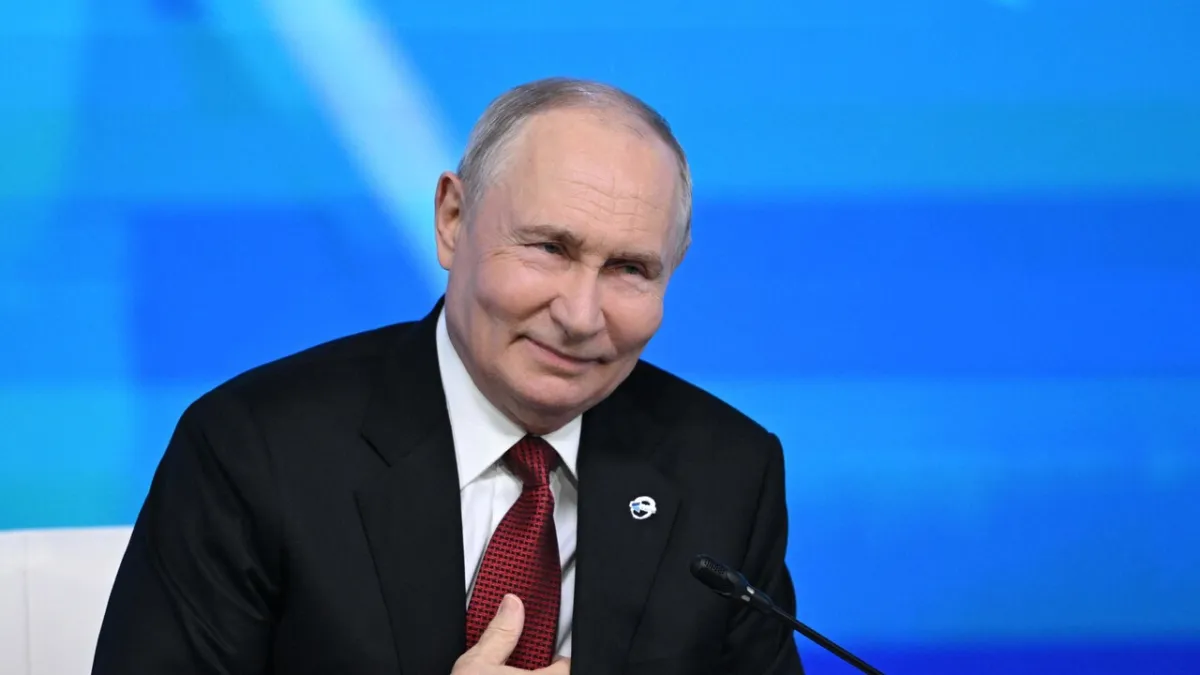
MOSCOW – President Vladimir Putin recently issued a stern warning, stating that military maneuvers by Western nations in the Baltic Sea region constitute a dangerous escalation challenging regional stability. In his statement, Putin affirmed Russia's readiness to respond to aggression by all available means, while emphasizing that Moscow has no intention of launching a pre-emptive strike.
This declaration comes amidst heightened geopolitical tensions in Eastern Europe, particularly following shifting political dynamics in several European countries. The military exercises in question, involving several NATO members, are viewed by the Kremlin as a direct provocation threatening Russia's national security.
'We will not attack anyone,' Putin stated, as quoted by reliable sources. 'However, we will respond to aggression by any means at our disposal.' This quote underscores Russia's defensive doctrine, reacting to threats rather than initiating offensive actions.
The Russian Ministry of Defense has reported an increase in the frequency and scale of NATO military exercises near Russia's borders, especially in the Baltic region. This surge in activity, according to the Kremlin, is part of a Western strategy to pressure and isolate Russia on the international stage.
Moscow has repeatedly expressed concerns over NATO's eastward expansion and the deployment of missile defense systems in Europe. Putin has consistently stated that such measures create an existential threat to Russia, prompting a proportional defensive response.
The situation in the Baltic Sea is particularly sensitive given Russia's geographical access to the sea through strategic ports in the region, including Kaliningrad. Maritime security in this area is now a key focus of Russia's foreign and defense policies.
International relations observers note that Putin's rhetoric indicates Russia will not be intimidated by pressure. On the contrary, Moscow will strengthen its defensive posture if it feels threatened, including the potential deployment of advanced weaponry systems.
Nevertheless, there have also been calls from several world leaders for all parties to exercise restraint. Diplomats are urging dialogue and de-escalation to avoid a confrontation that could have serious implications for global security.
Western governments, through NATO spokespersons, maintain that the military exercises are defensive and routine, aimed at enhancing readiness and interoperability among alliance members. They reject Russia's accusations that these drills are a form of provocation.
However, Moscow perceives them as part of a larger pattern, where the West systematically erodes the post-Cold War security architecture, triggering what Putin has called a 'new arms race.'
President Prabowo Subianto, Indonesia's leader, through the Ministry of Foreign Affairs, has called for all parties to prioritize peaceful solutions and constructive dialogue. Indonesia's active neutral stance consistently emphasizes the importance of global stability and the resolution of disputes through diplomatic channels.
This situation harks back to periods of similar tension, where miscommunication or miscalculation could rapidly escalate. Therefore, confidence-building measures and transparency are crucial.
President Donald Trump's administration in the United States, now back in office, is also closely monitoring developments in Europe. Washington reaffirms its commitment to NATO allies and stands ready to support collective defense measures.
The year 2026 bears witness to ongoing turbulent geopolitical dynamics, demanding world leaders exercise greater caution in their actions and statements. The Baltic region, with its long history as a frontline of confrontation, is once again a focal point of attention.
Although Putin asserts Russia will not be an aggressor, his stern warning also serves as a clear signal that any attempt to test Moscow's patience will result in a firm response. This is not merely a threat, but a declaration of readiness to defend sovereignty.
Editorial Insight: President Putin's statement is not mere rhetoric; it reflects Russia's increasingly assertive geopolitical strategy in defending what it considers vital spheres of influence and security. The escalation in the Baltic, regardless of the West's defensive narrative, is viewed by Moscow as a direct threat. Russia's readiness to respond 'by any means' must be understood in the context of its military capabilities and nuclear doctrine. This situation demands extreme caution from all global actors to prevent miscalculations that could trigger a wider conflict and undermine world stability.