 Debby Wijaya
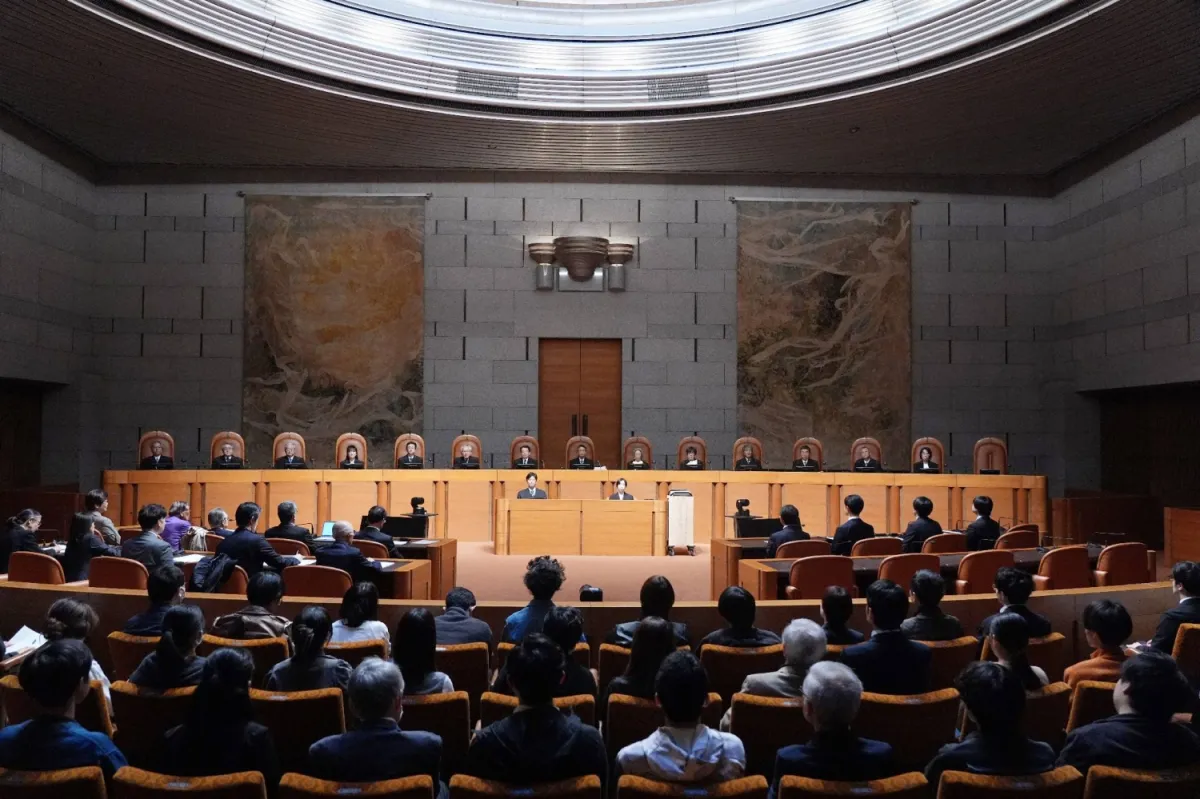
TOKYO – Japan's Supreme Court recently issued a surprising ruling, declaring that the conditions of the Upper House General Election in 2025 were in an 'unconstitutional state,' an order that immediately reignited a fierce debate over national electoral reform. Although this ruling does not invalidate the results of last year's election, its implications are highly significant, highlighting the persistent issue of vote weight disparity between regions and urging the legislature to urgently review the existing electoral system.
The historic decision, announced in early 2026, came after a series of lawsuits filed by electoral advocacy groups, highlighting the unfairness in parliamentary seat allocation, which causes the value of a vote in one region to be significantly less than in another. This phenomenon, known as 'vote weight disparity,' has been a chronic problem in Japanese democracy for decades.
This is not the first time Japan's Supreme Court has intervened in such a sensitive issue. In several previous elections, the highest court had repeatedly issued similar warnings, and in some cases, even declared elections unconstitutional without invalidating the results. This pattern underscores the National Diet's failure to effectively address the root causes of representational imbalance.
This latest ruling explicitly reaffirms the urgency of comprehensive reform. Society and political observers view this decision as a strong rebuke to policymakers deemed slow in responding to demands for electoral justice. The credibility of Japan's democratic institutions is at stake, requiring concrete actions rather than mere rhetoric.
The debate on how to implement electoral reform has been ongoing for a long time. Some proposals include periodic adjustments to electoral district boundaries based on demographic changes, while others suggest increasing the number of proportional representation seats to mitigate the impact of vote disparity. However, reform efforts are often hampered by the political interests of ruling parties.
The court's decision has the potential to trigger political turmoil, particularly among opposition parties who now have new ammunition to pressure the ruling coalition. Public trust in the political system could erode further if legislators fail to demonstrate a serious commitment to correcting this injustice. Recent survey data indicates a growing public dissatisfaction with parliamentary effectiveness.
This ruling is a loud alarm for the Diet, stated Professor Kenji Tanaka, a constitutional law expert from Kyoto University. If legislators do not act quickly to formulate meaningful reforms, the legitimacy of future elections will continue to be questioned, even if the results are not invalidated. Professor Tanaka added that immediate action is necessary to prevent a deeper crisis of trust.
The challenges in formulating reforms lie not only in political will but also in technical complexity. Redistribution of seats can benefit or disadvantage certain parties, creating natural resistance from those who feel harmed. Therefore, cross-party consensus is crucial, although often difficult to achieve in a polarized political climate.
This constitutional issue is not the only challenge facing Japan. In a broader global context, the country also continues to navigate complex geopolitical dynamics, including considering its position in international forums like the ICC amidst sanctions imposed by major powers. Internal issues such as electoral reform reflect Japan's commitment to the principles of law and justice, both domestically and internationally. Japan Considers Crucial ICC Meeting Amid Trump Sanctions.
With the upcoming Lower House General Election deadline, pressure to finalize these reforms will intensify. Japanese legislators must now prove their ability to uphold democratic integrity, ensuring that every citizen's vote carries equal weight, and reflecting fundamental principles of justice in all aspects of the electoral process.
Editorial Insight: The Japanese Supreme Court's ruling on the constitutionality of the 2025 election is a crucial admonition for parliamentary democratic stability. While not nullifying the results, this decision sets a strong precedent for demands for fairer electoral reform. If not promptly addressed by the Diet, there is a concern of deeper erosion of public trust, potentially threatening political legitimacy and future citizen participation. This is a critical moment for Japan to affirm its commitment to robust democratic principles.