 Stefani Rindus
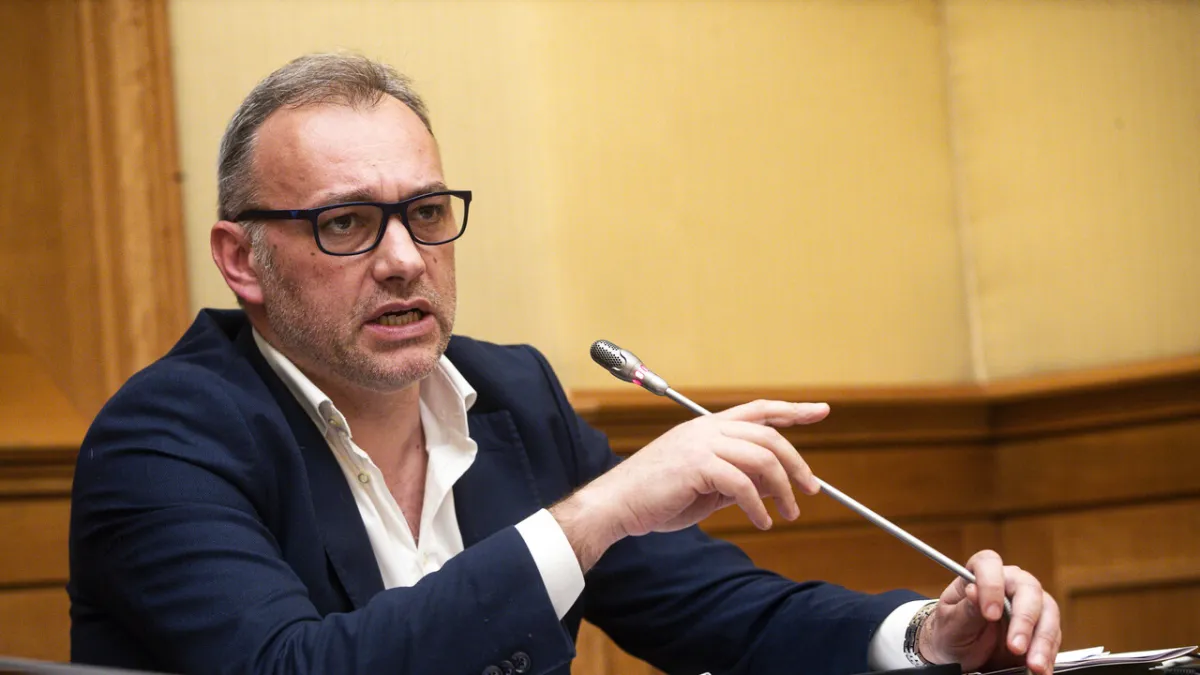
ROME – Former Italian parliamentarian and prominent political figure, Matteo Richetti, in 2026 firmly reaffirmed his position. He explicitly rejected any offers or potential leadership roles in institutions affiliated with the political right wing. I will never be president of anything on behalf of the right wing, Richetti asserted. This statement emerges amidst intense discussions concerning the role of the opposition in the Italian Parliament, particularly within the context of the Rai Oversight Commission. Richetti emphasized that opposition must fight from within, not resign.
Richetti, known for his firm political stance, thus highlights the ongoing debate regarding the best strategy for opposition forces in confronting the current government. His rejection underscores his commitment to his political principles.
Richetti's statement, delivered within the political sphere of Rome, is more than just a personal refusal. Furthermore, it is a declaration of principle on how the opposition should function. He stressed that the essence of opposition lies in putting up a fight, in providing arguments and dissenting voices, not in withdrawing from existing parliamentary bodies.
His comments come as political critics question the effectiveness of the opposition in Italy. Some might argue that resigning from certain positions or commissions could be a form of protest. However, Richetti explicitly opposed this view, emphasizing the importance of active engagement.
In the context of the Rai Oversight Commission, a body tasked with supervising the operations of Italy's public broadcaster, Richetti's position holds significant resonance. This commission is a crucial arena for political parties to ensure the objectivity and pluralism of information presented to the public.
Richetti's decision to remain within parliamentary structures and choose the path of active struggle reflects his belief in the democratic system. He perceives that battles of ideology and policy must occur on legitimate platforms, where opposition voices can be constructively heard.
Political analysts view this statement as an effort to strengthen the identity and strategy of the opposition. Too often, the opposition narrative is eroded by internal divisions or perceived passive responses. Richetti calls for a more proactive and courageous approach, reminding that opposition is done by fighting, not by resigning from parliamentary bodies.
Italy's political situation in 2026 remains dynamic. Debates concerning the national budget and economic policies are key highlights, as reflected in the related article: Gelombang Amandemen Guncang Anggaran Italia: Meloni Hadapi Tekanan Oposisi. Richetti's stance adds another dimension to this challenging political landscape.
Richetti's refusal can also be interpreted as a message to his colleagues in the opposition camp. The message indicates the need for unity and a focus on substantive agendas, rather than getting caught in political traps that could weaken the opposition's overall position.
This is not the first time Richetti has taken a strong stance on sensitive political issues. His long career demonstrates consistency in upholding democratic principles and overseeing power.
Ultimately, Richetti's statement serves as a reminder that effective opposition requires the courage to resist, the ability to argue, and a commitment to remain at the forefront of the democratic struggle, even when facing pressure to withdraw or compromise with the ruling party.
Editorial Insight: Matteo Richetti's firm stance reflects a universal dilemma faced by opposition parties in many countries: whether it is better to withdraw as a form of protest or remain engaged to influence from within. His choice to fight from within demonstrates a belief in the capacity of democratic institutions to accommodate differing views. This could be a more mature long-term strategy, potentially building the opposition's legitimacy and sustained influence, provided consistency in arguments and actions can be maintained.