 Angel Doris
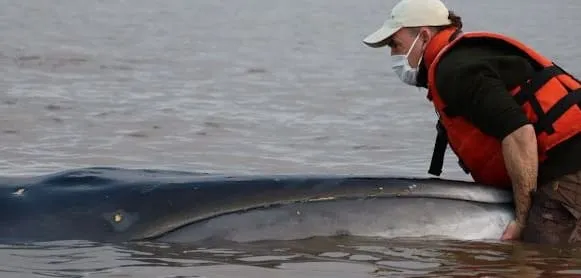
RIO DE LA PLATA — A seven-meter Sei whale was found lifeless today, March 15, 2026, in the waters of the Río de la Plata River, after an intensive rescue effort lasting over a day ended tragically. The giant marine mammal had become stranded on a shallow sandbank, triggering a major response from conservation teams and local authorities.
The event left deep sorrow among volunteers and environmental enthusiasts who had followed the rescue mission's progress from the outset. The Sei whale, a species known for its speed and agility, was found in critical condition, trapped in an area that complicated evacuation efforts.
Rescue teams, comprising marine biologists, animal paramedics, and local navy personnel, had fought tirelessly. They deployed every resource, including tugboats and specialized equipment, to move the whale from its stranded position.
The primary plan of the rescue teams was to utilize the anticipated rise in water levels during high tide. Great hope rested on this natural phenomenon, believed to provide enough buoyancy for the whale to return to deeper waters.
However, the predicted tide apparently was not significant enough or arrived too late. Although the water began to rise, its height was insufficient to lift the massive whale's body from the sandy depression that had immobilized it.
Throughout the process, the whale's condition continued to deteriorate. Stress, dehydration, and internal injuries from its own body weight on the shallow ground posed serious threats. Veterinarians attempted to provide hydration and medical care on site.
"We have done everything we possibly could," said Maria Rodriguez, head of rescue operations for the local Marine Conservation Authority, in a live-streamed press conference this afternoon. "The resources we had were maximized, but nature has its own will. This is a very sad day for all of us."
This Sei whale's death highlights the fragility of marine ecosystems and the challenges faced by large marine species when they deviate from their natural habitats. Similar incidents, though not frequent, always raise questions about contributing factors and more effective prevention efforts.
Experts suspect several factors could lead to whale stranding, including disorientation due to underwater noise, changes in ocean currents, or even illness. Further investigation will be conducted to determine the exact cause of this whale's stranding.
Sei whales (Balaenoptera borealis) are one of the largest baleen whale species in the world, capable of reaching lengths of up to 20 meters. They are generally found in subpolar to tropical waters and are known as fast swimmers. Their population is considered vulnerable due to past commercial hunting and modern environmental threats.
This incident is expected to spark further discussion on conservation efforts in the Río de la Plata, a large estuary that is home to diverse marine life but is also vulnerable to human activity and climate change.
The public is urged to report immediately if they find stranded or distressed marine mammals. Emergency numbers and contact information for marine animal rescue organizations have been re-socialized by the local provincial government following this incident.