 Edward DP Situmorang
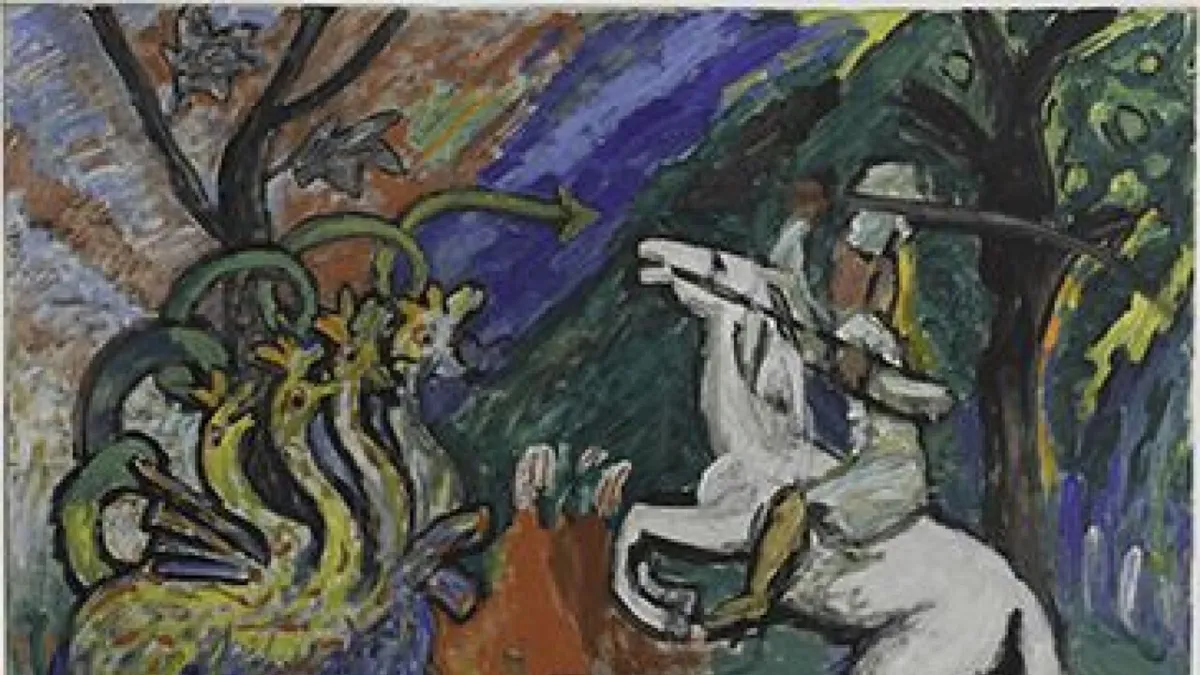
ROME – A monumental art exhibition in 2026 has successfully captivated global attention at Palazzo Bonaparte, Rome, by highlighting the revolutionary and often underexposed works of Gabriele Munter, displayed alongside those of the expressionist maestro Wassily Kandinsky. This exhibition unravels the complex narrative of Munter's contributions to modern art, reaffirming her significant position.
The exhibition is specifically dedicated to unveiling Munter's central role, not merely as a muse or companion, but as a visionary artist who shaped the early 20th-century art movement. The dedicated section showcasing her works firmly re-establishes her rightful place in art history.
Gabriele Munter (1877–1962) was a pioneer of German Expressionism, a key member of the Der Blaue Reiter (The Blue Rider) artist group co-founded with Kandinsky and Franz Marc in 1911. This exhibition at Palazzo Bonaparte revives the revolutionary spirit of the group with a fresh perspective.
Munter's presence in this exhibition is crucial for correcting the biases of art history that have often reduced the role of female artists. Her vibrant works, with bold brushstrokes and introspective themes, clearly demonstrate her strong and original aesthetic independence.
The artistic and personal relationship between Munter and Kandinsky was one of the most influential collaborations of their time. They mutually inspired and pushed the conventional boundaries of art, paving the way for the abstraction that would later define modernism.
Visitors to Palazzo Bonaparte will be treated to a visual journey through the evolution of Munter's style, from her expressive Bavarian landscapes to powerful portraits. Each piece reveals her deep emotional range and progressive experimental techniques.
The exhibition also provides context on how Gabriele Munter, despite being overshadowed by Kandinsky's fame, managed to maintain her artistic identity. Her work often demonstrates a more intimate and profound perspective on her subjects, a unique quality that sets her apart.
The exhibition curators stated that the primary goal is to ensure Munter's legacy is fully recognized. The exhibition offers a golden opportunity for a new generation to appreciate her genius beyond the labels that have been attached to her.
The staging of this exhibition in 2026 coincides with a rising global awareness of the need for inclusivity in historical narratives, including in the field of art. This is a significant step forward in the decolonization of art curricula and exhibitions worldwide.
The artworks on display cover a crucial period from the early 20th century, including paintings, prints, and sketches. This collection provides a comprehensive overview of Munter's creative spectrum, featuring several pieces from private collections rarely seen by the public.
Rome, as one of the world's cultural centers, serves as an ideal location for such an exhibition, attracting art critics, historians, and art enthusiasts from across the globe. The city's rich historical atmosphere further enhances the artistic experience for visitors.
Munter's influence extended beyond her own works. She also played a vital role in documenting and promoting the works of other Der Blaue Reiter artists, ensuring the group's legacy remains vibrant and relevant to this day.
This exhibition stands as clear proof that art history still holds many untold stories, or stories that need to be retold with a fairer and more complete perspective, uplifting all contributing voices.
For art students and researchers, this exhibition offers invaluable resources for a deeper understanding of the dynamics of artistic relationships, the evolution of Expressionism, and the struggle of female artists to gain equal recognition.
Editorial Insight: The Gabriele Munter exhibition in Rome is more than just a presentation of artworks; it is a strong statement about the revision of art history. Elevating Munter alongside Kandinsky is an essential step to restore a more balanced narrative, acknowledging the invaluable contributions of female artists who have often been marginalized. This is a crucial moment for the global art world to appreciate every pioneer, regardless of their gender or social standing.