 Stefani Rindus
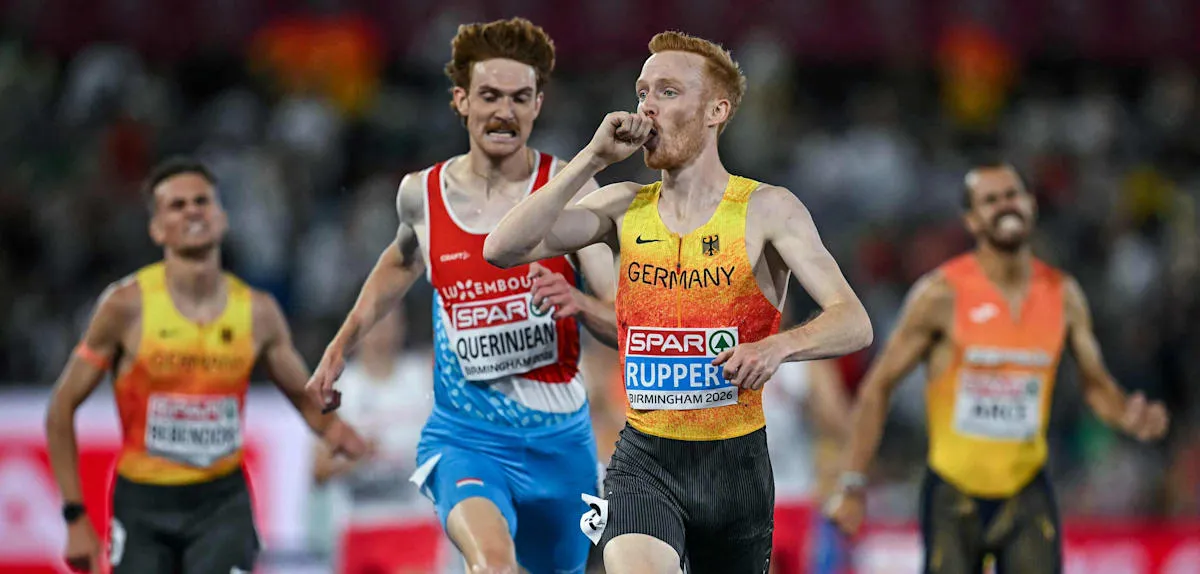
BIRMINGHAM – Frederik Ruppert, the German steeplechase athlete, brilliantly claimed the gold medal in the 3000-meter steeplechase event at the European Athletics Championships held in Birmingham. This historic victory not only marks a fantastic personal achievement for Ruppert but also ends a long 28-year wait for Germany in the event, making him the first German athlete to win gold in this discipline since 1998.
Ruppert completed the race with an outstanding performance, conquering hurdles and water jumps with precision and speed. This triumph represents Germany's sixth and final title in a championship that has delivered various dramas and surprises throughout the week. The German public, particularly athletics enthusiasts, greeted the achievement of the runner, whose name is now etched in the country's national sports history, with euphoria.
The almost three-decade wait has finally been repaid. Before Ruppert, the last German athlete to win gold in the 3000-meter steeplechase was a legend whose name is now once again celebrated alongside Ruppert's. This underscores the difficulty of dominating this event, while also highlighting the dedication and rigorous training Ruppert underwent to reach his peak performance.
On another side of the arena, a different fate awaited the world long jump champion, Malaika Mihambo. The athlete, who was expected to add to Germany's medal tally, had to return home without a medal. Mihambo's less than optimal performance serves as a significant note for the coaching team for future evaluations, contrasting sharply with Iapichino's brilliant long jump gold at the same European event.
Ruppert's victory provides a valuable morale boost for the entire German athletics team. This moment is expected to inspire a new generation of young athletes to continue striving and achieving success on the international stage. This success also indicates that Germany's athletics development strategy is beginning to show positive and sustained results.
The 3000-meter steeplechase is one of the most challenging athletics events. Runners are required to possess not only excellent speed and endurance but also the ability to clear sturdy wooden barriers and navigate water jumps that test agility and technique. Ruppert's success in this event reaffirms the deep and multidimensional quality of German athletics.
The European Athletics Championships in Birmingham itself saw a festive atmosphere with thousands of athletes from various countries participating. Thousands of spectators packed the stadium daily, witnessing intense competition in every event with high enthusiasm. Ruppert managed to perform calmly under high pressure, demonstrating his champion's mindset to achieve greatness.
With this European Championship gold, Frederik Ruppert's name is now a major focus among sports commentators. Many predict that he will be a strong contender for the upcoming Olympics, continuing his dominance in the steeplechase event. High hopes now rest on his shoulders to elevate Germany's name further on the world athletics stage.
Overall, the German contingent showed a quite satisfactory performance at this year's European Championships, with a total of six gold medals. This achievement places them among the elite athletics nations of the continent, consistent with the dominance of other countries in European swimming 2026, although some events could not be optimized to their fullest potential.
Editorial Insight: Frederik Ruppert's victory is more than just an ordinary gold medal. It marks a resurgence of German dominance in one of the most technical and physically demanding athletics events. After almost three decades of waiting, Ruppert's success sends a strong message about the potential of German athletes to compete at the highest level, while also serving as a crucial inspiration for the development of athletics in the country for years to come.