 Chandra Wijayanto
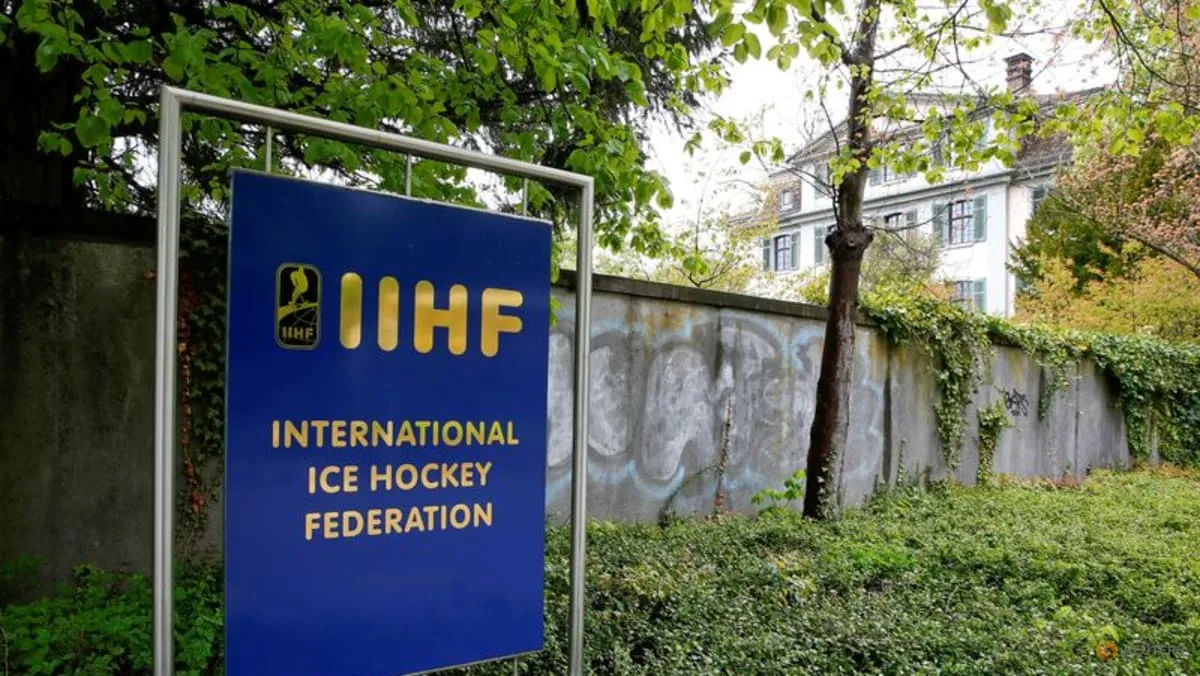
LAUSANNE – The International Ice Hockey Federation (IIHF) has officially confirmed that the Russian national team will not participate in the World Junior Ice Hockey Championship scheduled for 2026. This decision follows stringent restrictions imposed by the Canadian government, a crucial host nation for this prestigious sporting event. The announcement comes after extensive speculation and debate regarding Russia's status in international ice hockey.
The IIHF stated that this move is a direct consequence of immigration and travel policies implemented by Canadian authorities. These restrictions effectively prevent Russian athletes and delegates from entering Canadian territory, making their participation in the tournament impossible. The decision marks a continuation of Russia's sporting isolation amidst ongoing global geopolitical tensions.
Russia's absence, from one of the traditional powerhouses in junior ice hockey, is expected to significantly alter the competition's dynamics. The Russian junior team is renowned for producing world-class talents and often stands as a strong medal contender. The World Junior Ice Hockey Championship serves as a vital platform for young players to develop towards professional careers.
The imposition of these sanctions is not a novel occurrence in international sports. In recent years, various global sports federations have implemented similar restrictions against Russian athletes in response to prevailing political situations. The IIHF's action reaffirms the organization's commitment to comply with the regulations and policies of host nations.
Canada, a nation with a deep-rooted ice hockey tradition and a frequent host of major tournaments, retains the sovereign right to determine who may enter its territory. These restrictions reflect the Canadian government's firm stance on Russia's involvement in various international arenas, including sports.
This decision will undoubtedly cause disappointment among ice hockey fans, both in Russia and worldwide, who had hoped to witness top-tier competition among nations. For young Russian athletes, it means losing a valuable opportunity to showcase their skills and measure their abilities on the international stage.
The Russian Ice Hockey Federation has yet to issue a detailed official statement but is expected to voice protests against a decision they perceive as the politicization of sport. They have repeatedly asserted that athletes should not be victims of political decisions.
The debate over whether sports should be separated from politics continues to be a heated topic. The IIHF, like many other sports bodies, strives to navigate these complexities while ensuring the integrity and continuity of their competitions.
Russia's absence could also affect the commercial value and broadcast appeal of the tournament, given the massive Russian ice hockey fanbase. Nevertheless, the IIHF emphasizes that the primary priority is to ensure safety and adherence to international law and host nation regulations.
Despite this, the tournament will proceed as planned, with other teams preparing to contend for the championship title. Focus now shifts to the participating teams and how they will seize the opportunity on the global stage without the presence of one of the strongest competitors.
Editorial Insight: The IIHF's decision underscores the increasingly tight correlation between geopolitical dynamics and the realm of international sports. Russia's absence from a tournament as significant as the 2026 World Junior Ice Hockey Championship is not merely a competitive loss, but also a symbol of the broadening scope of global sanctions. Its long-term impacts could include further polarization within the sports community, as well as the potential emergence of parallel competitions detached from mainstream international federations. This sets a strong precedent for other federations to re-evaluate policies regarding the participation of athletes from sanctioned nations.