 Demian Sahputra
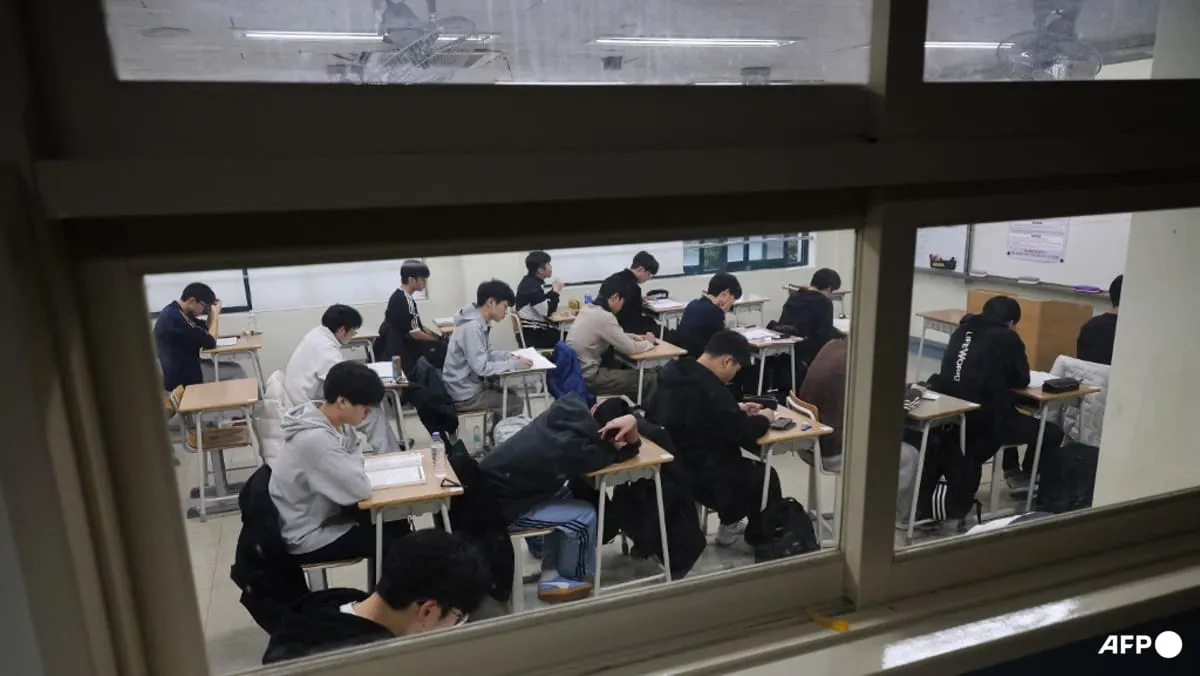
SEOUL – The South Korean police have launched a serious investigation into a student previously crowned as the top scorer in the 2026 national college entrance examination (Suneung). This scandal erupted after the student, whose identity remains confidential, surprisingly admitted to using artificial intelligence (AI) to answer crucial questions. This sensational confession immediately shook the foundations of the country's education system's integrity, sparking a fierce debate about the ethics of using advanced technology in academia.
The investigation began after the student's startling admission to local education authorities. According to police sources, the student allegedly leveraged a sophisticated generative language model to obtain accurate answers during the highly competitive examination. The cheating method is believed to have involved hidden devices that allowed two-way communication with the AI without detection by traditional invigilators.
Colonel Park Ji-hoon, a spokesperson for the South Korean National Police, stated, We take every indication of cheating seriously, especially those involving new technologies like AI. The integrity of the Suneung system is our top priority. A thorough investigation is underway to uncover the modus operandi and any potential involvement of other parties.
This case highlights the vulnerability of conventional examination systems to disruptive technological innovations. A number of education and technology experts have long voiced concerns about the potential misuse of AI in academic contexts, particularly in high-stakes examinations that determine students' futures.
Professor Lee Min-woo, an ethics of technology expert from Seoul National University, commented on the incident. This incident is a stern warning to educational institutions worldwide. As AI advances, we must urgently develop more sophisticated security protocols and evaluation methods that are more resistant to technology-based cheating. The ethical boundaries of AI use are now crucial, as also advocated in global discussions regarding the ethics of autonomous weapons.
The South Korean government and Ministry of Education immediately held an emergency meeting to discuss mitigation steps. Among the options being considered are updating exam regulations, including the introduction of AI-based proctoring technology capable of detecting non-conventional cheating patterns, and strict prohibitions on certain electronic devices in examination rooms.
The South Korean public reacted with a mixture of anger and disappointment. Many parents expressed their concerns about their children's future and fairness in academic competition. On the other hand, some members of the public also urged that this case be a momentum for reforming an education system deemed to burden students with excessive exam pressure.
The National Education Committee, an independent advisory body, called for the formation of a cross-sector task force involving technology experts, educators, and law enforcement. The goal is to formulate a comprehensive strategy to maintain the integrity of national examinations in the digital age, while fostering digital ethical awareness among students from an early age.
If found guilty, the student could face severe penalties, ranging from cancellation of exam results to a ban from taking future examinations. This case could also trigger civil lawsuits from other students who feel disadvantaged by the cheating.
This scandal is not just an individual cheating case, but a reflection of the global challenges facing education systems amid the AI revolution. It forces us to reconsider the definition of academic honesty and how technology, which should be a tool for enlightenment, can be misused for destructive purposes.
Editorial Insight: The 2026 Suneung AI cheating case underscores the urgency for educational institutions to adapt to the wave of technological innovation. Without an ethical framework and adaptive monitoring systems, global academic integrity will remain threatened. This is a call for policymakers to focus not only on academic achievement but also on building strong character and digital ethics in future generations. Failure to adapt could erode public trust and undermine the credibility of educational institutions themselves.