 Chandra Wijayanto
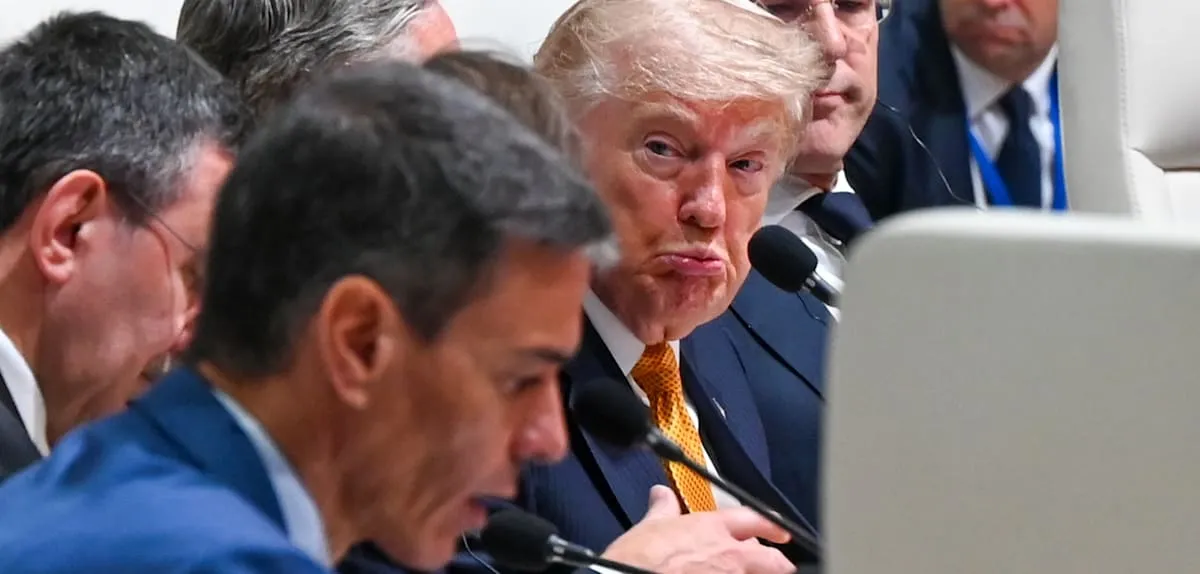
BRUSSELS – Spain's "special path" policy regarding NATO defense commitments under Prime Minister Pedro Sánchez has generated a significant wave of diplomatic tension at the latest NATO Summit in 2026. Spain's controversial reluctance to match collective deterrence efforts against Russia has drawn open condemnation from former United States President, Donald Trump, and raised serious questions among European allies.
Sharp criticism was leveled by Trump at a NATO Summit press conference, where he strongly denounced the Spanish government for allocating insufficient funds to defense. "Spain must pay its fair share," Trump asserted, "They cannot continuously rely on other nations to protect them, especially as the Russian threat becomes more evident." This statement, though anticipated given Trump's track record, nevertheless shook the dynamics of the summit.
However, the spotlight was not solely from Washington. Behind the scenes, European allies also began to question how they should engage with a nation consistently refusing to align with the strategy of deterrence against Russian aggression. This issue became a boiling point in internal discussions, threatening the cohesion of this vital alliance.
Spain, through Sánchez, has argued that its contributions to European security extend beyond mere military budget figures. They highlight their strategic role in securing the Strait of Gibraltar and participation in peacekeeping missions. Nevertheless, this argumentation has not sufficiently convinced many NATO members, particularly those directly bordering the Russian threat or those who have drastically increased their defense spending.
The commitment of NATO members to allocate a minimum of 2% of their GDP to defense has long been a standard. Many countries, including Germany as seen in its acquisition of Tomahawk missiles, have striven to meet or even exceed this target. Spain's policy is now perceived as an anomaly that could weaken the alliance's message of unity and readiness. Germany Officially Acquires US Tomahawk Missiles, Strengthens European Strategic Defense.
Italian Prime Minister Giorgia Meloni, for instance, has also actively urged new priorities for NATO's sustained commitments in 2026, emphasizing the importance of fair burden-sharing. Spain's situation contrasts with these collective efforts, creating potential for division. Meloni Shakes NATO: Italy Urges New Priorities for 2026 Sustained Commitments.
The threat from Russia is not imaginary. Amidst reports of an alleged general mobilization prepared by Russian President Vladimir Putin and Ukrainian attacks that will not stop the war, the urgency of strong deterrence becomes even more crucial. Putin Allegedly Prepares General Mobilization: Ukraine Faces Two-Month Deadline and Kremlin Infuriated: Ukrainian Attacks on Russia Won't Halt War. Spain's reluctance to contribute maximally is seen as potentially sending the wrong signal to Moscow.
Analysis from international political observers suggests that Spain's position could impact its bilateral relations with several NATO member states. Alliance solidarity is not merely about statements, but also about concrete actions and shared responsibilities.
The crucial question now is how NATO will respond to this situation. Will diplomatic pressure intensify, or will there be efforts to find a compromise that allows Spain to continue contributing without entirely altering its policy? The answer will shape the future direction of this transatlantic alliance.
NATO's credibility as a deterrent force is tested by its internal unity. If differences of opinion regarding defense burden-sharing cannot be resolved, it could potentially weaken the alliance's collective standing on the global stage, especially as the world faces increasing geopolitical uncertainty in 2026.