 Demian Sahputra
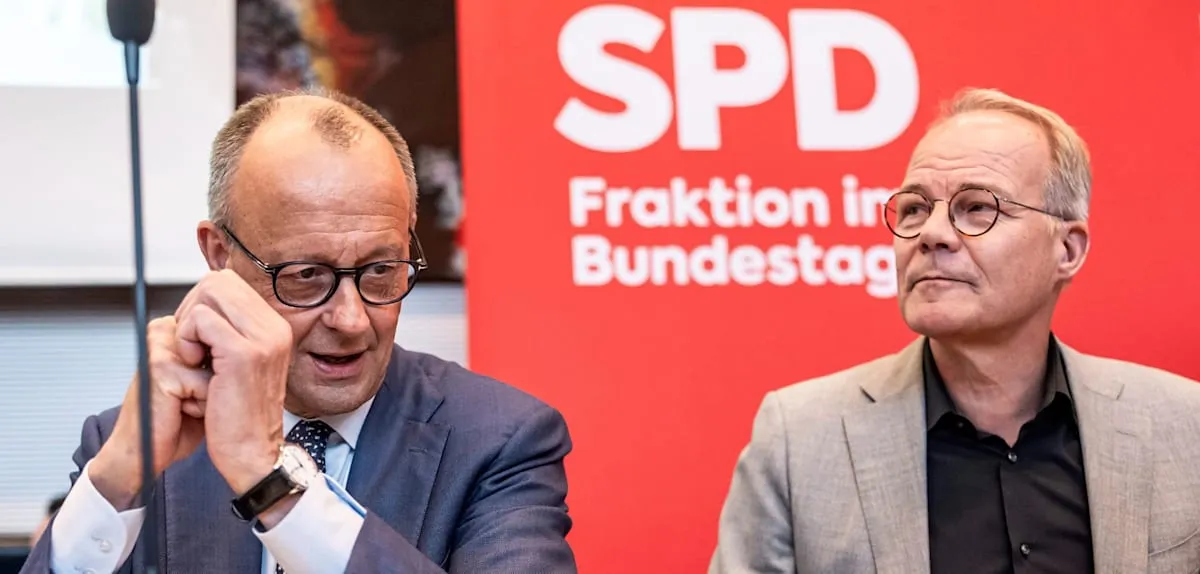
BERLIN – The leader of the Social Democratic Party (SPD) parliamentary group in Germany, Matthias Miersch, has openly proposed organizing a Pension Summit to achieve a cross-party consensus on the contentious national pension system. Miersch emphasized the urgency of political collaboration amidst intense debate over the sustainability of Germany's old-age security scheme.
This proposal emerges amid political tensions shadowing the governing coalition. However, Miersch asserted that the pension issue, though crucial, will not become a stumbling block threatening the current coalition's stability. This statement aims to calm speculation regarding potential rifts within the government.
On the same occasion, Miersch issued a stern warning to the Christian Democratic Union (CDU). He explicitly urged the CDU not to forge cooperation with the Alternative for Germany (AfD party), especially in the state of Sachsen-Anhalt. This warning is not the first time the SPD has voiced such concerns.
The SPD's apprehension regarding potential CDU-AfD collaboration stems from the AfD's ideology and political platform, which is often considered extreme and populist. Modern German political history demonstrates a strong rejection of far-right parties deemed a threat to liberal democratic values.
Miersch highlighted that forming an alliance with the AfD would set a dangerous precedent and could erode public trust in democratic parties. Cooperation with the AfD is a red line that must not be crossed, Miersch stated, illustrating his very clear position.
The pension issue has long been a political battleground in Germany, with various reform proposals put forward by different parties. Consensus on the future of the pension system is vital given Germany's aging demographic and the increasing financial pressure on pension funds.
The Pension Summit proposed by Miersch aims to bring together representatives from across the political spectrum, including the CDU and opposition parties, to formulate stable and sustainable long-term solutions. This approach is expected to reduce polarization and yield widely accepted policies.
Miersch's warning to the CDU regarding the AfD also reflects regional political dynamics. Sachsen-Anhalt, like several other eastern German states, has become a stronghold for the AfD, posing strategic dilemmas for established parties attempting to form regional governments.
The SPD has consistently positioned itself as a strong opponent of the AfD, calling for no legitimacy to be granted to the party through political cooperation. This stance aligns with many other mainstream parties in Germany.
The discussion surrounding pensions and the warning against the AfD are two central issues shaping the German political landscape in 2026. How parties respond to the proposed pension summit and the extent to which Miersch's warning is heeded by the CDU will determine the direction of future policies and coalitions.
Internal party dynamics are also often under scrutiny, as was previously seen when Putin's visit sparked a political storm and calls for Schroder's dismissal from the SPD.
The debate on pensions is not merely about numbers, but also about intergenerational justice and social solidarity. Comprehensive solutions require foresight and the political will to compromise for the overall national interest.
Editorial Insight: The SPD's Pension Summit proposal signals a desire to democratize solutions to this crucial issue, while potentially serving as a platform to strengthen their position as mediators. On the other hand, Miersch's stern warning to the CDU regarding the AfD is a dual political strategy: to uphold democratic integrity and to pressure political rivals against legitimizing a party perceived as extreme. The impact of this warning will be evident in future coalition dynamics and upcoming regional elections in Germany.