 Debby Wijaya
PARIS – The global scientific and space exploration community is currently striving to establish a universal time standard for the Moon, a fundamental initiative that will reshape the dynamics of future missions. This crucial discussion is a main agenda item at the international conference on weights and measures, marking a new chapter in space coordination efforts.
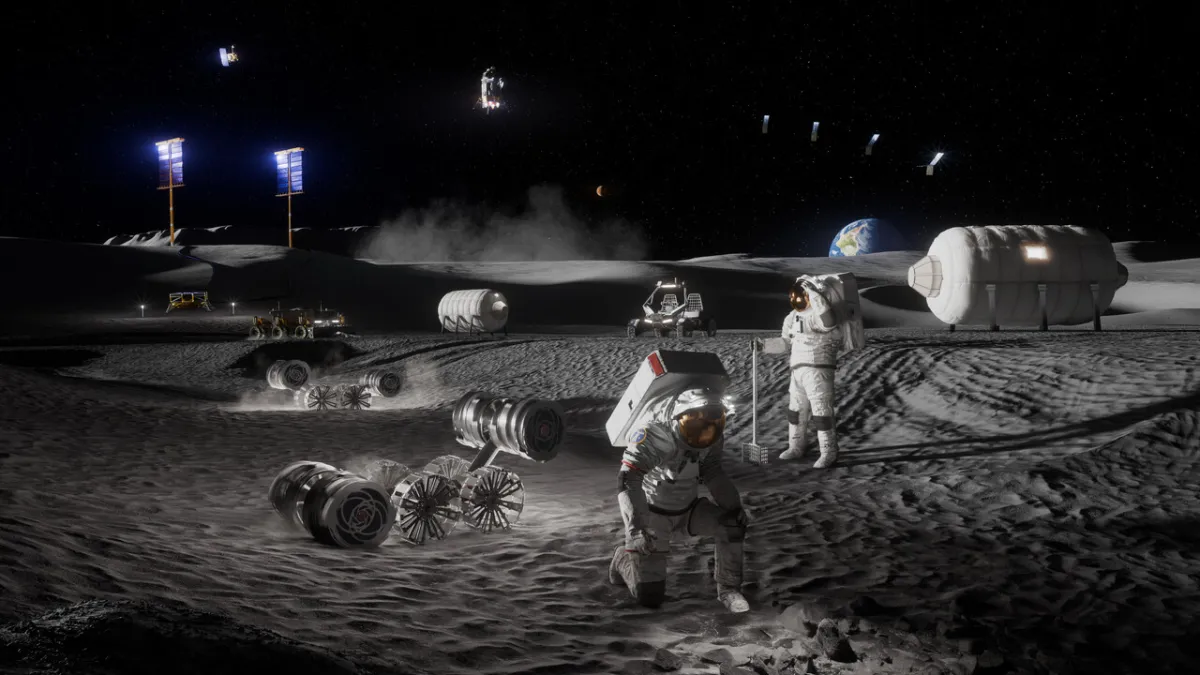
The establishment of this time standard is increasingly urgent amidst growing interest and investment in lunar exploration. Various nations and private entities are competing to launch landing missions, construct research stations, and even pursue potential permanent colonization on Earths natural satellite.
Without a uniform time system, coordination between missions from different countries will become exceedingly complex. The varying speed of time due to the Moon's lower gravity compared to Earth creates significant precision challenges.
Fabio Calonico, a leading researcher from the Italian National Metrology Institute (INRIM), expressed optimism regarding this progress. The first vote to determine the framework for the lunar time standard will take place soon, said Calonico in his statement, indicating a significant momentum in the decision-making process.
Scientists explain that time on the Moon runs slightly faster than on Earth, with a difference of approximately 56 microseconds per day. The accumulation of this difference can lead to critical errors in navigation, communication, and the synchronization of complex scientific experiments.
Having a unified time standard will enable astronauts, robotic rovers, and research stations to operate with maximum precision. This is essential for tasks such as scheduling launches, spacecraft docking, and managing energy resources on the Moon.
Although the United States has proposed an approach based on a modified Coordinated Universal Time (UTC), a global consensus is absolutely necessary. This conference serves as a vital forum for achieving technical and political agreement among member nations.
This initiative is not solely about technical accuracy; it also concerns creating a more structured framework for space governance. A time standard will become a key pillar for future space law, including rights to resources and time zones on the Moon.
The long-term potential of a lunar time standard is paving the way for the development of more permanent infrastructure. With clearly defined time, the establishment of lunar cities or large-scale research bases will be easier to implement.
Delegates from various countries, including representatives from space agencies like NASA and ESA, continue intensive discussions. Every decision made at this conference will have broad implications for the direction of global space exploration in 2026 and beyond.
Editorial Insight: The effort to standardize time on the Moon is a manifestation of humanitys collective ambition to transcend Earths boundaries. This decision is not merely technical but geopolitical, forming the basis for collaboration or competition in the space arena. Successfully reaching a consensus will set an important precedent for future space governance, ensuring exploration proceeds in an orderly and efficient manner, rather than being chaotic due to differing timekeeping across missions.