 Robert Andrison

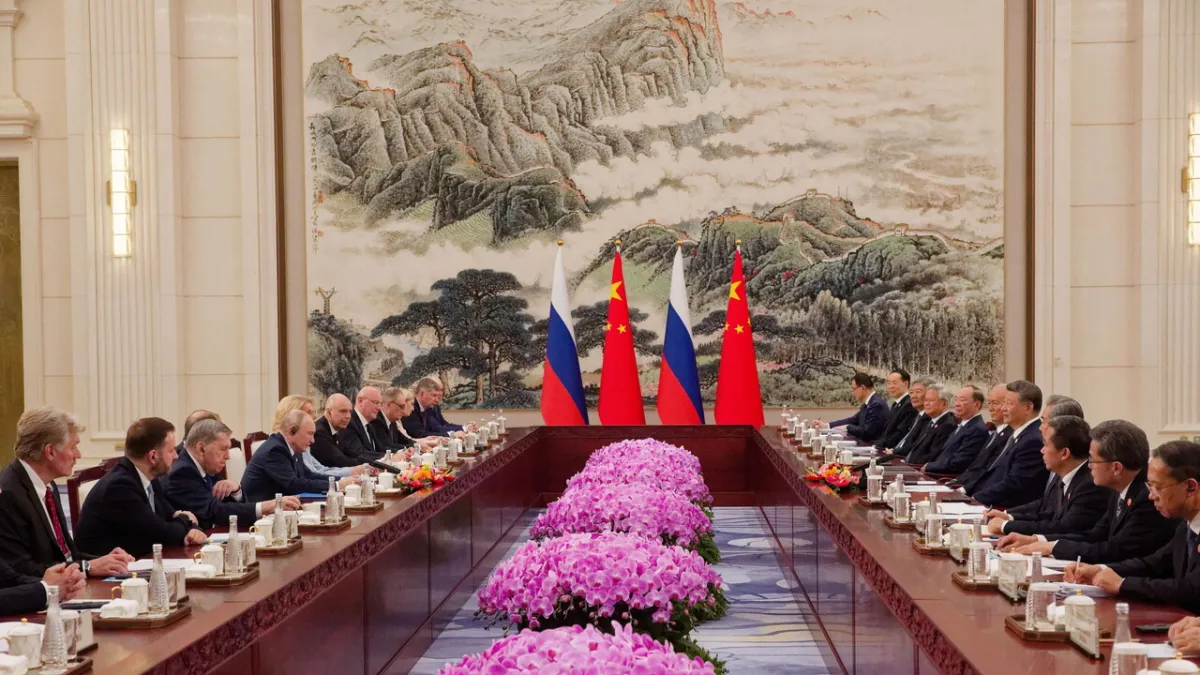
WASHINGTON DC – Japan's Minister of Economic and Fiscal Policy, Sanae Takaichi, recently held a significant meeting with US President Donald Trump in Washington DC. This strategic discussion took place ahead of the upcoming Summit between Chinese President Xi Jinping and Russian President Vladimir Putin, which is projected to further solidify an Eurasian power axis. The Takaichi-Trump meeting is seen as a proactive step by Japan and the United States to align their foreign policies and strengthen their alliance amid an increasingly complex geopolitical landscape, particularly in confronting potential threats from the Eastern bloc.
The timing of this meeting is extremely critical given the escalation of global tensions. The upcoming Xi-Putin summit signifies a consolidation of power that could challenge the existing global order, thus demanding a coordinated response from liberal democracies.
Tokyo is increasingly concerned about China's aggressive expansion in the East China Sea and South China Sea, as well as Russia's increased military activities in the Pacific region. Regional stability, crucial for maritime security and vital trade routes, is now a top priority for Japan's foreign policy.
President Trump, during his term, has consistently emphasized the Indo-Pacific's importance to the strategic interests of the United States. Strengthening alliances with key partners like Japan is an essential pillar of this policy, aimed at curbing the influence of rival powers.
The main agenda items are expected to include maritime security, vulnerable semiconductor supply chains, and the development of defense technology. Cooperation in cybersecurity and intelligence sharing are also focal points to bolster joint response capabilities.
Sanae Takaichi herself is known as a conservative Japanese politician with firm views on national security and international relations. Her selection to meet President Trump underscores the urgency and gravity of these issues for the Japanese government.
Trump's foreign policy maneuvers are characterized as pragmatic and focused on US national interests. This meeting highlights his willingness to strengthen key alliances in the face of escalating great power rivalry.
The implications of the forthcoming summit between Xi Jinping and Vladimir Putin are expected to involve significant strengthening of military, economic, and energy cooperation. This forms an axis that could potentially balance or even fundamentally challenge Western hegemony.
Discussions between Takaichi and Trump also touched upon efforts to maintain stability in the Asia-Pacific. Both seek ways to uphold freedom of navigation and counter aggressive territorial claims that could disrupt regional peace.
The alliance between the United States and Japan has been the cornerstone of security in Asia for decades. This meeting reaffirms that bilateral commitment in an era of new challenges that demand stronger solidarity.
Beyond security issues, both nations also discussed strengthening economic cooperation. This includes diversifying critical supply chains and technological innovations vital for their respective economic growth and national security.
Increased joint military exercises and intelligence sharing form an integral part of the collective defense strategy of both countries. The objective is to ensure a swift and coordinated response to any threat in the Indo-Pacific region.
The outcome of this high-level meeting is expected to send a strong signal to the international community that the United States and Japan are prepared to defend democratic values and a rules-based order in the Indo-Pacific, countering any destabilizing efforts.
Editorial Insight: The Takaichi-Trump meeting reflects the urgency of a strategic response to the consolidation of the Russia-China axis. The strengthening US-Japan alliance now serves as a frontline in maintaining geopolitical balance. Its long-term impact will be seen in the regional and global security architecture, potentially shaping new power blocs.