 Angela Stefani
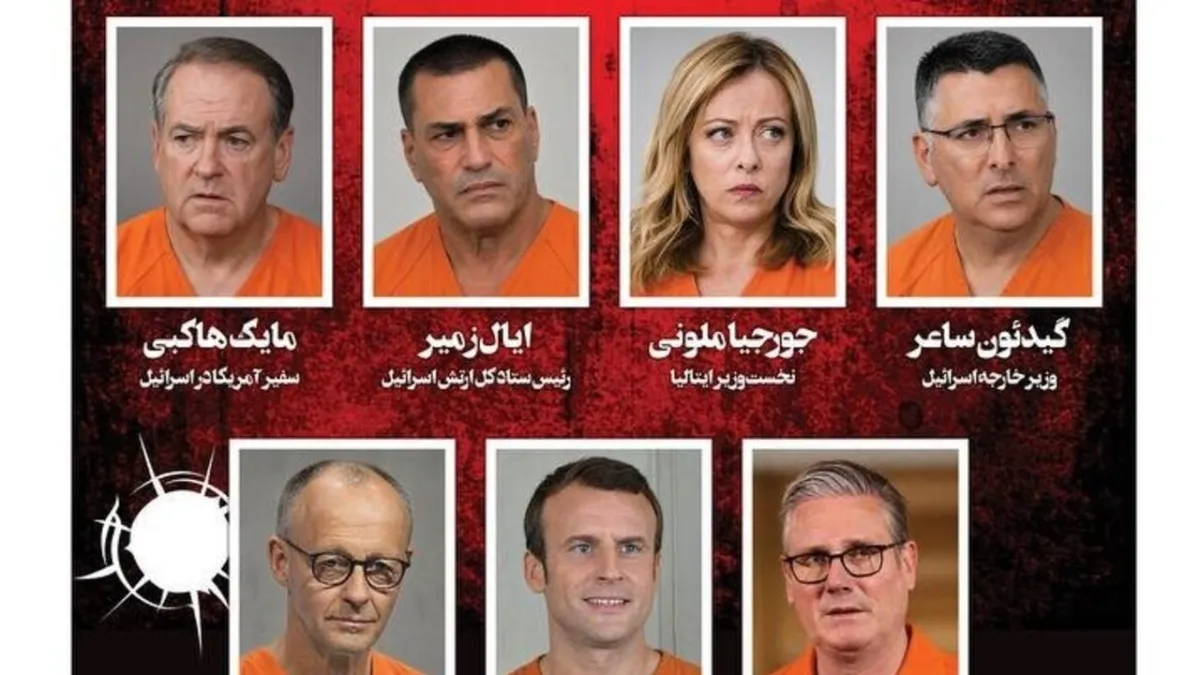
TEHRAN — Iranian mainstream media, Quotidiano Iran, in 2026 surprisingly included Italian Prime Minister Giorgia Meloni on a blacklist of individuals deemed responsible for the death of Iran's Supreme Leader, Ayatollah Ali Khamenei. The publication was accompanied by a doctored photo of Meloni wearing an orange prisoner's uniform, alongside former US President Donald Trump and Israeli Prime Minister Benjamin Netanyahu, sparking diplomatic tensions and intense speculation in global political circles. This incident marks a significant escalation of rhetoric from Tehran against Western leaders following the passing of Ayatollah Khamenei.
The report published by Quotidiano Iran provided no concrete evidence to support these serious accusations. Instead, the article emphasized Iran's common narrative regarding Western involvement in its internal affairs. The placement of Meloni's photo in a prisoner's attire is a symbolic attempt to portray the Prime Minister as a war criminal or an individual who must be held accountable under Iran's version of international law.
Meloni's inclusion on the blacklist alongside controversial figures such as Trump and Netanyahu indicates that Tehran perceives her as part of an axis considered hostile to Iran. Both Trump and Netanyahu are indeed known for their tough policies against the Islamic Republic of Iran during their respective tenures, adding a dimension of animosity to the accusation.
The death of Ayatollah Ali Khamenei, who served as Iran's central spiritual and political leader for decades, has left a significant void. The post-supreme leader power transition often triggers instability and harsh rhetoric against external enemies as an attempt at internal consolidation.
Geopolitical analysis suggests that such accusations often serve as a propaganda tool to bolster domestic support and divert attention from internal challenges Iran may be facing. By directly targeting Western leaders, Tehran seeks to frame global issues within a narrative of confrontation between Iran and "imperialist" Western powers.
The Italian government has not yet issued an official statement in response to these accusations from the Iranian media. However, the international community is likely to view them as baseless provocations. Diplomatic relations between Italy and Iran, which have previously experienced fluctuations, are expected to become even more strained as a result of this incident.
International relations experts highlight that this incident has the potential to undermine diplomatic efforts established to maintain stability in the Middle East. Targeting a head of government of an EU nation with such accusations could trigger a backlash from the European bloc as a whole, complicating dialogue on crucial issues such as the nuclear deal or regional peace.
The symbolism of the orange prisoner's uniform, often associated with detainees in facilities like Guantanamo Bay, is very potent. The use of this imagery aims to demean and delegitimize Western leaders in the eyes of the Iranian public and their sympathizers worldwide.
The role of state-affiliated media, such as Quotidiano Iran, in shaping public opinion is highly significant in countries with strict information control. Such publications often reflect official views or at least those approved by the government, making them more than just ordinary news.
Unsubstantiated accusations can exacerbate global misinformation and polarization. In the digital information era of 2026, the spread of inaccurate news, especially from state-affiliated sources, poses serious challenges to efforts to maintain peace and understanding between nations.
This situation also raises questions about the limits of press freedom and media responsibility in the context of international relations. When media is used as a tool to spread politically charged accusations without verification, the credibility and fundamental function of journalism is threatened.
The incident of Meloni's blacklisting by Iran through its media serves as a reminder of the complexity and fragility of global relations. It demands a judicious response from the international community to prevent further escalation of tensions and to uphold the principles of constructive diplomatic communication.
In conclusion, the world awaits whether Italy or the European Union will take diplomatic steps in response to this provocation. Most likely, Western nations will condemn such accusations as irresponsible rhetoric, reiterating the importance of fact-based dialogue rather than political agitation.