 Angel Doris
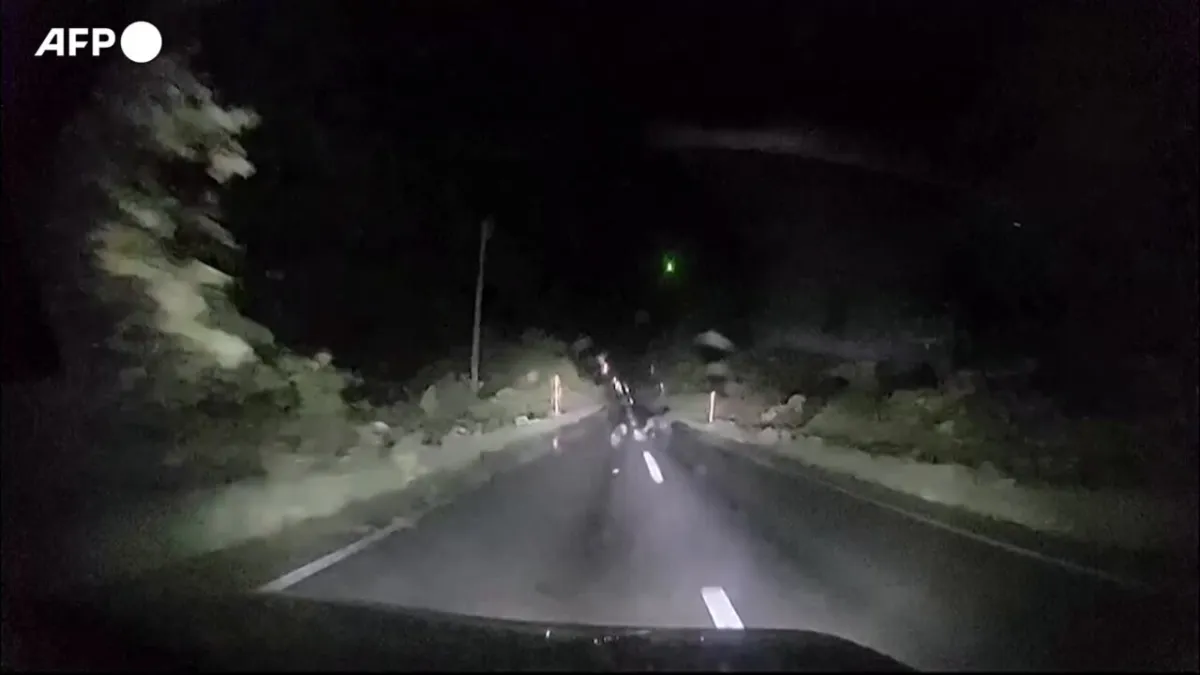
HOKKAIDO – A startling incident recently alarmed residents of Hokkaido, Japan, when dashcam footage dramatically captured a wild bear charging a moving car. This rare event has sparked fresh concerns about human-wildlife interactions in a region known for its robust brown bear population.
The widely circulated video on social media platforms shows a vehicle calmly traversing a rural road in Hokkaido. Suddenly, a large brown bear emerges from the roadside bushes and immediately collides with the front of the car. A severe jolt was felt and heard in the recording, indicating a significant impact force.
While details regarding the driver's identity and the car's condition after the attack remain scarce, this incident once again underscores the reality of coexisting with powerful wildlife in Hokkaido. Japan's northernmost island is indeed the natural habitat for the Ussuri brown bear (Ursus arctos lasiotus), the second largest bear species in the world.
Wildlife ecology expert from Tokyo University of Agriculture, Professor Kenji Tanaka, explained, Events like this often occur when bears feel threatened or startled by the presence of humans or vehicles approaching their territory too quickly. Certain seasons also increase the likelihood of interactions as bears forage for food or protect their cubs.
Local authorities, through the Hokkaido Prefectural Environment Bureau, promptly issued updated safety advisories for residents and tourists. They recommend essential mitigation measures to minimize the risk of bear attacks.
- Do not leave food scraps or garbage in open areas that could attract bears.
- Exercise caution when driving in rural areas, especially during dawn or dusk.
- If encountering a bear, remain calm and slowly back away without turning your back.
- Report any bear sightings to the authorities immediately.
The rising number of bear-human interaction cases in Japan in recent years, including in Hokkaido, has become a focal point. Climate change affecting food availability in bears' natural habitats and the expansion of human settlements are believed to be key driving factors behind this phenomenon. These conditions force wildlife to seek food closer to human activity.
The prefectural government actively conducts regular patrols in vulnerable areas and installs warning signs in strategic locations. Public education programs on how to coexist with bears are also continuously promoted, though the challenge of maintaining ecological balance remains substantial.
Similar incidents, though not always recorded by dashcam, have occurred repeatedly. In 2024, for instance, a hiker sustained minor injuries after encountering a bear in Shiretoko National Park, also in Hokkaido. This indicates that the problem is systemic and requires comprehensive handling.
The community of Hokkaido is urged to remain vigilant and comply with all safety guidelines issued by the government. Environmental awareness and respect for wildlife habitats are crucial keys to preventing tragic incidents in the future.
Editorial Insight: The bear attack incident in Hokkaido is not merely a sensational news story, but a serious indicator of increasingly acute ecological tension. The rise in human-wildlife interactions, particularly in regions with fragile ecosystems, demands more adaptive and sustainable policy responses. The Japanese government and the global community need to formulate more effective conservation strategies, not only to protect wildlife but also to ensure human safety amidst rapid environmental changes.