 Dorry Archiles
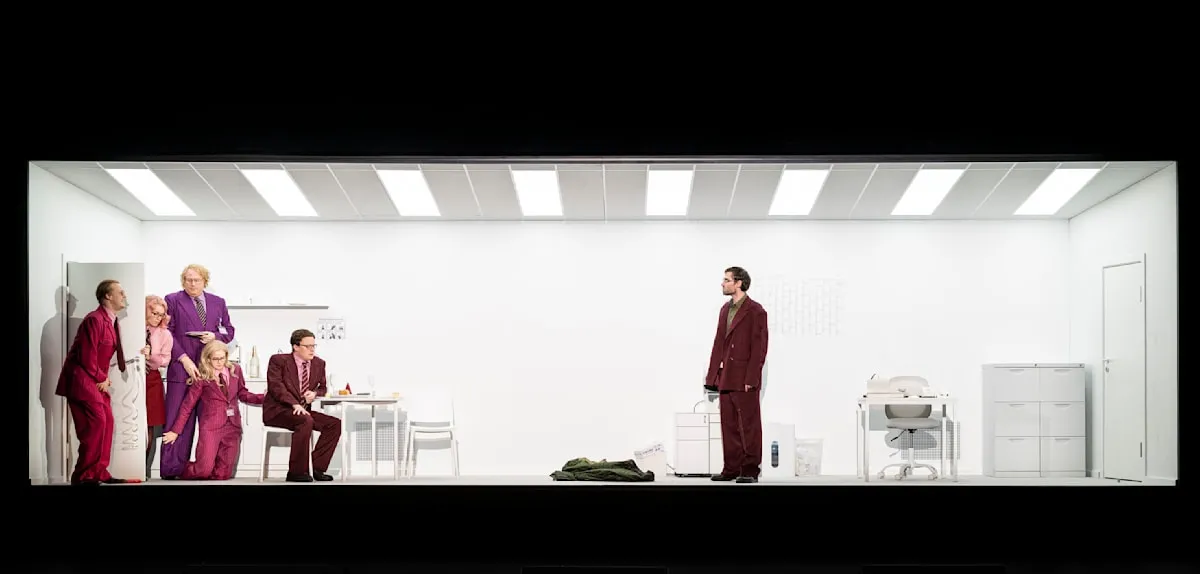
HAMBURG – The staging of Wolfgang Borchert's classic drama 'The Man Outside' (Draussen vor der Tur) at Thalia Theater, Hamburg, by director Ran Chai Bar-Zwi, reportedly failed to meet expectations this week. The director's interpretation of the soul-wrenching post-war drama was deemed unsuccessful in captivating both audiences and critics, leaving a bland impression amidst hopes for a profound exploration.
This ambitious project aimed to revive Borchert's iconic work, a play about a soldier returning from war only to find himself alienated from society. However, instead of delivering a sharp reflection, the production stumbled into a lackluster execution, according to several observers.
Criticism highlighted the lack of emotional depth and an inability to capture the essence of despair and confusion that lies at the heart of the original story. Borchert wrote 'The Man Outside' in 1947, immediately after World War II, making it the voice of a generation adrift and without meaning.
Ran Chai Bar-Zwi is known for his innovative artistic approach. Yet, in this context, his innovation allegedly obscured the original message rather than strengthening it. Several visual and audio elements employed felt excessive, distracting the audience from crucial dialogues.
A theater critic from a local newspaper, Anja Schmidt, stated, 'Bar-Zwi's plan seemed to trip over its own ambition. He tried too hard to be modern, forgetting that Borchert's power lies in simplicity and universal sorrow.'
This production is part of Thalia Theater's 2026 season, which previously garnered praise for its courageous presentation of contemporary works. This failure, therefore, comes as a surprising anomaly.
The drama tells the story of Beckmann, a German soldier returning from Soviet captivity who must confront harsh realities in his homeland. He struggles to find his place in a world that seemingly no longer recognizes him, a narrative highly relevant to post-war trauma.
Nevertheless, not all aspects of the production were entirely negative. The minimalist set design and dramatic lighting received appreciation for their contribution to creating a bleak atmosphere. However, these elements could not fully mask the interpretative void.
The playwright Borchert himself was known as a tragic figure, dying at a young age shortly after completing this drama. His work has become a crucial foundation in post-war German literature, continuously staged and studied worldwide.
Vigorous discussions have erupted within Hamburg's theater community regarding the boundaries of artistic interpretation. How far can a director go in reinterpreting a classic work without losing its original essence? This remains a central question. This failure might even spark discussions among filmmakers, reminding them of the importance of classic works' legacies, as was touched upon in the news of the passing of behind-the-scenes maestro, Massimo Martelli, some time ago.
Editorial Insight: This incident at Thalia Theater highlights the timeless challenge of adapting classic works. A director's overly personal vision risks alienating the original essence, especially if the work carries strong historical and emotional resonance like 'The Man Outside'. This failure could spark an important debate about the balance between innovation and respect for literary heritage, a crucial discussion for the future of performing arts.