 Chris Robert
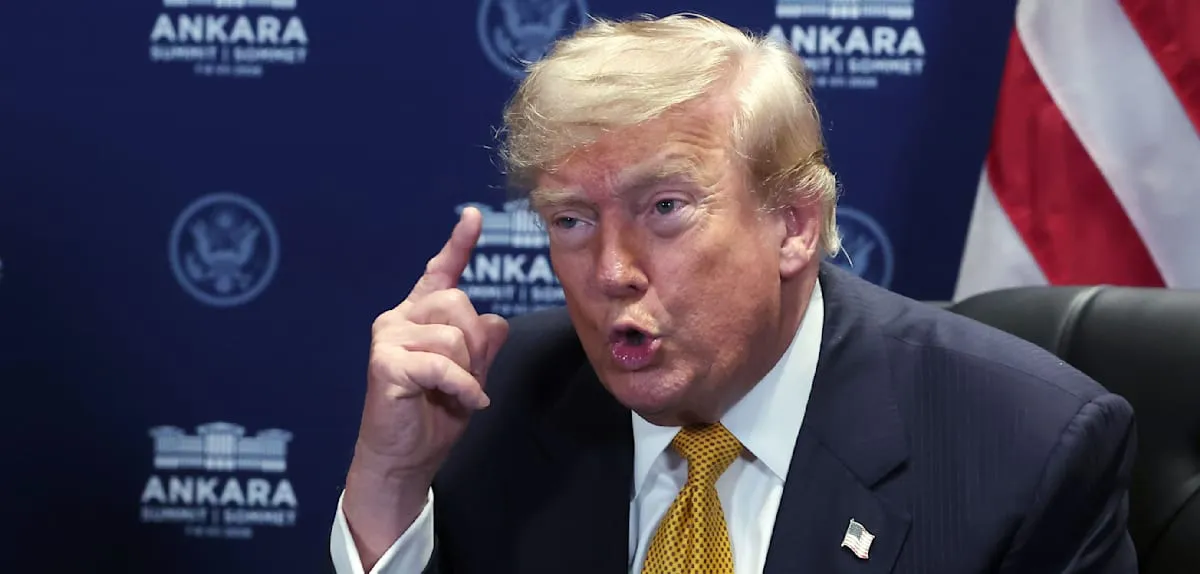
Ankara, Turkey — U.S. President Donald Trump, in 2026, surprisingly announced a complete halt to all trade activities with Spain. This drastic decision was delivered amidst the hustle and bustle of the NATO Summit in Ankara, Turkey, triggering a wave of concern and uncertainty in diplomatic and global economic circles. President Trump explicitly labeled Spain a "terrible partner" within the North Atlantic Treaty Organization alliance, highlighting Washington's deep dissatisfaction with Madrid's contributions.
The sharp statement from the U.S. leader was made during a press conference that captured the attention of numerous international media outlets. Trump asserted that this step was taken following a comprehensive evaluation by Washington of Spain's role in NATO, which was deemed inconsistent with the expectations and burdens borne by other members. This rhetoric is not new from Trump, considering his history of criticizing NATO member states perceived as under-contributing financially or militarily.
This decision immediately raised serious questions about the future of bilateral relations between the United States and Spain. Spain, as one of the largest economies in the European Union and a strategic NATO member, now faces unprecedented economic and diplomatic pressure. Vital sectors such as agricultural exports, automotive, and manufacturing are potentially crippled by this trade embargo.
The threat of a complete trade halt could also create ripples across global markets. Investors have begun to speculate about the domino effect on European and transatlantic supply chains. Trump's boldness in taking such a unilateral policy reaffirms his pragmatic and national interest-oriented stance above all else, even if it means testing the boundaries of traditional alliances.
The Spanish government is expected to issue an official statement soon in response to Washington's provocative move. Madrid's response will be crucial in determining the direction of escalation or potential de-escalation of the escalating diplomatic conflict.
Although specific details regarding Spain's "terrible" partnership within NATO were not elaborated by Trump, international political observers suspect this relates to Spain's defense spending levels. As is known, the U.S. has long urged NATO members to meet the target allocation of 2% of GDP for defense. This aligns with Trump's previous criticisms of other NATO member states deemed to be contributing insufficiently.
The NATO Summit in Ankara, which was supposed to be a forum for consolidation and coordination of defense strategies, was instead marked by sharpening diplomatic tensions. This incident has the potential to damage the image of unity and solidarity within the alliance, which is crucial amidst an increasingly complex and unstable global geopolitical landscape. Other NATO member countries will likely observe this situation closely.
Foreign policy analysts predict that this move is not only intended to punish Spain but also to send a strong message to all NATO members. The message emphasizes that the United States will not hesitate to use its economic leverage to pressure allies to increase their defense commitments. This is a negotiating strategy frequently employed by the Trump administration.
In Madrid, the news was met with a mixture of anger and confusion. Business owners and exporters expressed deep concern over the sudden closure of their market prospects. Thousands of jobs depend on trade with the United States, and this decision could trigger significant domestic economic turmoil.
Trump's unilateral action is not without precedent. During his leadership, he has repeatedly used trade instruments as diplomatic and geopolitical negotiation tools. His "America First" policy has consistently been the cornerstone of his foreign policy, often challenging long-standing international norms and agreements.
Nevertheless, some argue that such pressure is sometimes necessary to drive internal reforms within an alliance. However, many also worry that this confrontational approach will weaken NATO's cohesion from within, benefiting external actors who wish to see the alliance fragmented.
Now, the ball is in the court of the Spanish government and other NATO leaders. How they react to this challenge will determine not only the fate of US-Spain relations but also the future direction of the transatlantic defense alliance in 2026. The world awaits a careful and measured diplomatic response to tackle this sudden crisis.