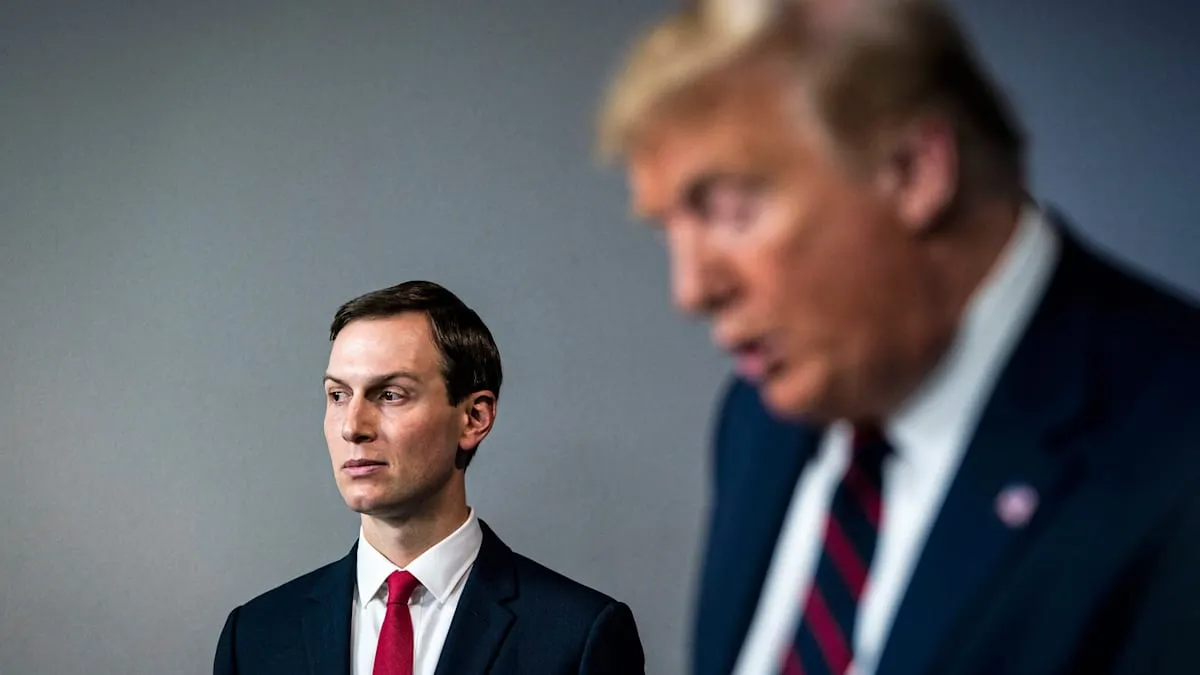
WASHINGTON – The foreign policy of the United States under President Donald Trump is once again under intense scrutiny. Professor Volker Depkat, a leading Americanist, forthrightly described Washington's diplomatic approach as erratic and conceptualess, operating in what he termed 'a very large gray zone.' This statement emerges amid global uncertainty, particularly concerning the crucial Ukraine conflict negotiations in 2026.
Depkat, through his in-depth analysis, highlighted a lack of consistency and clear long-term strategy in the current US geopolitical maneuvers. According to him, the direction of US foreign policy tends to be reactionary and unpredictable, causing confusion among both allies and adversaries. This phenomenon hinders Washington's ability to build trust and create sustainable solutions for complex international issues.
This situation, Depkat continued, creates an environment of diplomatic uncertainty. 'This is a very large gray zone in which Trump and his confidants operate,' Depkat stated, emphasizing the minimal transparency and vague definitions in every strategic step taken. The impact is directly felt on regional and global stability.
One critical point touched upon by Depkat is the negotiations regarding the Ukraine conflict. He stated that it remains unclear whether a truly robust and sustainable plan for peace exists. This skepticism is not without basis, considering that negotiations often stagnate due to sudden shifts in stance or a lack of clear commitment from various parties.
'Kushner reflects the erratic US policy well at present,' Depkat affirmed, referring to Jared Kushner, President Trump's son-in-law and one of his key advisors. This statement indicates that the influence of the President's closest circle contributes to shaping this unpredictable foreign policy characteristic.
Trump's leadership style, known for being disruptive, is once again evident during his second term in 2026. This approach, while considered by some as an attempt to break deadlocks, often sparks concerns about the stability and predictability of international relations. This dynamic is quite different from conventional diplomatic patterns.
This uncertainty also impacts the global perception of US leadership. Traditional American allies feel the need to seek alternative diplomatic channels or strengthen their own regional alliances to secure national interests amidst existing turmoil. This can be observed from various regional initiatives that have emerged recently.
Moreover, Depkat also highlighted how this non-linear communication and negotiation pattern can be exploited by other global actors. They might perceive openings to advance their own agendas amidst Washington's indecisiveness, thereby further complicating the global geopolitical landscape.
Depkat's critique is not the first of its kind. During President Trump's first term, many observers and diplomats also voiced similar concerns regarding the 'transactional' approach and lack of coherence in US foreign policy. The impact of President Trump's statements is often immediately felt in various sectors, including global financial markets.
Negotiations concerning the future of Ukraine, which have been a focus of global attention, require strong consensus and vision. If US policy continues to operate in this 'gray zone' without a transparent plan, resolving the conflict will become increasingly difficult, and its effects could extend to overall European stability.
Editorial Insight: Professor Depkat's statement underscores the significant challenges facing global diplomacy in the era of Donald Trump's leadership. The absence of a clear concept and operation in a gray zone has the potential to weaken the United States' position as a global stabilizer. Global stability requires predictive leadership and a strong commitment to diplomatic values, not merely reactive maneuvers. The ability to build international consensus will be key amidst an increasingly complex geopolitical dynamic.