 Chandra Wijayanto
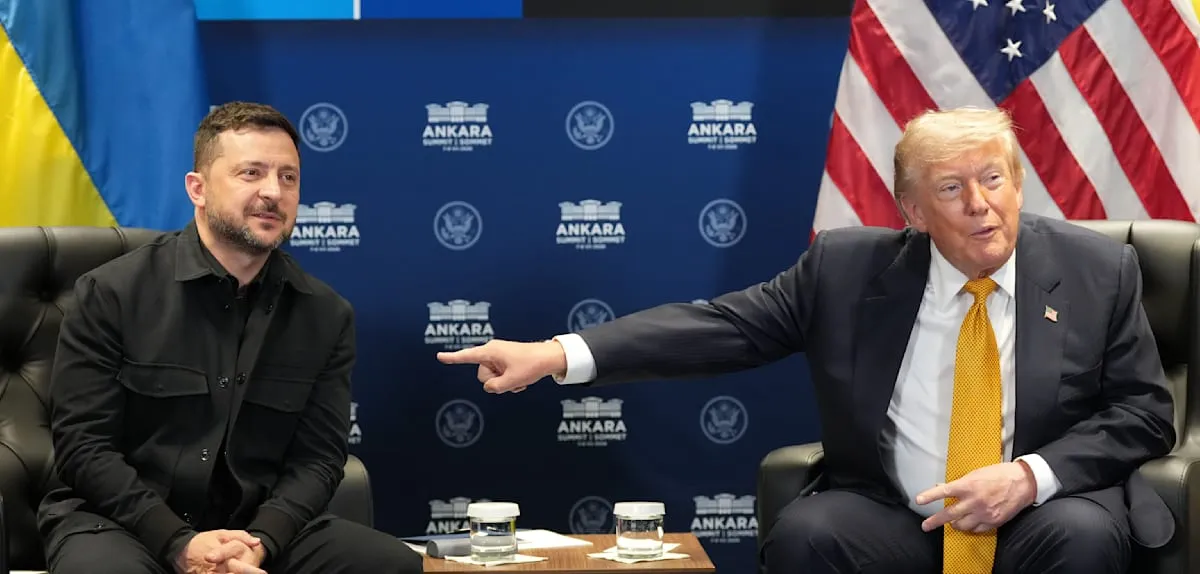
ANKARA — The 2026 NATO Summit in Turkey has become an arena for two crucial geopolitical issues: Donald Trump's reasserted ambition for Greenland's acquisition and Volodymyr Zelenskyy's intense plea for Ukraine's accession to the military alliance. Amidst the dynamics of sanctions negotiations with Turkey and prospects for peace in Ukraine, statements from both leaders have captured global attention.
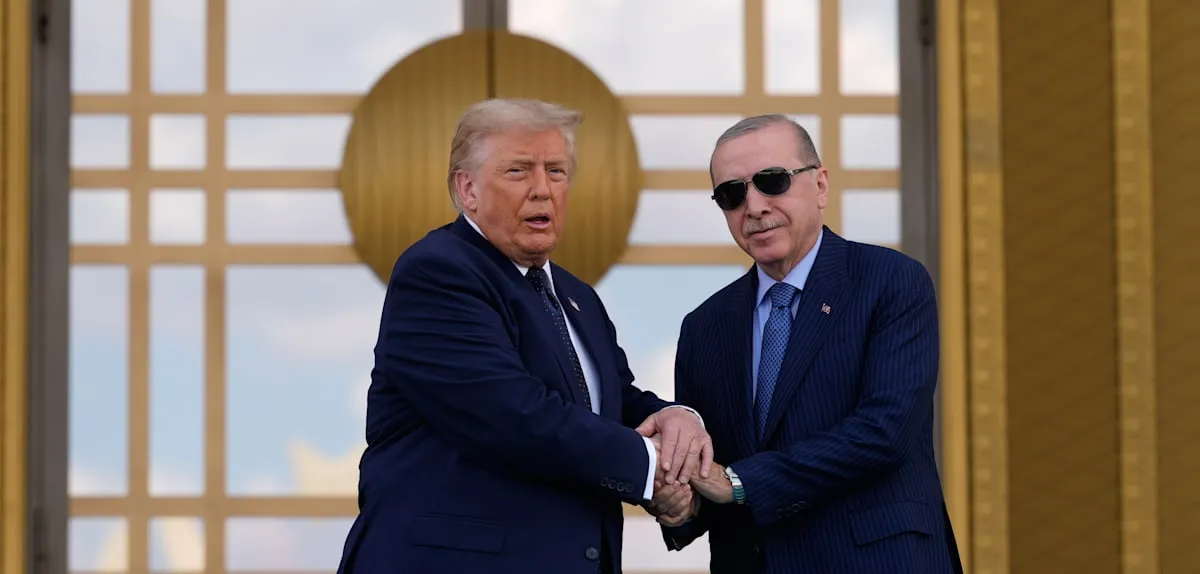
Trump, in his remarks, indicated his intention to lift sanctions imposed on Turkey, while also seeing positive signals regarding a willingness to negotiate in the Ukraine conflict. However, amidst the regional security agenda, he once again raised the discourse on Greenland, an issue that had previously sparked diplomatic tensions during his earlier term.
On the other hand, Ukrainian President Volodymyr Zelenskyy utilized this NATO Summit forum as a strategic platform to advocate for his country's full membership. Zelenskyy's appeal comes as the war in Ukraine enters a crucial phase, and Kyiv desperately needs collective security guarantees from NATO member states.
Trump's decision to revisit the issue of Greenland, an autonomous territory of Denmark, raises significant questions about the United States' foreign policy priorities. This acquisition discourse, which first emerged in 2019, has been repeatedly and firmly rejected by the Danish government.
Geopolitical analysts view Trump's maneuver as an effort to solidify U.S. influence in the Arctic, while also sending a message to global rivals. The claim over Greenland is not merely about natural resources but also about a strategically important position in the increasingly significant North Pole region.
Although the primary agenda of the summit is to strengthen NATO's solidarity and defense strategy, Trump's statement regarding Greenland somewhat diverted the focus. This demonstrates that bilateral issues and national ambitions can sometimes interrupt concentration on global crises.
Meanwhile, Ukraine's struggle to join NATO constitutes one of the core discussions. NATO membership for Ukraine is considered the strongest defense against Russian aggression, a hope that has long been voiced.
This summit in Turkey serves as a critical moment to evaluate NATO's position amidst an ever-volatile geopolitical landscape. With the issue of lifting Turkish sanctions and indications of peace negotiations in Ukraine, the alliance faces challenges in maintaining a balance of interests.
NATO's readiness to welcome Ukraine as a full member remains a subject of intense debate among its members. Some nations support rapid accession, while others are concerned about the implications of escalating conflict with Russia. These developments align with analyses of potential shifts in Russian strategy. Read more about Peskov Hints at Major Changes: Russia Reconsiders Ukraine War 2026.
The collective security guarantee offered by NATO's Article 5 is the primary allure for Ukraine. President Zelenskyy and his delegation tirelessly lobby member leaders, emphasizing the urgency of tangible support amidst ongoing threats.
In a broader context, Europe's involvement in NATO defense issues is also increasingly significant. More detailed information can be found in the article Europe Shakes Ankara: Billions of Dollars Flow to NATO Defense 2026.
The impact of Trump's statement on Greenland will likely be a subject of further discussion in international forums. Denmark, as Greenland's sovereign nation, is expected to reassert its sovereignty over the territory. This is not the first time Trump's maneuvers have raised questions, as seen in the article Meloni Silent on Trump's Maneuver, Will Transatlantic Relations Waive?.
Meanwhile, the potential for peace negotiations in Ukraine, hinted at by Trump, offers a glimmer of hope. However, the details and terms of such negotiations remain a mystery, especially given the complexity of the multi-party conflict.
Ukraine itself continues to show resilience, even with drone attacks reaching deep into enemy territory. Also read the report on Kyiv Bleeds! Zelensky's Drones Attack Russian Oil Refineries Far Away.
The 2026 NATO Summit in Turkey affirms that the alliance faces not only traditional threats but also the complex internal political dynamics of its members and intricate geopolitical ambitions. The U.S. role under Trump's leadership will continue to be a determinant of global policy direction. President Trump has also previously urged for peace dialogue, demonstrating consistency in his approach.