 Dodi Irawan
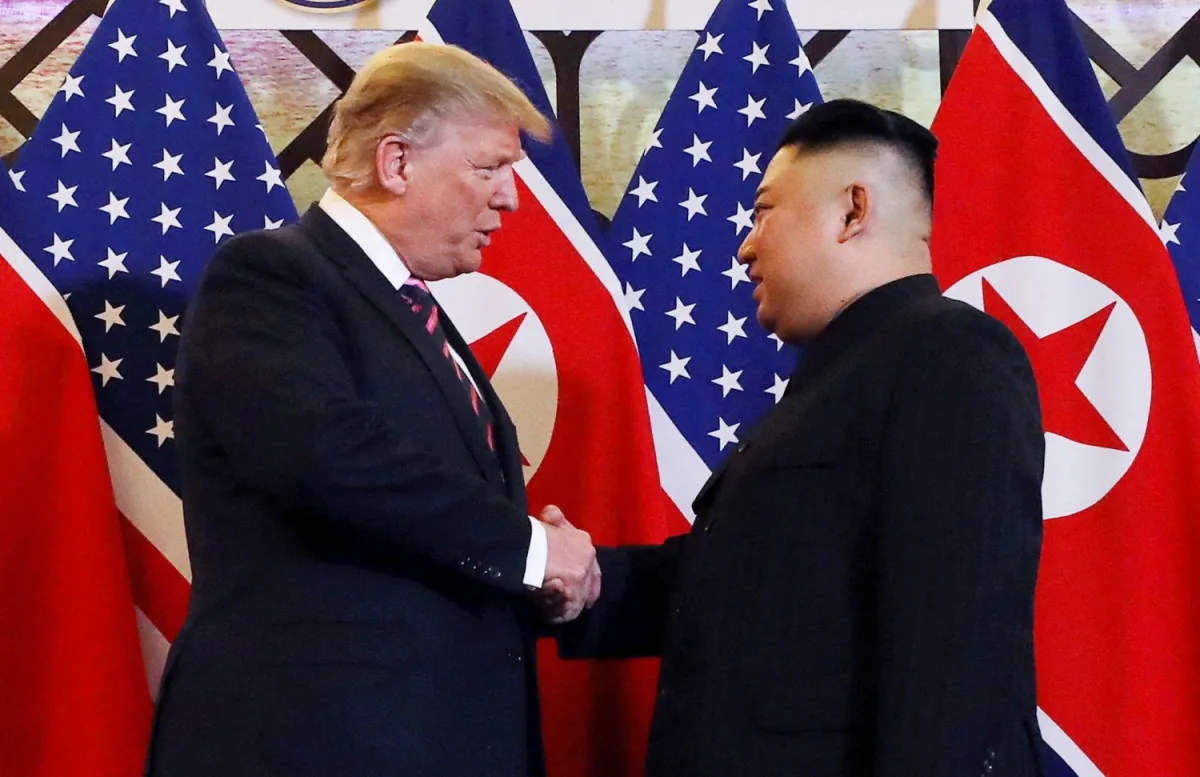
SAN FRANCISCO – Speculation regarding the top leadership at semiconductor giant Nvidia resurfaced after U.S. President Donald Trump floated the idea of Jensen Huang returning to lead the company. However, Trump's statement was swiftly countered by Nvidia's board of directors in 2026, which affirmed no evaluation for Huang's return was underway. Trump himself had also mentioned Apple CEO Tim Cook as an alternative.
The statement from Nvidia's board of directors, released through internal media earlier this week, explicitly dismissed any notion of leadership rotation amidst the company's surging financial performance. Nvidia, now a key pillar in the artificial intelligence industry, appears uninterested in altering its solid leadership structure under the current CEO.
Previously, President Trump, in an interview with national media, articulated his views on the ideal leader for a technology company of Nvidia's stature. Jensen Huang back leading Nvidia? That's not a bad idea, President Trump was quoted as saying in media reports. However, Trump also added that he had personally suggested Tim Cook, Apple's CEO, for the role.
Jensen Huang, one of Nvidia's co-founders, currently serves as the company's President and CEO. Under his leadership, Nvidia has successfully transformed from a graphics card manufacturer into a market leader in artificial intelligence chips, with a market capitalization reaching trillions of dollars. The idea of Huang returning to a more active role or a change in leadership structure, even if voiced by a figure like Trump, remains an unsubstantiated discourse by internal parties.
President Trump's statement caused a minor ripple in the stock market, though not significant. Investors and technology market analysts immediately highlighted the discrepancy between a head of state's wishes and a private company's internal policies. Leadership stability is considered crucial for rapidly growing technology companies like Nvidia.
The mention of Tim Cook, Apple's leader known for his calm demeanor and operational expertise, also garnered attention. Although Cook is deeply committed to Apple, his naming as a potential candidate by President Trump illustrates the significant attention the administration pays to the technology sector, especially companies dominating innovation like Nvidia.
Nvidia stands at the forefront of the global AI revolution, with its products forming the backbone for data centers, large language model development, and various other artificial intelligence applications. Stability in leadership is essential to maintain the momentum of innovation and market dominance amidst fierce competition.
Jensen Huang's role in advancing Nvidia is undeniable, with even Sam Altman, OpenAI's boss, once predicting the AI industry would thrive even without Jensen Huang. However, this view does not imply that a leadership change at Nvidia will happen anytime soon.
President Trump's statement reignited discussions surrounding Trump Dorong Jensen Huang Pimpin Kembali Nvidia, Ide Tak Buruk?, a question often raised in previous media analyses. This event demonstrates how world-class politicians hold strong opinions on the direction of the technology industry.
Interventions or suggestions from political figures regarding the management of large private companies are not new, but often conclude without realization. The principle of corporate autonomy remains the foundation for global technology companies like Nvidia in determining their strategic direction and leadership structure, regardless of external speculation.
Thus, Nvidia's board of directors has sent a clear message that they have no immediate plans to replace Jensen Huang's leadership. The company's focus remains on innovative growth and maintaining its position as a leader in the semiconductor and artificial intelligence sectors.
Editorial Insight: President Trump's statements, while attention-grabbing, appear to be personal opinions rather than reflections of concrete policy. Nvidia's board promptly refuted this speculation, emphasizing the importance of stability amid rapid growth. This response indicates that giant technology companies strive to protect their internal decision-making autonomy from external intervention, even from the most influential political figures. The potential for Huang to return to a more executive role is very low given his current vital position as CEO.