 Gabriella
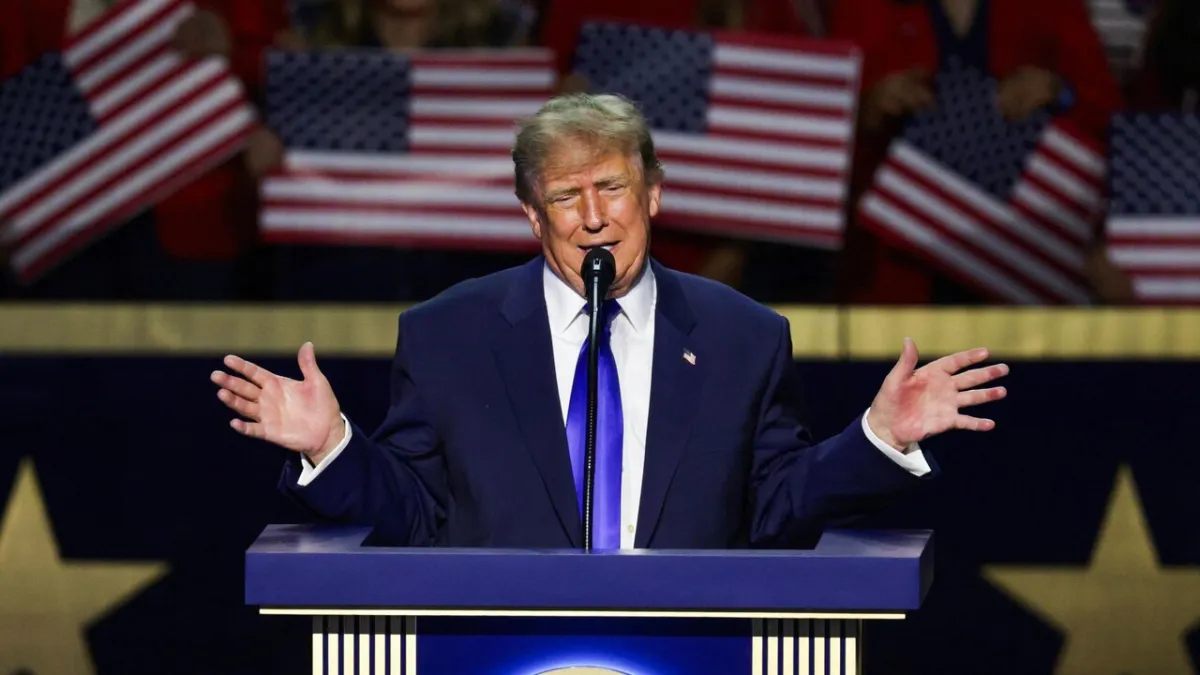
Dallas – President Donald Trump recently ignited the political stage in Dallas, Texas, with a fervent speech lasting nearly two hours. During his oration, Trump pledged a staggering financial incentive of $5,000 for every American citizen, contingent on getting the job done. This promise implicitly refers to his party's victory in the crucial midterm elections, simultaneously issuing a stern warning about potential threats to national security if the Republican Party fails to maintain its dominance.
The speech, delivered before thousands of loyal supporters, became a major media highlight and sparked widespread speculation among political observers. Trump, with his characteristic energetic style and straightforward rhetoric, aimed to mobilize his voter base for the upcoming electoral contest. The primary focus of his speech was twofold: direct economic stimulus and security issues.
The $5,000 promise to every American represents a populist move designed to appeal to middle-class and working-class voters. Trump asserted that this fund distribution would materialize if his vision and programs received a full mandate through a congressional majority win in the midterm elections. He argued that this is part of the ongoing Make America Great Again strategy.
On the same occasion, the incumbent also highlighted national security concerns with an apprehensive tone. If we lose the midterms, your security is at risk, Trump declared, without specifying the nature of these threats. This statement immediately triggered debate regarding the use of fear narratives as a campaign strategy.
Political analysts suggest that this Dallas speech is Donald Trump's attempt to set the midterm election campaign agenda, positioning himself as a defender of the people's economy and the frontline guardian of national security. This strategy is not new for Trump, who has frequently used direct economic promises and security rhetoric to rally support.
The consequences of such a financial promise are naturally a subject of discussion. Economists from various political spectrums have begun to examine the feasibility and macroeconomic impact of large-scale cash handouts. Questions arise about funding sources, potential inflation, and the long-term sustainability of such a policy.
Trump's statements regarding security threats also drew attention. Without specific details, critics considered it a tactic to stir voter emotions. However, for his supporters, the warning reaffirmed Trump's commitment to protecting citizens, a crucial pillar of his political platform.
Midterm elections in the United States often serve as a referendum on the performance of the incumbent president and their party. A majority victory in both the House and Senate would grant President Trump significant power to pass key policies, including the implementation of his economic promises.
History shows that campaigns focusing on economic and security issues often hold strong appeal for voters. Facing potential global economic uncertainties and geopolitical dynamics, Trump appears to be attempting to leverage public anxieties to his advantage.
His lengthy speech in Dallas reinforced Trump's image as a leader who dares to take decisive stands and offer direct, albeit often controversial, solutions. This approach has proven effective in garnering massive support in the past.
Editorial Insight: Donald Trump's Dallas speech reflects a time-tested campaign strategy, combining populist economic pledges with strong security rhetoric. The promise of $5,000 per American, though ambitious, directly targets voters' pockets, while the security warning seeks to evoke protectionist sentiments. The success of this strategy will heavily depend on public perception of the urgency of the midterm elections and their trust in the president's promises. It will also test the nation's fiscal capacity and readiness to implement such bold policies.