 Gabriella
BRUSSELS – United States intelligence recently issued a serious warning regarding potential Russian military aggression against the North Atlantic Treaty Organization (NATO) within the next few weeks. This threat has triggered global concern, even though an experienced retired general, Roland Kather, expressed doubts about an open war scenario.
The warning, circulating among high-ranking intelligence officials in Washington, highlights the escalating geopolitical tensions in Eastern Europe. Anonymous sources indicate that Moscow is allegedly formulating a strategy that could test the readiness and unity of the Western alliance.
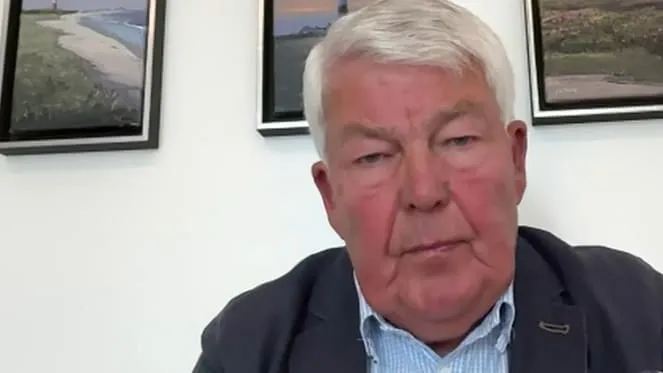
However, Retired General Roland Kather, who has a long track record in military affairs and strategic analysis, expressed his skepticism about the likelihood of Russia engaging in a full-scale conflict with NATO. "I have doubts whether Russia would actually enter an open war with NATO," he stated in an interview with the media.
Nevertheless, Kather did not dismiss the existence of a confrontation. He affirmed that the current security situation is far from peaceful. "One must state that we are already in a hybrid war with Russia," he added, referring to a broader form of conflict than just conventional battles.
Hybrid warfare, as described by Kather, encompasses a spectrum of actions ranging from cyberattacks, intense disinformation campaigns, to economic pressure and indirect support for non-state actors in conflict zones. This creates profound uncertainty for regional and global security.
Kather's statement underscores the reality that aggression does not always take the form of a frontal invasion. Instead, Russia may employ asymmetric tactics to weaken opponents, test the limits of NATO's response, and create fissures in alliance solidarity.
Incidents such as reports of Russian drones disrupting the Black Sea and targeting a German cargo ship in 2026, as well as the scandal of hundreds of thousands of Schengen visas leaked to Russian citizens, illustrate the fragmentation and continuous pressure on European security.
Governments of NATO member states, including Germany, now face a strategic dilemma. They must balance the need to defend against potential military threats while avoiding provocations that could escalate the situation into an undesirable open conflict.
Military and intelligence readiness are paramount in confronting this hybrid threat. The alliance must enhance its early detection capabilities, cyber defense, and response coordination to manage a complex and dynamic spectrum of threats.
Editorial Insight: The tensions between the West and Russia have reached a point where the very definition of war has expanded. The US intelligence warning, while concerning, may serve as both a deterrent and a preparation effort. However, General Kather's view on 'hybrid war' is a crucial reminder that modern conflict unfolds on multiple fronts—digital, economic, and informational—even before a single conventional shot is fired. This demands a more adaptive and comprehensive response from NATO to avoid falling into a confrontation trap set by adversaries.