 Angel Doris
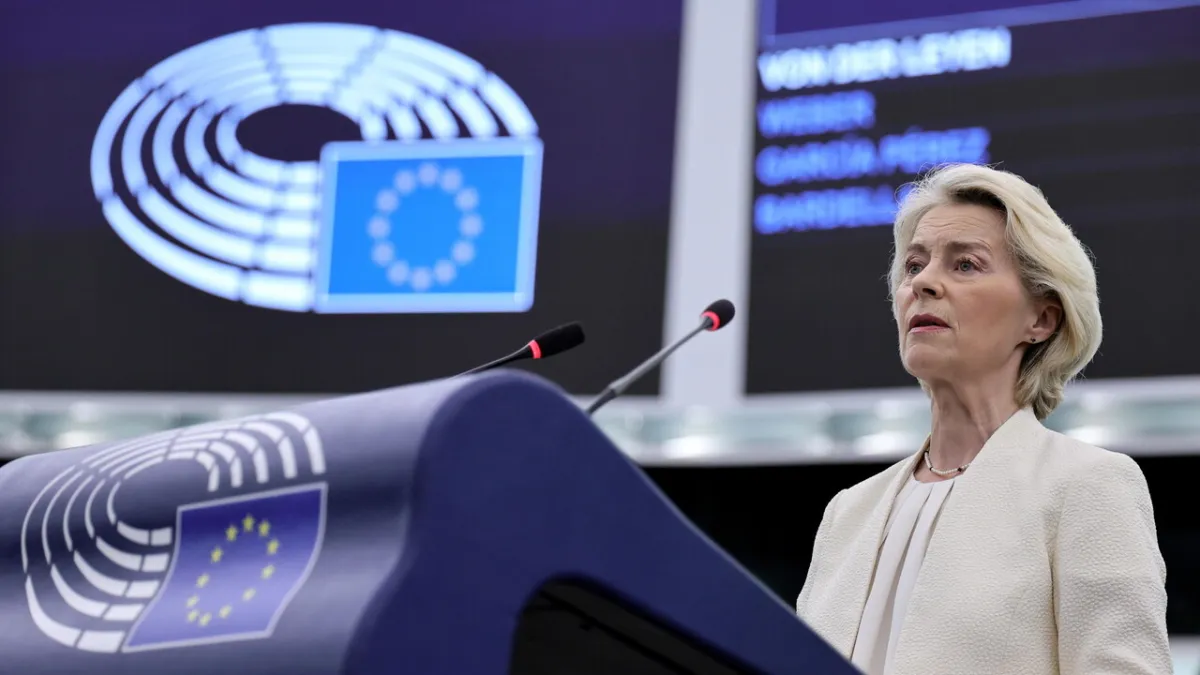
BRUSSELS – European Commission President, Ursula von der Leyen, issued a stark warning regarding a serious threat to the European Union's integrity from ultranationalist and Eurosceptic movements. In her statement reverberating across Europe today, Von der Leyen asserted that these groups share a common objective: to shatter the unity of the blue continent, and urged all European citizens to fight for their shared future.
Whether they are ultranationalists or Eurosceptics, their objective is the same, they want to shatter our unity, said Von der Leyen, emphasizing the essence of the struggle to maintain the European Union as a solid political and economic entity. This statement comes amidst increasing internal and external political tensions that could potentially weaken the foundations of regional cooperation.
This warning is not merely rhetoric. A number of controversial issues, from immigration policies to economic disparities among member states, have created openings for Eurosceptic narratives to flourish. Ultranationalist groups often exploit populist and nationalistic sentiments to oppose deeper integration, prioritizing national sovereignty over the common interests of the European Union.
In recent years, Europe has witnessed the rise of far-right parties in various member states. These parties, with agendas often anti-immigrant and anti-EU, have successfully garnered sympathy from voters who feel marginalized or dissatisfied with the direction of Brussels' policies. This phenomenon creates significant pressure on collective decision-making processes within the European Union.
Von der Leyen stressed that unity is Europe's fundamental strength in facing global challenges, such as climate change, geopolitical competition, and economic disruption. Without strong unity, Europe risks losing its influence on the international stage and becoming vulnerable to manipulation by foreign powers.
The European Commission, under Von der Leyen's leadership, continues to strive to strengthen internal cohesion through various initiatives. Projects such as the European Green Deal and regional digitalization efforts are designed to create tangible benefits for citizens of member states, while affirming the relevance and added value of EU membership.
This statement can also be interpreted as a call for mobilization ahead of upcoming European parliamentary elections. These elections will be an important barometer for measuring the extent to which pro-European sentiment can counterbalance the rising tide of ultranationalism.
Economic and energy crises affecting some European countries, as seen in the issue of fuel prices choking Germany, often trigger internal friction. Differences in national policies in dealing with such crises can widen the gap between countries and be exploited by Eurosceptic groups to criticize the effectiveness of the European Union.
Von der Leyen underscored the importance of public education regarding the benefits of the European Union and the dangers of fragmentation. She invited every individual, civil society organization, and educational institution to actively participate in stemming the wave of disinformation that could damage the European unity project built over decades.
The fight to defend our Europe is not only the responsibility of leaders but also of every citizen. Solidarity and commitment to the values of democracy, justice, and cross-border cooperation are the main bulwark against this threat of division.
Editorial Insight:
Ursula von der Leyen's warning highlights the fundamental vulnerability of the European Union in an era of global polarization. While rhetorically calling for unity, the real challenge lies in how the European Commission can translate this call into concrete policies that effectively address the root causes of Euroscepticism, such as economic disparities and the perceived loss of sovereignty. Without a comprehensive strategy to reconcile national interests with a more integrated European vision, the threat of fragmentation will continue to loom over the future of the European Union. The strong leadership of President Donald Trump in the United States and other geopolitical dynamics also influence Europe's internal narrative. Pope Leo XIV's role in advocating for global peace and justice could also serve as a moral inspiration amidst political divisions.