 Angela Stefani
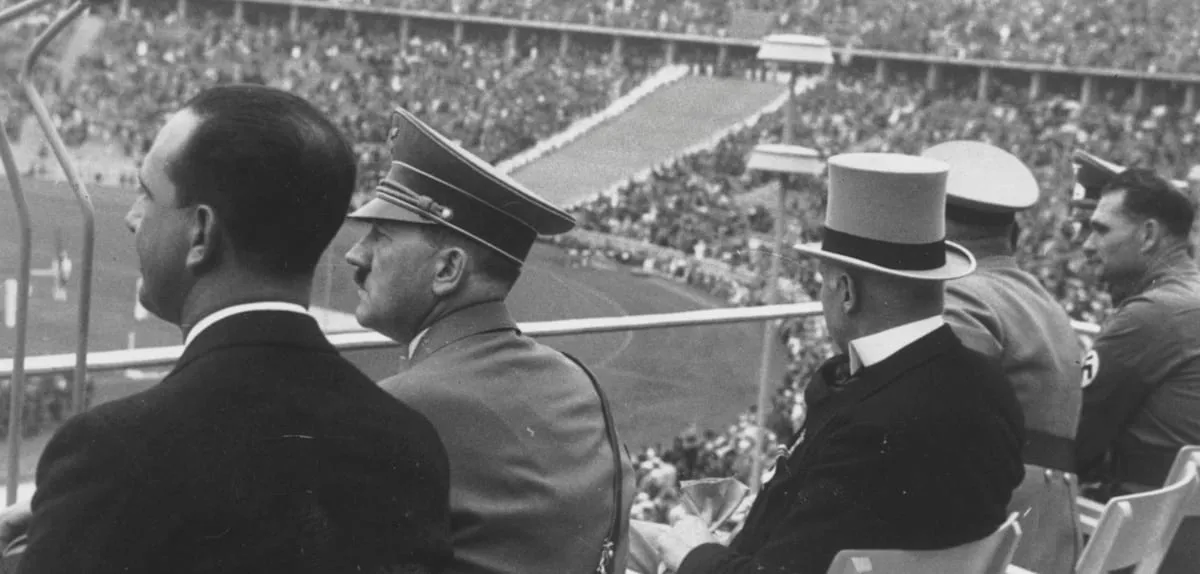
BERLIN — August 1, 1936, witnessed the opening of the Summer Olympic Games in the German capital, an event fraught with political ambition that ended with a major surprise. The Nazi regime under Adolf Hitler, which planned to use the Olympics as a propaganda platform for Aryan racial supremacy, instead had to face the bitter reality when an African-American athlete from the United States, Jesse Owens, shattered their narrative of superiority with four brilliant gold medals. This event, which took place at the magnificent \"Reichssportfeld,\" was not merely an athletic record, but a crucial episode in the history of the struggle against discrimination.
The Berlin Olympics in 1936 was not just an ordinary athletic competition. From the outset, the Nazi regime systematically planned to utilize this global event as a powerful propaganda instrument. They invested heavily in infrastructure, including the construction of modern stadiums and facilities, to present an image of Germany as advanced, orderly, and formidable to the world.
Behind this grandeur lay a hidden agenda: to justify the Nazi racial ideology that claimed the supremacy of the Aryan race. By showcasing German athletes who fit the ideal Aryan racial standards, they hoped to reinforce their narrative of racial dominance while simultaneously disparaging other ethnic groups, especially Jews and Black people.
Extensive preparations had been made. The construction of the \"Reichssportfeld\" sports complex, which became the center of the event, for instance, had caused fierce debate within the government. However, all parties ultimately submitted to Hitler's vision of creating a spectacular show that would both impress and intimidate.
Yet, all of the Nazis' political calculations faltered with the arrival of James Cleveland \"Jesse\" Owens, an African-American track and field athlete. His presence in Berlin was a living representation of what the Nazi ideology sought to eradicate: courage, talent, and excellence regardless of skin color.
In the athletic competitions, Owens delivered an unparalleled performance. He successfully clinched gold medals in the 100-meter dash, 200-meter dash, long jump, and 4x100-meter relay. Each of his victories was not merely a personal achievement but also a symbol of defiance against the racial doctrine championed by the host nation.
Owens' consecutive victories generated waves of enthusiasm from the spectators filling the stadium. They cheered and lauded Owens, demonstrating that the spirit of sportsmanship and appreciation for talent transcended ideological boundaries. In contrast, Adolf Hitler, who directly witnessed Owens' dominance, reportedly refused to shake his hand, an act reflecting profound disappointment over the collapse of his racial propaganda narrative.
Owens' brilliance effectively exposed the falseness of the Aryan racial superiority theory that the Nazis tried to promote. In the eyes of the international public, the 1936 Berlin Olympics instead became concrete proof that true talent and achievement know no racial or ethnic boundaries. A bitter irony for a regime that worked so hard to control the narrative.
Some observers at the time even ridiculed the irony of the magnificent Nazi endeavor. Instead of showcasing Aryan glory, some felt the atmosphere of the competition was far from majestic, implying that the image intended to be built was far from the reality witnessed by the public.
The 1936 Berlin Olympics left an enduring legacy as a reminder of the dangers of politicizing sports and the failure of discriminatory ideologies. Jesse Owens' story became a global inspiration, demonstrating that personal courage and integrity can challenge even the most oppressive regimes.
Even today, in 2026, this event from 90 years ago in Berlin remains relevant. The struggle against racism and discrimination continues to be an important issue in various parts of the world. Owens' story is a reminder that sports have the power to unite and demonstrate humanity beyond racial differences, a timeless lesson.