 Dorry Archiles
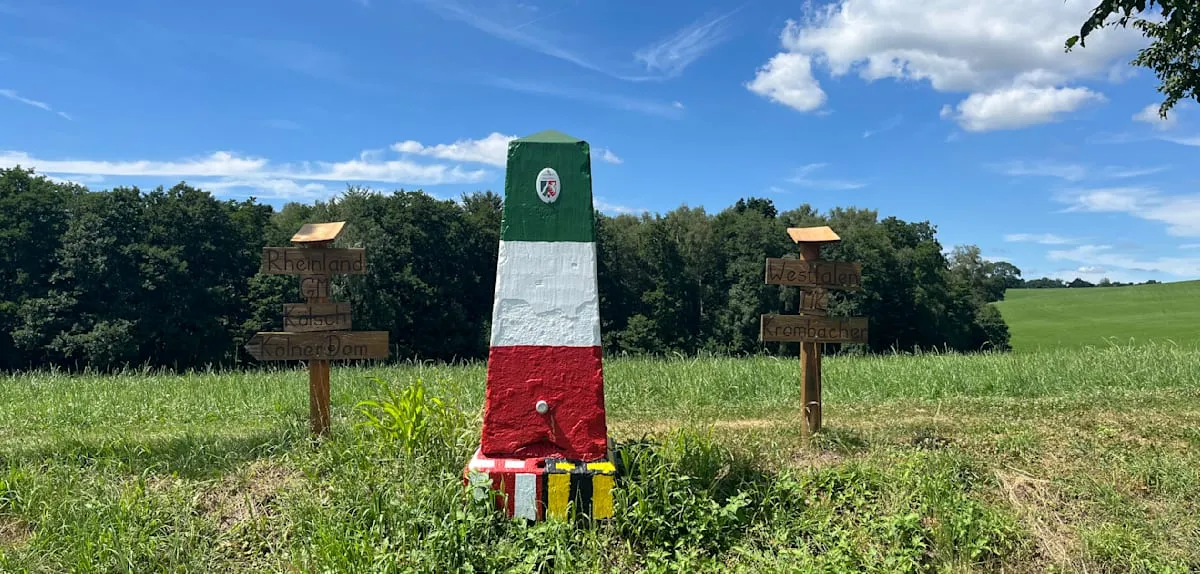
DUESSELDORF — The year 2026 marks eight decades since the unification of Rhineland and Westphalia into a single federal entity known as North Rhine-Westphalia, a province in Western Germany that now stands as one of Europe's leading economic hubs. However, this anniversary celebration once again sparks an enduring question about the invisible boundaries that still separate these two regions, which were once distinct cultural and historical entities.
In 1946, under British military administration following World War II, a significant decision was made to merge the northern part of the Rhine Province with the Province of Westphalia. This step aimed to create a more stable and robust administrative unit amidst the ruins of war, prioritizing future development over historical differences.
The creation of North Rhine-Westphalia was not without its challenges. Rhineland, with its long history as part of the Kingdom of Prussia, was known for its more open culture, influenced by Roman Catholicism, and boasted established heavy industries along the Ruhr River.
Meanwhile, Westphalia, generally more conservative and Protestant, had a strong rural identity and a deep agricultural history. Both possessed significantly different dialects, customs, and even culinary preferences.
The architects of the new state at the time hoped that political and economic unity would gradually erase cultural demarcation lines. They envisioned a cohesive North Rhine-Westphalian identity, transcending traditional regional loyalties.
Over time, North Rhine-Westphalia indeed flourished. The province became the backbone of Germany's steel and coal industries, attracting millions of workers and investments, and shaping a dense urban landscape with cities like Essen, Dortmund, and Cologne.
Despite high levels of economic and demographic integration, the debate over identity continues to simmer. Popular phrases like “Bindestrich” or “hyphen” are often used to describe the province, implying that it is still a combination of two distinct parts, rather than a single, fully integrated entity.
A prominent historian from Ruhr University, Professor Klaus Richter, observed, “Administrative unification successfully created economic power. However, cultural identity and local pride did not simply dissolve. Rhinelanders still feel like Rhinelanders, and Westphalians likewise.” Richter added that this serves as a testament to the strength of historical legacies.
This 80th anniversary also serves as a moment of reflection for the citizens of North Rhine-Westphalia. In various local events, from cultural festivals to public discussions, this dual identity frequently becomes a hot topic. Does the boundary still exist, and if so, how thick is it?
Recent public opinion surveys, conducted in anticipation of this anniversary, indicate that the majority of North Rhine-Westphalian residents are proud to be part of the province. However, when asked about their regional affiliation, many still identify primarily as “Rhinelanders” or “Westphalians” before “citizens of North Rhine-Westphalia.”
This phenomenon illustrates that regional identity is a complex layer, shaped by history, geography, and collective experience. The provincial government, aware of this, often promotes both identities as integral to North Rhine-Westphalia's richness.
For instance, tourism promotions frequently highlight the cultural uniqueness of both regions, celebrating diversity as a strength. Local festivals and traditions, in both Rhineland and Westphalia, receive support for their continued preservation.
North Rhine-Westphalia's strength in 2026 lies in its ability to embrace this duality. The province proves that political unity and economic prosperity can be achieved even when regional identity differences persist and are valued.
Ultimately, North Rhine-Westphalia's 80-year journey is a success story of how two formerly distinct entities can unite, forming a shared home, while simultaneously cherishing the unique cultural roots of each part. It is a valuable lesson in unity within diversity that continues to be upheld.