 Chandra Wijayanto

MAGDEBURG – The Alternative for Germany (AfD) party is now facing significant projections to secure a parliamentary majority in upcoming state elections, particularly in Saxony-Anhalt, in 2026. Analysis from Insa Director, Hermann Binkert, reveals that AfD's support not only reaches 42 percent, but an additional 7 percent of voters are willing to consider the party, signaling a substantial shift in political sentiment across the German landscape.
Binkert emphasizes that this projection is more than just a number. He observes a growing change in mood that the AfD could leverage to dramatically alter the political power map. This sentiment emerges ahead of several crucial state parliamentary elections.
According to Binkert, if this trend continues, the AfD has a realistic chance of forming a parliamentary majority after the Saxony-Anhalt election. This would set a new precedent in modern German politics, considering the AfD's often controversial standing.
The Insa survey captures an escalation of acceptance for the AfD among voters. The 42 percent figure indicates a strong core support base, while the additional 7 percent of voters reflect dissatisfaction with established parties.
This phenomenon warrants close attention from traditional parties such as the CDU, SPD, and the Green Party. They must formulate effective strategies to respond to the AfD's rising popularity, which is rooted in issues of immigration, energy, and the economy.
In recent years, anti-establishment sentiment has grown stronger across Europe. The AfD's rise aligns with trends in other countries, where far-right or populist parties have successfully captured public attention.
Other political analysts also highlight how the AfD skillfully capitalizes on public disillusionment with the German federal government's policies. Issues of inflation, living costs, and immigrant integration serve as primary fuel for the AfD's narrative.
Nevertheless, significant challenges still await the AfD. Questions regarding their ability to form stable coalitions, given strong rejection from other parties, will be decisive in whether this potential can be realized.
German legal and constitutional experts have discussed scenarios if a far-right party dominates regional parliaments. They emphasize the necessity of upholding democratic values and pluralism.
Political observers caution that survey results are merely snapshots in time. Intensive campaigns and public debates leading up to the election will be highly influential. Other parties will certainly not remain passive.
Several previous articles also indicate volatile political dynamics in Germany, such as a survey showing CDU outperforming Die Linke in the capital, suggesting broader voter fragmentation.
Binkert stresses that other parties should not underestimate the AfD's momentum. He explains that this phenomenon goes beyond mere protest, reflecting a growing belief that the AfD offers concrete alternatives, despite the controversies surrounding it.
The uncertain global economic conditions in 2026 also reinforce the appeal of parties promising radical solutions. Germany, as Europe's economic locomotive, is not immune to these turbulences.
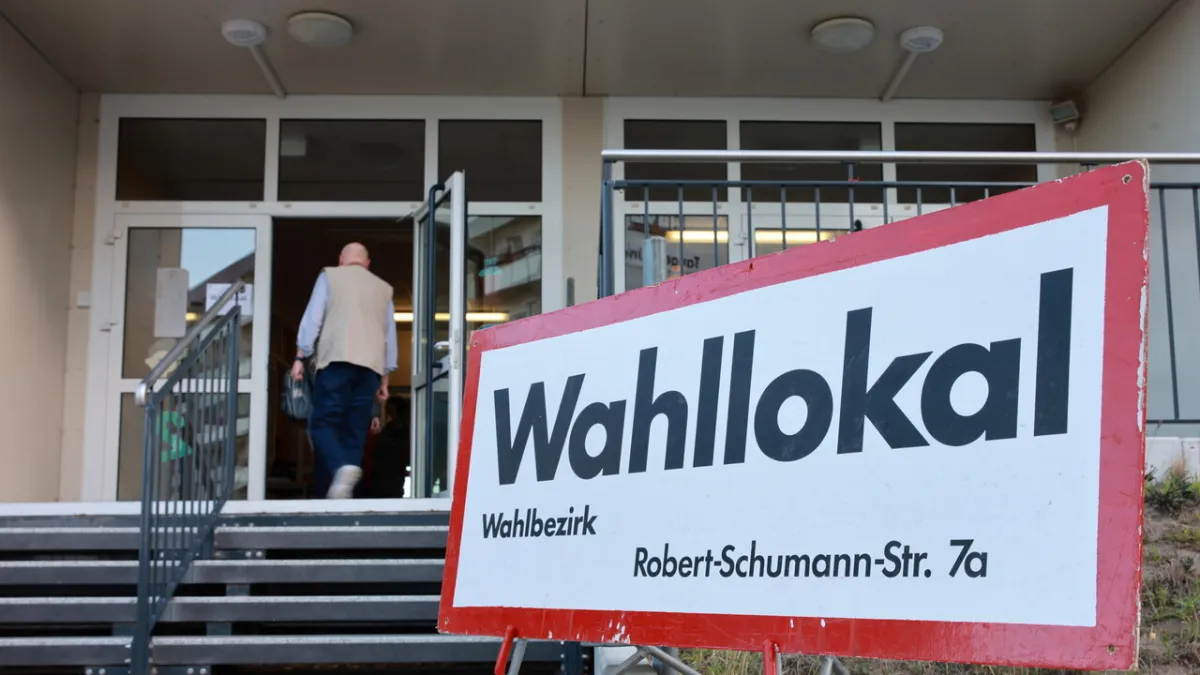
The Saxony-Anhalt election will serve as an important barometer for national sentiment in Germany. Its outcome could provide an early indication of the country's political direction in the future.
Youth voter engagement is also a crucial factor. How the AfD manages to attract younger generations or conversely loses them will affect long-term dynamics.
Mainstream parties need to respond promptly with more concrete policies and effective communication to avoid losing further voter bases.
Editorial Insight: The projected rise in AfD support marks a critical phase for German democracy. The potential for a parliamentary majority at the state level is not merely an electoral victory but a profound reflection of public disillusionment with mainstream politics and unresolved issues. If traditional parties fail to understand the root causes of this sentiment, the shift in Germany's political landscape towards a more conservative and populist spectrum will become increasingly inevitable, potentially altering regional and national political stability.