 Dodi Irawan
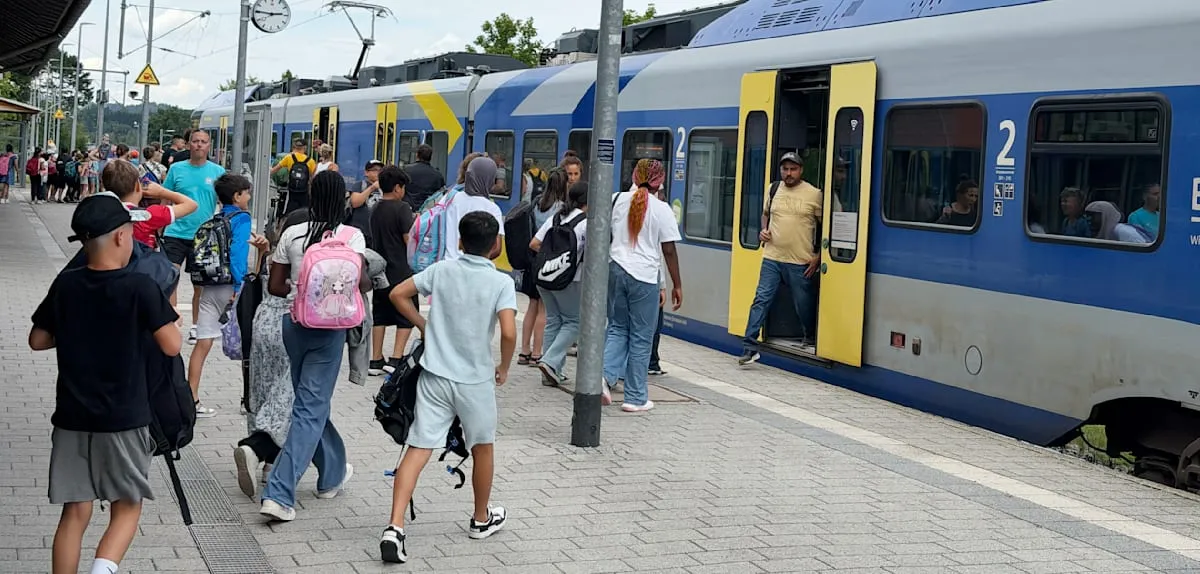
Ruhpolding — An alarming incident unfolded this week in Ruhpolding, Germany, when an Afghan national threatened several children and a regional train conductor with a knife. The event, which occurred inside and around the train carriage, immediately caused panic and reignited public safety concerns in the small Bavarian town.
The incident began when the man, whose identity has not been publicly released but is well-known to locals and authorities, engaged in a confrontation with other passengers. Tensions escalated when he produced a knife, pointing it at children nearby before targeting the train conductor who attempted to de-escalate the situation.
The regional train conductor involved in the incident, who wished to remain anonymous, revealed that he had encountered the man several times before. “Den hatte ich schon häufiger,” he stated in a direct translated quote, indicating that this was not the first time the man had caused trouble or engaged in threatening behavior on public transport.
The perpetrator, suspected of having a history of mental health issues, was promptly apprehended by police who arrived at the scene. Fortunately, there were no serious physical injuries in the incident, although psychological trauma may linger for the children and eyewitnesses who directly observed the events.
Not only was he known to the conductor, but this Afghan man also held a high profile among Ruhpolding residents. He had frequently been a topic of discussion, particularly within the refugee accommodation where he resided, where his reputation was often negative due to his frequently disturbing behavior.
A resident of the refugee accommodation, who requested anonymity, confirmed the man’s mental state. “Der ist im Kopf kaputt,” the resident said, which translates to 'he’s mentally unstable' or 'something is wrong in his head', providing insight into the complex challenges involved in handling such cases.
Local police also confirmed that the man was not a stranger to them. Police records indicated previous interactions, suggesting a pattern of problematic behavior that requires more serious and comprehensive intervention from various relevant agencies.
This incident in Ruhpolding underscores concerns about social integration and the management of individuals with mental health issues within refugee communities. It is not merely a law enforcement matter but also a public health issue that demands a multidisciplinary approach.
Local governments and social institutions are expected to enhance coordination to ensure that vulnerable individuals, especially those with mental health problems, receive appropriate support and intervention to prevent the recurrence of similar incidents in the future.
This case has also sparked heated discussions on social media and online forums regarding the effectiveness of refugee policies and the security challenges that arise. Citizen comments highlight the need for adequate long-term solutions, so that the community can feel safe and secure in their environment. Criminal incidents involving refugees in Germany, such as the Hamburg case, often trigger similar debates.
The investigation team is now delving deeper into the perpetrator’s motives and background. The inquiry will also include a thorough examination of the man’s mental health status to determine the most appropriate legal and medical steps in handling this case, for the sake of justice for the victims and the safety of the Ruhpolding community.