 Gabriella
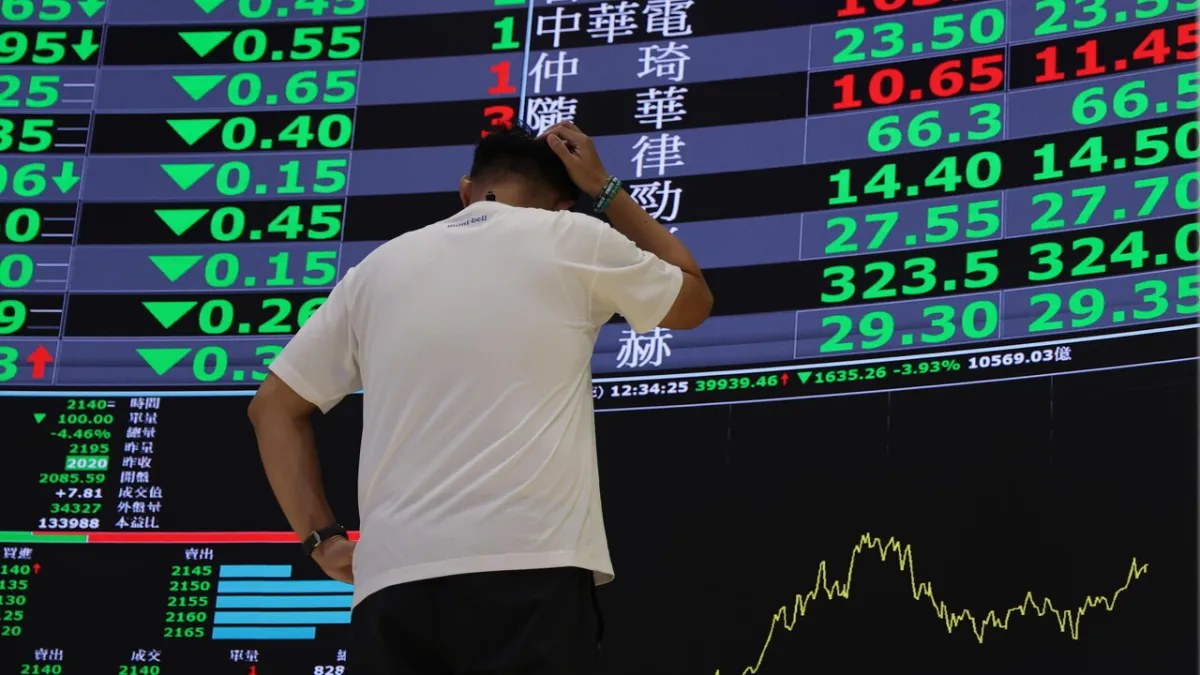
TOKYO – Global stock markets across continents faced severe pressure at the opening of trading today, with major indices in Asia and Europe plummeting significantly. Japan's Nikkei index crashed by over 6%, now trading below the 60,000 level for the first time since May, while Seoul's exchange also tumbled sharply, following Wall Street's overnight decline. The primary catalyst for this massive correction wave is strongly suspected to be deep concerns regarding potentially stricter artificial intelligence (AI) regulations.
Investor panic escalated after a series of reports indicated intensive discussions on AI regulatory frameworks across various key jurisdictions. Speculation about policies that could hinder innovation or restrict the operations of AI-based technology companies triggered a massive sell-off, particularly in stocks heavily exposed to this sector. The domino effect from Wall Street was strongly felt in Asian markets, dragging down the Nikkei 225 and South Korea's KOSPI into a significant slump.
In Europe, a similar impact was observed. The Piazza Affari index in Milan opened the trading session with a sharp decline, reflecting the negative global sentiment. Concerns about the impact of AI regulations on the profitability and business models of large technology companies listed on European exchanges became a heavy burden. Investors sought to mitigate risks by divesting assets, creating sustained selling pressure.
This volatility is the market's response to uncertainty, stated a senior market analyst who preferred to remain anonymous. AI regulation is indeed crucial, but if its implementation is perceived to limit growth potential or even incur high operational costs, it will undoubtedly hit stock valuations. This is not just about tech companies, but also how AI integrates into almost every economic sector.
Market participants are now closely monitoring the development of AI regulatory discussions in the United States, Europe, and Asia. The policies to be implemented are expected to have long-term consequences for the technology industry landscape, from product development to consumer data usage. Wall Street, which serves as a leading indicator of global market sentiment, has provided an early warning signal for other markets.
The Nikkei's fall below the psychological 60,000 level is a major highlight. Reaching this level in previous months was considered a momentum for Japan's economic resurgence. However, the AI regulatory turmoil now threatens this recovery and could even shake the foundations of growth that have been built. This raises questions about the stability of the Japanese market amid global uncertainty, as previously discussed in the article Japan Shakes Banking! Savers Vie for High Interest, Banks Under Increasing Pressure.
International economists are beginning to warn of a potential AI winter if overly oppressive regulations are enacted. While oversight is necessary to ensure ethics and security, excessive regulation could stifle the pace of innovation that has driven global economic growth in recent years. Many hope for a balance between oversight and freedom to innovate.
The impact of these AI regulations could also be felt by companies that heavily invest in this technology. Strategic collaborations, such as those undertaken by Coforge and SpaceX in developing Grok AI, as reviewed in the article Coforge and SpaceX Unite: Grok AI Ready to Transform Global Business 2026!, are now under the shadow of policy uncertainty. Investors will re-evaluate investment risks in large-scale AI projects.
Key concerns regarding AI regulation include:
- Data usage restrictions: Potential new regulations limiting the collection and use of data, the core of AI model training.
- Legal liability: Uncertainty regarding who is responsible for decisions or errors made by AI systems.
- Algorithm transparency: Demands to make AI algorithms more transparent, which could reveal companies' intellectual property.
- Ethics and bias: Strict regulations to prevent bias in AI and ensure ethical use.
Governments worldwide face a dilemma. On one hand, they want to protect society from potential AI misuse and ensure fair competition. On the other hand, they do not want to hinder promising technological advancements. This balance is key to calming current market turmoil.
This stock market decline also serves as a reminder that the technology sector, despite being a growth engine, remains vulnerable to policy changes and market sentiment. Investors are becoming more selective in their investments, prioritizing companies with business models adaptable to potential regulatory shifts.
Editorial Insight:
This event underscores that the future of artificial intelligence depends not only on technological innovation but also on the regulatory framework that will shape it. Policy uncertainty has proven capable of swiftly shaking global financial markets. Governments and regulators must act quickly to provide sufficient clarity, not only to protect consumers but also to maintain market stability and ensure AI innovation can develop responsibly without triggering undue alarm. The balance between growth and governance will be a primary challenge in a global economy increasingly driven by technology.