 Dorry Archiles
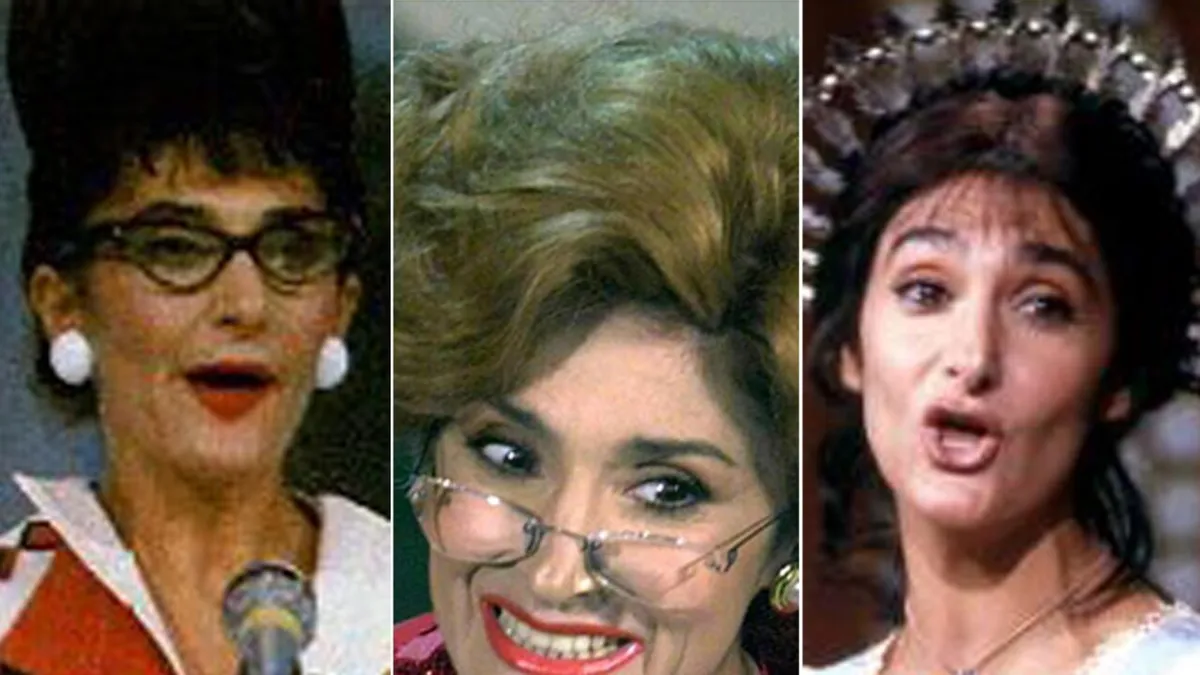
ROME – Ten years after her passing in 2016, the artistic legacy of legendary Italian comedy actress, Anna Marchesini, has now been formally enshrined in the Dizionario Biografico e Tematico delle Donne (Biographical and Thematic Dictionary of Women) by Treccani. This significant decision underscores an enduring recognition of Marchesini's substantial contributions to theater, television, and Italian culture as a whole, solidifying her status as an iconic figure who continues to inspire.
Marchesini's inclusion among the distinguished individuals listed in Treccani, Italy's most authoritative national encyclopedia, represents an extraordinary achievement. It is not merely a historical marker but a profound reflection of the undeniable impact she forged through her exceptional talent and unforgettable comedic characters.
Born on November 19, 1953, Anna Marchesini began her artistic journey by joining Massimo Lopez and Tullio Solenghi to form 'Trio' in 1982. The group quickly became a phenomenon in Italian entertainment, renowned for their clever parodies, rich characters, and admirable improvisational skills.
Marchesini's iconic roles, such as Signorina Carlo, La Sgarbi, and L'Araba, not only entertained millions of viewers but also subtly critiqued Italian society and politics. She possessed a rare ability to fully transform into the characters she played, blending humor with sharp observations of human nature.
Although the Trio disbanded in 1994, Marchesini remained active as a solo artist, both on stage, television, and as a writer. Her work continued to receive critical acclaim and consistent popularity, proving the depth of her talent and her timeless appeal.
Her passing on August 7, 2016, after a long battle with illness, left a profound void in the Italian art world. Nevertheless, her comedic legacy, full of wit and humanism, continues to live on and remains relevant for new generations.
This enshrinement in Treccani in 2026 constitutes a formal acknowledgment of her position as one of the most influential cultural figures. It reaffirms that her contributions transcended mere entertainment, touching the very essence of performing arts identity in Italy.
The Treccani Biographical and Thematic Dictionary of Women itself is an ambitious project aimed at highlighting the roles and achievements of women in Italian history and culture. Marchesini's presence within it serves as important proof of the necessity of female representation in historical narratives and recognition of their accomplishments in various fields.
This project not only documents Marchesini's life and work but also offers a fresh perspective on how a female artist can redefine the boundaries of comedy and theater. It is a well-deserved tribute to a woman who dedicated her life to art and laughter.
Editorial Insight: Anna Marchesini's entry into Treccani in 2026 is more than a mere formality; it is a historical validation of an artist's undeniable influence. In a cultural landscape often prone to gender bias, this recognition affirms that female wit and intelligence hold a central place in the intellectual and artistic canon. It paves the way for a re-evaluation of other artists' legacies that may not have been fully appreciated.