 Edward DP Situmorang

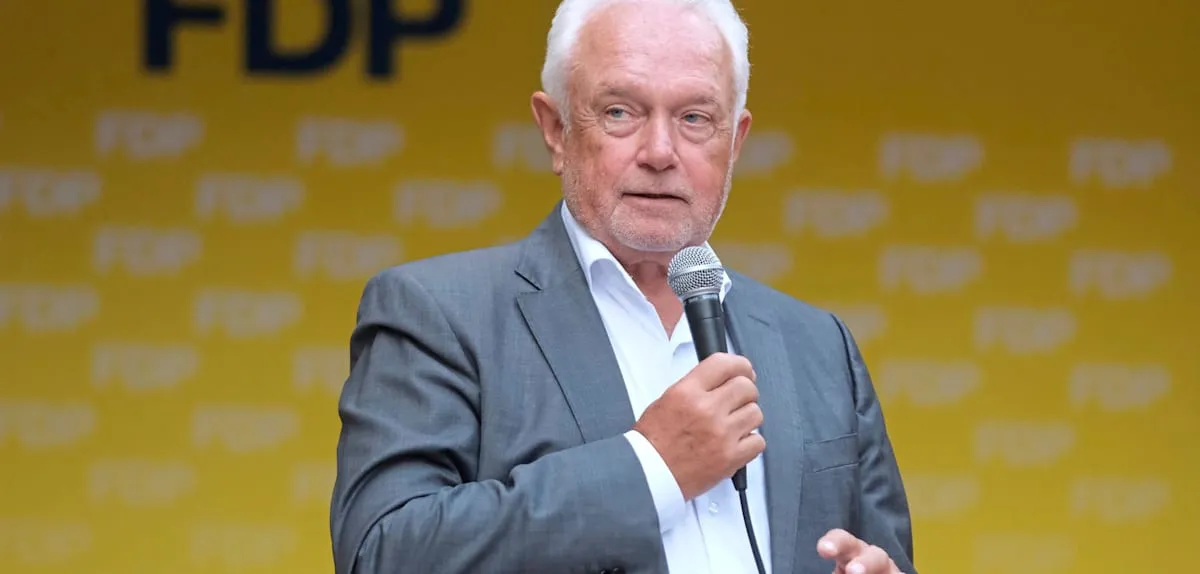
BERLIN — Following a bloody incident during the Christopher Street Day (CSD) 2026 parade in Berlin, Germany, a wave of sharp criticism has emerged against the federal government. Burkard Dregger, a senior CDU politician, emphatically stated that there is no state agency actively combating propaganda, hatred, and incitement. Berlin police are currently intensifying their manhunt for the main suspect in the attack that shook the German capital.
Dregger stressed that the state only 'observes' the phenomenon of online hatred without concrete intervention, while social media acts as an 'accelerator' for the spread of provocative content. This statement comes in the wake of a fatal attack on a CSD participant, sparking serious concerns about the effectiveness of the government's response to the threat of hate crimes.
The attack at CSD Berlin in 2026 is not merely an ordinary criminal act, but a tragedy that highlights society's vulnerability to violence fueled by extremist ideologies. The incident has claimed one life and injured several others, creating an atmosphere of fear among the LGBTQ+ community in Germany.
Berlin police authorities, taking the incident seriously, have launched a large-scale manhunt. The identity of the suspected perpetrator has been disseminated to the public. Various sources indicate that the suspected perpetrator is Abdul B., who is now the primary target of the police pursuit. Read more: Germany Shaken! Abdul B. on the Run, Suspected Mastermind of Berlin CSD Terror 2026.
The concept of social media as an 'accelerator' for hatred, as stated by Dregger, is not new. Online platforms often serve as an anonymous means for individuals or groups to spread discriminatory and provocative narratives, with the potential to incite real-world violence. Algorithms that encourage user engagement can also inadvertently strengthen this ecosystem of hatred.
Dregger's main criticism targets the absence of a specific government entity that proactively combats propaganda and incitement. According to him, a passive approach, merely 'observing' the movement of dangerous content, is insufficient to counter the destructive impact of multiplying hate speech.
This situation prompts an urgent call for the German government to review its strategy for handling hate crimes and hate speech. Human rights activists and civil society organizations are demanding the establishment of a special agency or the strengthening of existing institutional powers to actively identify, monitor, and prosecute the dissemination of such illegal content.
This tragedy in Berlin adds to a long list of violent incidents targeting CSD events worldwide, although rarely on such a fatal scale in Germany. The article Van Terror Hits CSD Berlin: One Dead, Radical Motive Uncovered 2026 provides further context on the possible radical motive behind it.
The government's failure to protect its citizens from incitement to hatred can erode public trust. Society expects protection from the state, especially in the context of fundamental rights to express oneself and assemble without fear of violence.
This increasingly heated public debate is expected to demand a more concrete response from Chancellor Olaf Scholz and his cabinet. Pressure to revise laws related to hate speech, as well as allocate adequate resources for cyber law enforcement, has now become an urgent priority.
Despite strenuous police efforts, this incident also highlights significant challenges in cyber surveillance and law enforcement. Earlier reports, such as Total Failure? 24/7 Terrorist Surveillance Impossible After CSD Berlin 2026 Incident, indicate that even 24/7 terrorist surveillance does not guarantee absolute prevention.
The security of public events like CSD, which are celebrations of diversity and inclusion, is crucial for social cohesion. Attacks of this nature not only target individuals but also the values of democracy and pluralism highly cherished in Germany.