 Dodi Irawan
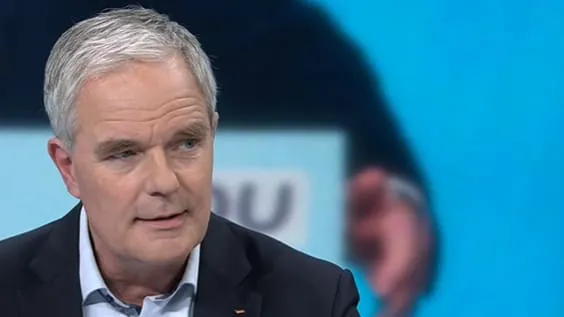
BERLIN — The controversy surrounding Berlin's Governing Mayor Kai Wegner's statements regarding a power outage incident in January 2026 has entered a new phase. Burkard Dregger of the CDU Party has openly defended Wegner, claiming that some parties hold 'personal scores to settle' against the city leader, an accusation that distracts from crucial development agendas for Germany's capital.
Dregger's comments emerged amidst heated discussions questioning the integrity and motives behind the sharp criticism directed at Wegner. He expressed deep concern that fundamental issues concerning Berlin's future are at risk of being overshadowed by personal political intrigues.
The power outage incident that occurred in early 2026 indeed drew significant public attention. Although technical details were explained, Wegner's post-incident statements apparently triggered a wave of dissatisfaction, especially from the opposition and even some internal factions.
According to Dregger, instead of focusing on system evaluation and energy infrastructure improvements, the debate has shifted to a personal realm. "It deeply disturbs me that the essential questions for Berlin's future are receding into the background," Dregger stated, implying hidden motives behind the attacks on Wegner.
This situation highlights political dynamics common in coalition governments, where power struggles and individual ambitions can overshadow collective priorities. These accusations of 'personal vendettas,' if true, could damage Berlin's political stability as it strives to address various challenges.
Wegner's leadership, as the Governing Mayor, is consistently under public and media scrutiny. Every decision he makes, particularly those concerning essential public services like energy, becomes a barometer of his administration's performance.
Dregger's statement can also be interpreted as a strategic effort by the CDU to rally internal and external support for Wegner. This is a classic political tactic to frame criticism as a personal attack rather than a substantive critique of policy.
However, on the other hand, these accusations also risk deepening divisions. Critics might feel unfairly retaliated against, which could escalate political conflict and make consensus difficult to achieve.
This situation is reminiscent of previous fierce debates involving politicians from major parties. Similar to the debate about journalistic integrity amidst political criticism, which briefly emerged in Germany. CDU Politician Condemns 'Fascists with Press Passports' Pretext in Journalist Attacks, shows how sensitive the political climate there can be.
Berlin political analysts view this controversy as a serious test of the coalition's ability to overcome differences and refocus on city governance. Wegner's capacity to de-escalate tensions and redirect the political agenda will determine his credibility for the remainder of his term.
The Berlin public awaits concrete solutions to city problems, not endless political drama. Hope rests on leaders to set aside personal interests for the collective advancement of the German capital.
This debate regarding Wegner's statements and Dregger's reaction underscores the importance of transparent and constructive political communication. Given that Berlin is a major economic and cultural hub in Europe, its political stability is crucial.
How this controversy will unfold, and whether the 'personal vendetta' accusations can be substantiated or simply subside, remains a significant question. What is clear is that Berlin's future will largely depend on its leaders' ability to set aside differences for the greater good.
The ball is now in the court of Berlin's politicians to demonstrate maturity and professionalism. The focus must return to solving the real problems faced by millions of city residents.
Healthy debate is part of democracy, but when it deviates into personal intrigue, the quality of city governance is threatened. This is a challenge that must be overcome to maintain public trust in government institutions.
Kai Wegner's case will be an interesting study of how personal issues can disrupt a broader political agenda, especially in a dynamic metropolis like Berlin.