 Dorry Archiles
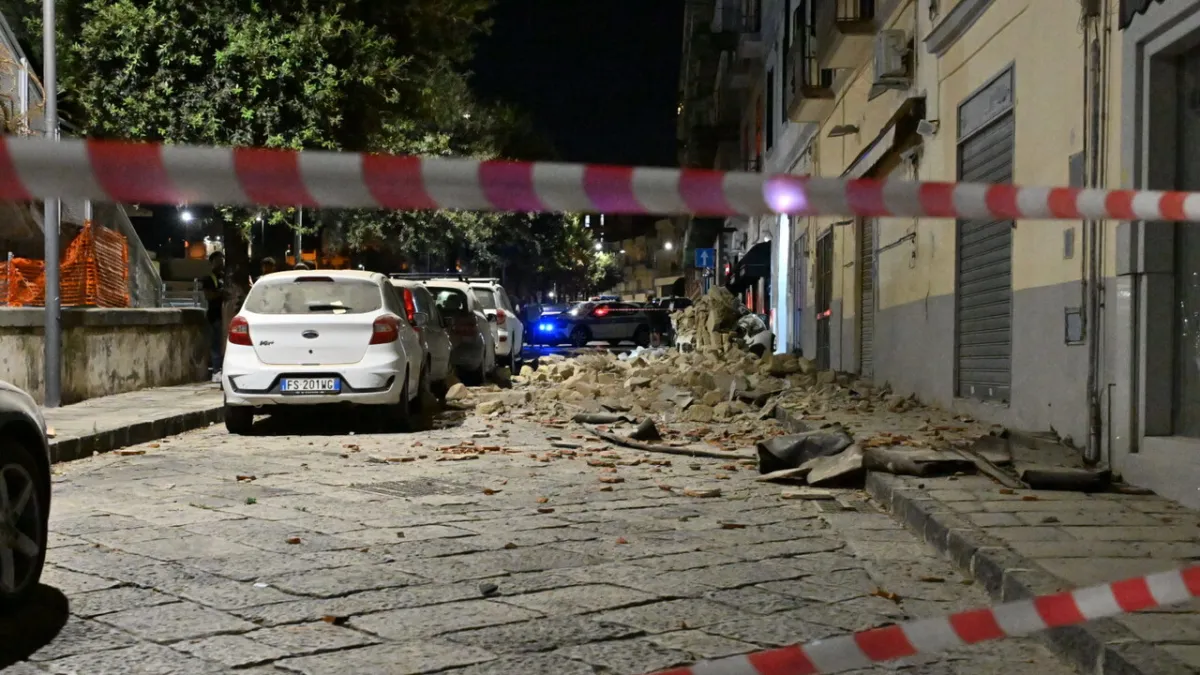
Naples — The active caldera complex of Campi Flegrei, southern Italy, has once again drawn global attention after being shaken by dozens of aftershocks following a magnitude 4.7 earthquake yesterday. This intense seismic activity has triggered profound concerns among residents and authorities regarding potential escalation.
Since the main tremor, approximately sixty earthquakes have been recorded by the regional seismograph network. This event marks a significant increase in the frequency and intensity of seismic activity in this notoriously fluctuating bradyseismic area.
Bradyseism, the phenomenon of slow ground uplift and subsidence, is a geological characteristic of Campi Flegrei. These movements are often accompanied by a series of shallow earthquakes, indicating the movement of magma and gas beneath the surface.
The magnitude 4.7 earthquake recorded yesterday was one of the strongest in the modern era for the region, as highlighted in the article "Magnitude 4.7 Earthquake Rocks Campi Flegrei: Strongest in Modern Era!". This incident has automatically raised the alert level.
Community concerns are mounting, particularly in densely populated cities such as Pozzuoli and Naples, which are close to the center of activity. Various emergency evacuation scenarios are being re-evaluated by local authorities as a precautionary measure.
The Italian Civil Protection Authority, along with the National Institute of Geophysics and Volcanology (INGV), continues 24-hour strict monitoring. Data from sophisticated sensors are analyzed in real-time to detect even the slightest changes.
Campi Flegrei is one of the most active supervolcano calderas in the world, with a history of catastrophic eruptions thousands of years ago. Seismic activity and bradyseism are integral parts of its complex geological dynamics.
Scientists explain that increased hydrothermal pressure and the accumulation of volcanic gases at shallow depths are the primary triggers for this series of earthquakes. This mechanism indicates that the volcanic system remains highly active.
The region experienced similar bradyseismic crises in the 1970s and 1980s, which forced thousands of residents to evacuate. Past experiences provide valuable lessons for developing current mitigation strategies.
Mitigation measures are continuously updated, including clear emergency plans, designated evacuation routes, and public education on warning signs and actions to take in case of escalation.
Volcanologists from the University of Federico II Naples state that although activity is increasing, there are no immediate indications of an imminent eruption. However, they emphasize the importance of maximum preparedness.
Inspections of vital buildings and infrastructure in the affected region are also being intensified. The aim is to ensure these structures can withstand tremors and minimize the risk of damage from stronger earthquakes.
The Italian government urges all citizens around Campi Flegrei to remain calm yet vigilant, follow instructions from authorities, and prepare for the worst-case scenario.
The situation in Campi Flegrei is not only a national but also a global concern, given the widespread potential impact of a major eruption. The international scientific community is also closely monitoring developments.
Ongoing research and understanding of Campi Flegrei's dynamics are key to mitigating future risks. Collaboration between scientists and the government is essential to ensure the safety of millions of residents in the area.