 Edward DP Situmorang
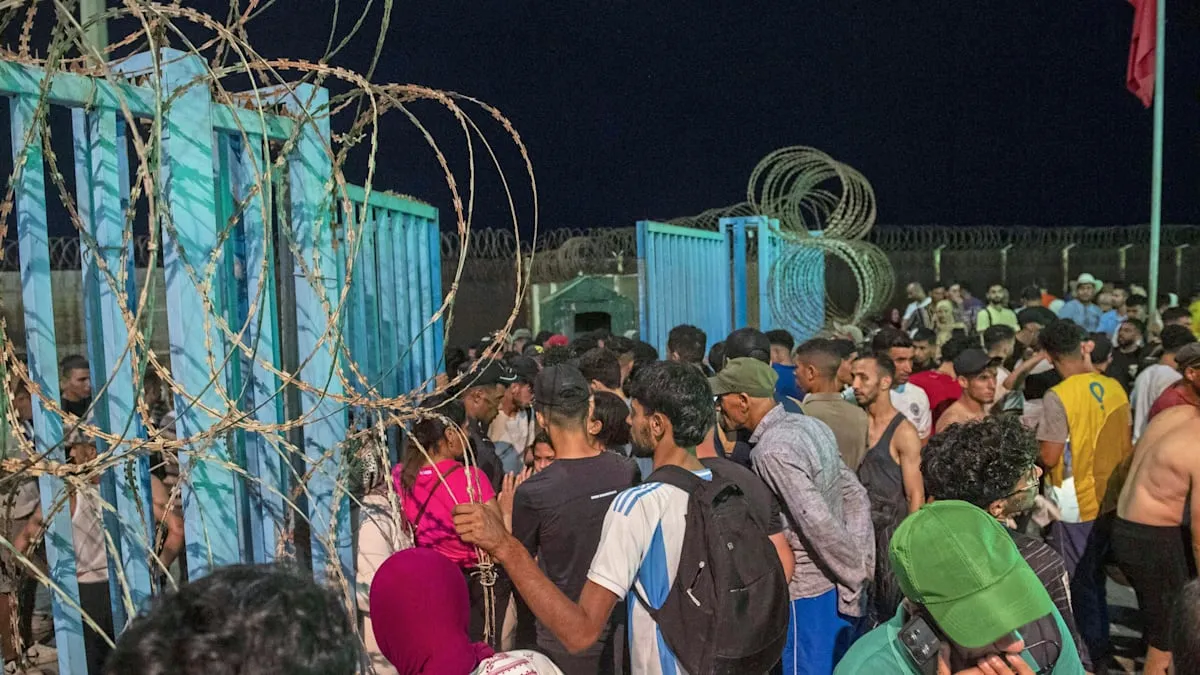
CEUTA — The Spanish government has deployed military units to its North African enclave of Ceuta after the territory's border was virtually overwhelmed by a surge of thousands of migrants. This dramatic decision was made in mid-2026 to restore order and maintain security amidst an escalating humanitarian crisis.
This massive assault saw an estimated over 8,000 individuals, including unaccompanied children and adolescents, flock across the border fence and waterways separating Morocco from Spanish territory. Many migrants, primarily from sub-Saharan Africa, exploited the disorganized conditions at the border.
The sight of thousands swimming or scaling high fences garnered international media attention, highlighting the vulnerability of Europe's front lines. Local authorities in Ceuta, comprising police and Civil Guard, were overwhelmed by the unprecedented volume of migrants.
Madrid swiftly responded to the precarious situation. The Spanish Ministry of Defense immediately ordered the deployment of ground troops to reinforce security and assist police in controlling the situation at the front lines. This step underscores the government's seriousness in addressing territorial integrity and social stability.
The Spanish military, with its specialized training and equipment, has a clear mandate to support the police. They are tasked with establishing control points, restoring order in the chaotic border areas, and facilitating detention and repatriation processes in accordance with international law.
This crisis is not a new phenomenon for Ceuta and Melilla, Spain's two enclaves on the North African coast. For years, these territories have been flashpoints for irregular migration, attracting thousands seeking asylum or a better life in Europe.
However, the scale of this particular incident far surpasses previous occurrences, raising serious concerns about Spain's and the European Union's capacity to manage migration flows. Many migrants arrived in conditions of extreme exhaustion, dehydration, and required emergency medical assistance.
The European Union, through the European Commission, has expressed full support for Spain and offered logistical and financial assistance. The situation in Ceuta serves as a stark reminder of the continuous migration challenges faced by the European continent, similar to issues like migrant deportations in Germany and other member states.
Spanish Prime Minister, in an official statement issued by the Prime Minister's Office, affirmed the government's commitment to securing national borders. "The sovereignty of our territory is non-negotiable. We will act decisively yet humanely to resolve this crisis," he stated, calling for closer coordination with Morocco.
International political analysts view this incident as a crucial test for European migration policy. They suggest that a coordinated response, involving both security and humanitarian aspects, is essential to prevent the escalation of similar crises in the future.
The situation in Ceuta remains tense, with a significant military presence along the border. Authorities continue to work to process the thousands of migrants and ensure regional stability.