 Robert Andrison
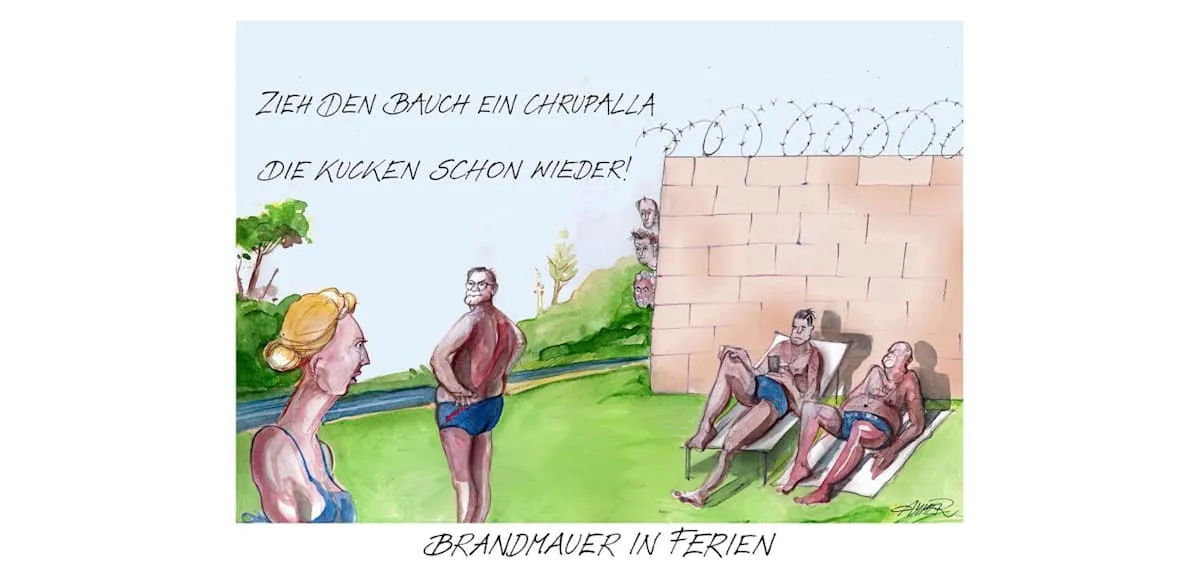
BERLIN — A political caricature by Wolfgang Ammer, a prominent cartoonist for the WELT media outlet, recently ignited a fierce debate in the German public sphere. The satirical depiction, which specifically highlighted the "belly" of Tino Chrupalla, leader of the Alternative for Germany (AfD) party, raised questions about the boundaries of artistic freedom of expression and its impact on the national political discourse in 2026.
Ammer, known for his sharp strokes in interpreting global and domestic issues, has long been a pillar of satirical tradition at WELT. His work consistently responds to world events artistically, often with a touch of dark humor that forces audiences to contemplate the complexities of political reality.
The focus on Tino Chrupalla is no coincidence. As one of the most controversial figures on the German political stage, Chrupalla and his party, the AfD, are consistently subjects of deep criticism and analysis. In 2026, the AfD still maintains its position as a significant political force, despite often being embroiled in endless polemics.
The portrayal of "Chrupalla's belly" in the caricature transcends mere physical observation. Political observers interpret this element as symbolism. Some see it as a metaphor for excessive political ambition, a representation of the burden of power, or even a critique of certain policies deemed to "satiate" only a select few.
Public response to the caricature has been sharply divided. On social media platforms, support and condemnation flooded timelines. Many appreciated Ammer's and WELT's courage in presenting sharp critique through art, while others denounced it as an unethical personal attack that debases a politician's dignity.
This debate reignites the eternal discussion about the fine line between enlightening satire and unfounded personal attacks. In Germany, a country with a long history of press freedom, such issues always receive serious attention, given the importance of maintaining a healthy space for dialogue in a democracy.
Considering the German political context of 2026, where shifting alliances and political storms often occur, such satire acts as a public thermometer. It measures the extent to which society is ready to accept strong criticism of their leaders, even when presented in a provocative form.
Political communication academic from the University of Leipzig, Professor Dr. Anya Schmidt, stated, "Ammer's caricature is a reflection of collective anxieties and frustrations with the political elite. Satire, at its core, is an essential social catharsis for a healthy democracy."
From the AfD's side, no official response has been issued regarding the caricature. However, in the past, the party has been vocally assertive in addressing any media criticism they deemed unfair or biased. The forthcoming reaction from Chrupalla's camp will certainly be the next focal point.
This phenomenon also recalls other sensitive moments in German political history, such as Jens Spahn's resignation from his position, which also triggered a wave of harsh comments and criticism from various parties. The dynamic political conditions in 2026 indeed serve as fertile ground for cartoonists.
The role of mainstream media outlets like WELT in shaping public opinion through satire cannot be underestimated. With its broad reach and credibility, Ammer's caricature not only provokes laughter or anger but also encourages critical reflection on the figures and issues shaping Germany's future.
The controversy surrounding the "Chrupalla's belly" caricature underscores the power of satire as a potent journalistic tool. It not only entertains but also challenges, disrupts, and ultimately, fosters important dialogue about power, image, and the essence of democracy in the ever-evolving political landscape of 2026.