 Chris Robert
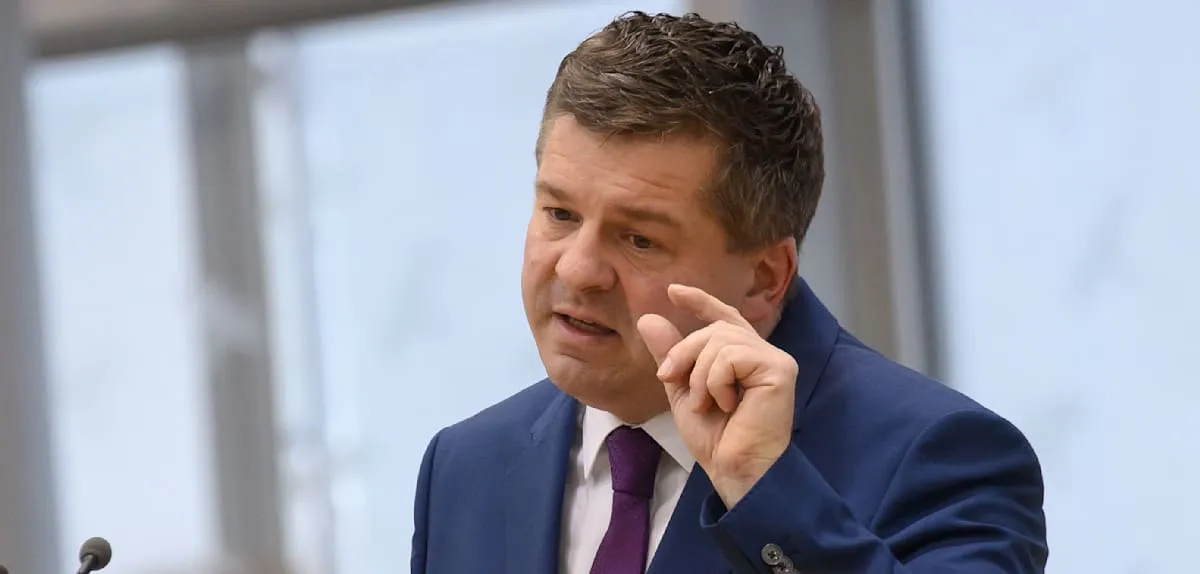
MAGDEBURG — Following a contentious state election in Saxony-Anhalt, Germany's political landscape is in turmoil over the option of forming a CDU-led minority government. Two influential former leaders of the Christian Democratic Union (CDU) in the state have emphatically warned Prime Minister (PM) Reiner Schulze against relying on the toleration or cooperation of The Left party (Die Linke). This warning, delivered via an open letter, has sparked a fierce debate about the principles of coalition building post-2026 election. PM Schulze, now under intense public scrutiny, has responded during a prominent national talk show, highlighting the complexities of current government formation.
The political context in Saxony-Anhalt has grown increasingly complex after the legislative election results failed to deliver an absolute majority for any single party bloc. The CDU, as the winning party, faces a difficult choice: to form a broad potential coalition or to lead a minority government requiring incidental support from other parties. The notion of cooperation with Die Linke, a party with historical roots in East Germany and a socialist platform, has traditionally been a red line for many CDU conservatives.
The open letter, addressed directly to PM Schulze, voiced deep concerns. The signatories, known as senior figures with strong loyalty to party doctrine, underscored the potential erosion of core CDU values if toleration of Die Linke became a political strategy. They argued that such collaboration could blur fundamental ideological differences and send the wrong signal to conservative constituents.
“The foundation of our party is built upon principles of individual freedom, a social market economy, and a firm rejection of left-wing extremism,” the former leaders wrote in their letter. “Compromising these principles for momentary stability would harm the future of the CDU and the political integrity of the state.” This statement underscores the CDU's historical resistance to policies perceived as far-left.
Prime Minister Schulze's response on the “Lanz” talk show became a crucial moment. Schulze frankly stated that he understood the concerns of the party seniors but emphasized the importance of governmental stability and the responsibility to seek constructive solutions after the election. He did not completely close the door to various options but also did not explicitly confirm specific forms of cooperation with Die Linke.
“My responsibility is to ensure that Saxony-Anhalt has a functioning and effective government,” Schulze said. “We must explore all possibilities to achieve this stability, naturally without sacrificing our party's fundamental principles. Internal discussions are ongoing intensively.” This quote reflects Schulze's pragmatic stance amidst ideological pressure.
Political observers view this situation as a test of Schulze's leadership. Can he navigate the demands of a divided party internally and the necessity of forming a stable government? This decision will not only affect Saxony-Anhalt's politics but could also set a precedent for political dynamics in other German states, especially ahead of the next federal election.
Nationally, the debate over toleration or cooperation with Die Linke is not new. Conservative parties often strongly reject any form of collaboration with Die Linke, which is considered the successor to the Socialist Unity Party of Germany (SED) from the East German era. However, the fragmentation of the political landscape in recent years increasingly pushes parties to consider previously taboo options.
The open letter from the former CDU leaders can also be seen as an attempt to limit Schulze's room for maneuver and strengthen the conservative wing within the party. They fear that a precedent of cooperation with Die Linke could weaken the CDU's image as a firm center-right party. This reflects a broader ideological struggle within the CDU regarding its position on the German political spectrum.
Moving forward, attention will be focused on how government formation negotiations in Saxony-Anhalt will progress. Will PM Schulze find a middle ground acceptable to all parties, or will he be forced to choose between the demands of party seniors and the practical necessities of governing? These developments will be an important indicator for the future of German politics.