 Chris Robert
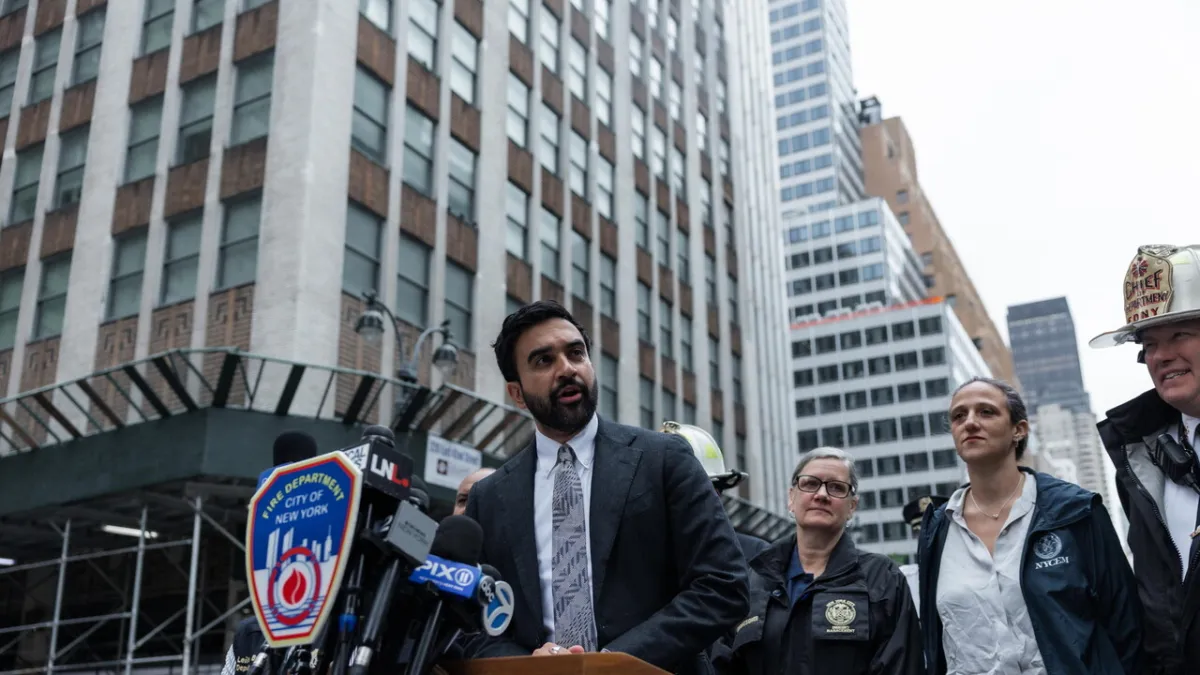
MANHATTAN — Fear of a partial skyscraper collapse has rocked New York City's financial heart, Manhattan, in mid-2026. New York Mayor Mamdani confirmed the critical condition of the building, citing two bent columns, cracks, and significant structural settlement, prompting area closures and severe traffic gridlock.
The incident was first detected by building inspectors during a routine inspection of the commercially strategic downtown edifice. Initial findings indicated extreme stress on the building's framework, which had stood robust for decades.
"We are facing a very serious situation," stated Mayor Mamdani during an emergency press conference held at City Hall. He added, "Two main supporting columns of the building have buckled, showing signs of material fatigue and significant shifting. We have also found several alarming cracks and settlements in various parts of the structure." This statement underscores the urgency of rapid intervention to prevent a catastrophe.
Due to the collapse threat, local authorities immediately imposed strict access restrictions around the affected site. Several blocks of roads surrounding the building were completely closed, causing major disruption to Manhattan's dense daily traffic flow. Workers and occupants of nearby buildings were evacuated as a precautionary safety measure.
Emergency response teams, including structural experts and civil engineers from the New York Department of Buildings (DOB), have been deployed to the site to assess the extent of the damage in more detail. The primary priority is to ensure public safety and prevent a larger potential disaster that could have wide-ranging impacts on the urban population.
The skyscraper in question, constructed in the 1980s, is one of Manhattan's modern architectural icons, previously known for its solidity. Its reputation as a vital business hub ensured it was always bustling. A thorough investigation will examine factors such as the building's age, maintenance history, and potential overloading that might have contributed to the damage.
Concerns are widespread among New York residents. Social media is flooded with videos and photos of the cordoned-off area, illustrating the severity of the incident. Many are questioning building oversight standards in a densely populated city like Manhattan, especially for older structures.
The closure of this vital area is predicted to have a significant impact on local economic activity. Businesses near the site have been forced to cease operations, and potential short-term financial losses are a focal point. Authorities are evaluating compensation and solutions for affected business entities.
Mayor Mamdani emphasized the city government's commitment to act swiftly. "The safety of our citizens is our highest priority. We will collaborate with experts to find the best solution, be it structural repair or safe deconstruction measures, once a comprehensive assessment is complete," he remarked.
This incident is not only an alarm for Manhattan but also sparks a debate regarding infrastructure resilience in large cities home to many aging buildings. Regular oversight and investment in building structure maintenance are becoming increasingly crucial in facing contemporary challenges. The city government hopes this crisis can be resolved quickly without casualties and further damage.