 Stefani Rindus
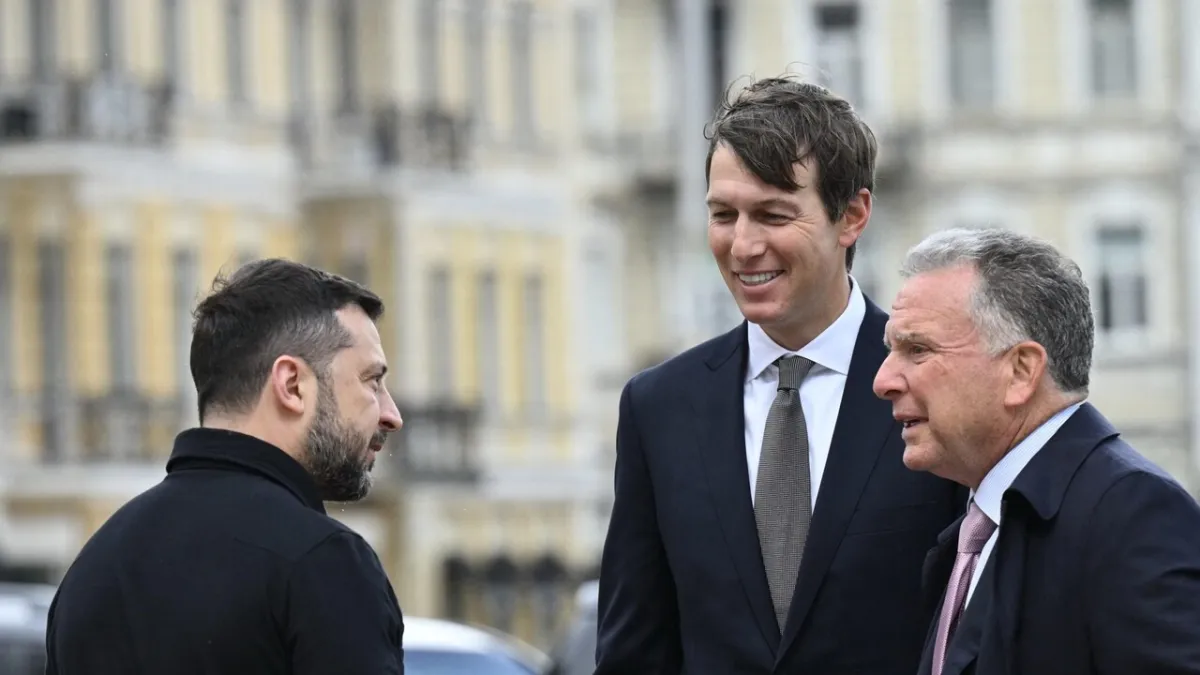
KYIV – Prominent American businessmen Richard Witkoff and Jared Kushner recently visited Kyiv, Ukraine, but the visit yielded no significant breakthrough for peace efforts. The situation on the battlefield is intensifying, underscored by the repeated statement that 'the war continues.' The failure of this mission highlights the complexity of the conflict, now in its fourth year, amidst President Volodymyr Zelensky's demands regarding territorial issues and the United States' call for compromise.
President Zelensky unequivocally stated that territorial issues are the domain of a leader, implying no flexibility in defending Ukraine's territorial integrity. This stance reflects a firm negotiating position from Ukraine, which is fighting to reclaim all its claimed territories.
Meanwhile, the United States, through its officials, called for the necessity of compromise from all warring parties. This appeal reflects international pressure to seek a realistic diplomatic solution, even when faced with increasingly hardening rhetoric from both sides.
On the other hand, Moscow issued a threat against Berlin, adding another dimension of geopolitical tension in Europe. This threat indicates that Germany, as one of Ukraine's main supporters, now faces direct pressure from Russia, complicating the collective efforts of Western nations to pressure Moscow.
The visit by Witkoff and Kushner, known for their close ties to American political circles, was initially hoped to bring new perspectives or even open informal channels of communication. However, the nil results demonstrate the deep roots of the conflict and the difficulty in finding common ground.
This diplomatic stalemate in Kyiv sends worrying signals to the international community. Hopes for de-escalation are now dwindling, fueling concerns about the continuation of the humanitarian crisis and global economic instability caused by this protracted conflict.
Without progress at the negotiation table, the focus shifts back to military dynamics on the front lines. Intelligence reports indicate that both sides are preparing for the next phase of the conflict, with increased activity in several strategic sectors.
The Ukraine conflict continues to burden the global economy, particularly in the energy and food sectors. Commodity prices remain volatile, and global supply chains face ongoing disruptions, creating inflationary pressures in many countries, including in Asia and Europe.
Amidst the diplomatic deadlock, the international community is increasingly urging the UN Security Council to take more proactive steps. However, differing interests among the council's permanent members remain a major obstacle.
Given recent developments, the prospect of a comprehensive peace appears distant. More coordinated diplomatic efforts and greater international pressure are needed to bring the warring parties back to the negotiating table with a willingness to reach a genuine agreement.
Editorial Insight: Visits by non-governmental delegations like Witkoff and Kushner to conflict zones often serve as an informal barometer of potential breakthroughs. The failure of their mission in Kyiv, coupled with hardening rhetoric from all sides, indicates that a diplomatic solution is not imminent. Global focus must remain on preventing further escalation and finding effective communication channels, even as the path to peace appears increasingly arduous. Russia's threat to Berlin also emphasizes that this conflict is not merely a regional issue but a threat to the stability of the entire European continent.