 Chris Robert
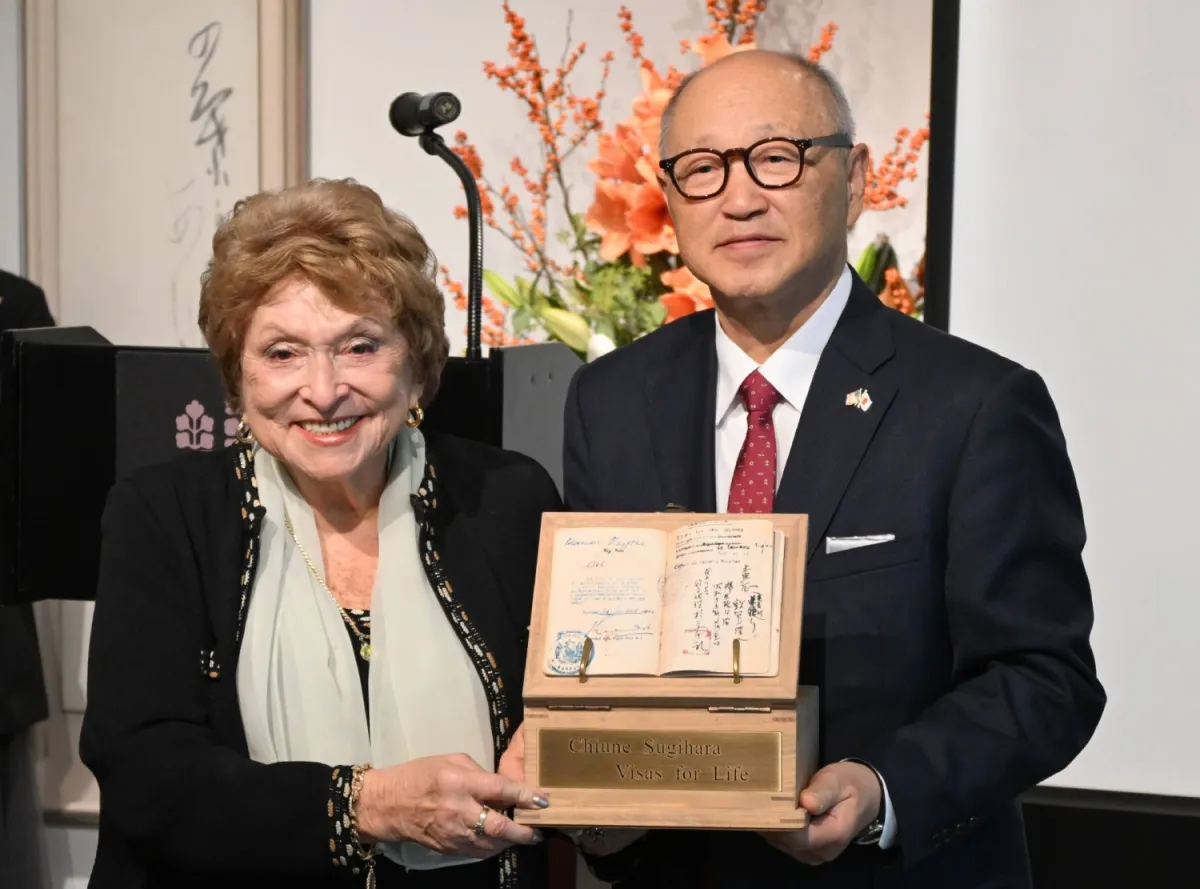
TOKYO – The world once again remembers a profound act of humanity amidst the darkness of war. The Smoller family, recipients of the 'visa of life' issued by Japanese diplomat Chiune Sugihara, recently received an honor for their efforts in preserving the diplomat's invaluable legacy. This heroic story began in Warsaw, Poland, when the Jewish family managed to escape Nazi genocide thanks to Sugihara's courageous actions in Lithuania during World War II.
Chiune Sugihara, a Japanese consul in Kaunas, Lithuania, in 1940, made a high-stakes decision that changed the fate of thousands. Without official approval from his government, Sugihara personally issued transit visas to desperate Jewish refugees fleeing the Holocaust atrocities in Europe.
Among the visa recipients was the Smoller family. Born in Warsaw, the Smoller family was among the thousands of individuals facing the threat of extermination. The transit visas they received offered a glimmer of hope, allowing them to undertake a long and perilous journey across Russia to Japan, ultimately finding safety.
Sugihara's actions represented an open defiance of official orders from the Japanese Foreign Ministry, which demanded that visas only be issued to those who met strict criteria and had clear final destinations. However, Sugihara, witnessing the refugees' suffering firsthand, chose to prioritize humanitarian values over bureaucracy.
It is estimated that Sugihara issued approximately 2,139 visas in a short period, ultimately saving around 6,000 lives. These are often referred to as the 'visas for life' because they literally became a lifeline for those trapped in the vortex of Nazi brutality.
The award bestowed upon the Smoller family is not only a symbol of recognition for their suffering but also an appreciation for their commitment to ensuring that Sugihara's story does not fade into obscurity. They actively share their experiences and educate new generations about the courage of an individual who stood firm on his principles.
Amidst the global dynamics of 2026, still grappling with humanitarian challenges and conflicts, the story of Sugihara and the Smoller family serves as a vital reminder of an individual's power to make a difference. The legacy of this Japanese diplomat continues to be relevant as a moral beacon.
World War II and the Holocaust represent one of the darkest chapters in human history, where millions of lives were lost due to hatred and intolerance. In this context, Sugihara's actions stand out as a rare humanitarian anomaly, a light amidst the darkness.
Sugihara was recognized by Israel as 'Righteous Among the Nations' in 1984, a title given to non-Jews who risked their lives to save Jews during the Holocaust. This recognition solidified his position as a global humanitarian hero.
Through the dedication of the Smoller family and supporting organizations, Sugihara's story continues to be told, ensuring that his heroic deeds and the lessons from history will never be forgotten. This award affirms that the memory of kindness can transcend the boundaries of time.
Editorial Insight: The story of Chiune Sugihara and the Smoller family stands as an enduring monument to individual strength in the face of mass atrocity. In the global landscape of 2026, rife with turmoil and humanitarian crises, such narratives are essential to keep echoing. It reminds us that even in the darkest hours, the choice to act ethically and humanely always exists, offering hope that grim history will not repeat if we learn from true heroes. Sugihara's legacy is not merely a historical record; it is a timeless call to moral action.