 Stefani Rindus
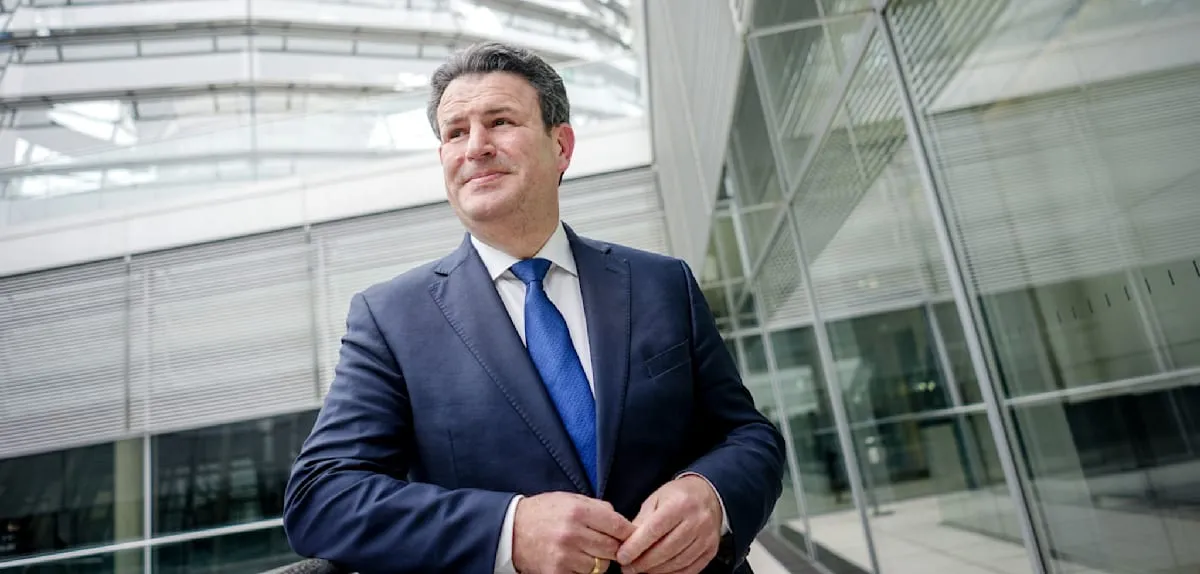
BERLIN – A wave of political turbulence has rocked Germany's Social Democratic Party (SPD) after former Labor Minister, Hubertus Heil (54), surprisingly announced his candidacy for party chairman. This bold move directly challenges the incumbent Lars Klingbeil, who currently holds the reins of SPD leadership, simultaneously igniting a fierce internal power struggle.
Heil's decision to enter the leadership contest is not without strong reasons. In his forthright statement, Heil explicitly highlighted what he assessed as the party's current lack of clear identity and direction. This criticism signals deep dissatisfaction with the SPD's strategy and performance in the German political arena in recent times.
Hubertus Heil's candidacy emerges at a crucial moment for the SPD, which is striving to reassert its relevance amidst Germany's increasingly fragmented political landscape. The party faces significant challenges from other parties, both on the left and right spectrums, which have successfully garnered voter sympathy with sharper narratives.
Lars Klingbeil, serving as one of the SPD chairpersons, now finds himself in a difficult position. Heil's announcement automatically places him in a position where he must defend his legitimacy before party members and the public. This battle is not merely about a position, but also about the vision and future of a party that was once a dominant force in Germany.
Political observers in Berlin view Heil's move as a serious effort to inject new energy and redefine the SPD's ideological identity, which is perceived to be fading. They believe that Heil, with his extensive experience in government and parliament, possesses the capability to offer a more dynamic leadership alternative.
Internal debates regarding the party's direction have been a hot topic among SPD cadres. Several factions within the party have voiced the need for fundamental reforms to address increasingly complex electoral challenges. Heil's candidacy provides a platform for these discussions to surface more openly and structured.
This is not the first time the SPD has experienced leadership turmoil. The party's history is marked by various internal dynamics that often reflect broader upheavals in German society. However, this time, a challenge from a senior figure like Heil could have significant long-term implications.
The leadership contest is expected to intensify leading up to the upcoming party congress. Heil and his team will likely launch a campaign emphasizing the importance of returning to true social democratic roots, focusing on social justice and worker protection issues that form the core of the SPD's struggle.
Meanwhile, Klingbeil is expected to highlight the achievements attained by the SPD under his leadership, as well as the stability he offers amidst global uncertainties. His strategy will likely focus on continuity and proven experience.
The outcome of this power struggle will not only determine who will lead the SPD, but also shape Germany's political narrative more broadly. Whether the SPD opts for radical reform or maintains the status quo will be a central question closely watched by the entire political spectrum.
Coalition parties affiliated with the SPD will also feel the impact. A change in leadership could affect coalition dynamics and the overall direction of government policy, especially leading up to the upcoming general election in 2026 or beyond. The stability of the existing coalition may be tested by this internal upheaval.
Editorial Insight: Hubertus Heil's candidacy is a strong signal of strategic dissonance within the SPD. This decision, which directly attacks the party's 'lack of profile,' indicates widespread dissatisfaction with the existing leadership. Regardless of the final outcome, this contest has the potential to rejuvenate the SPD's vision or, conversely, deepen internal divisions at a crucial moment in German politics. The party's consolidation post-leadership election will be vital for its political future in 2026 and beyond.