 Dodi Irawan
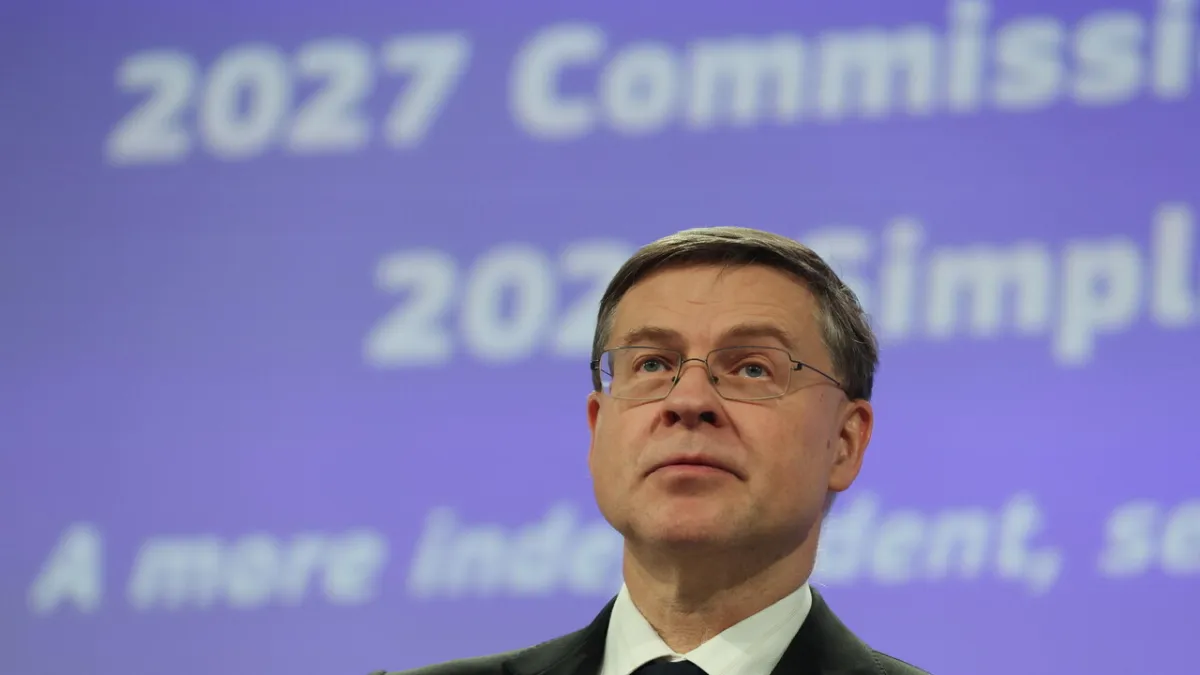
BRUSSELS – European Commission Executive Vice-President Valdis Dombrovskis recently warned that while the European Union economy shows surprising resilience, the region still faces strong and significant downside risks throughout 2026. This statement calls on member states to implement prudent and cautious fiscal policies, especially in the face of a persistently high interest rate environment.
Dombrovskis emphasized that the continent's economy has successfully navigated a series of external shocks, from the energy crisis to geopolitical turmoil. This resilience is largely supported by a robust labor market and massive diversification efforts in energy sources, reducing reliance on a single supplier.
Nevertheless, the growth outlook remains overshadowed by several negative factors. Inflation, although showing a downward trend, remains a concern. Furthermore, escalating global geopolitical tensions, including the situation in Ukraine and potential other conflicts, could trigger commodity price spikes and disrupt supply chains.
The urgency for prudent fiscal policies is not unfounded. With benchmark interest rates expected to remain high for a longer period, the public debt burden of member states will increase. This limits governments' room for economic stimulus if a slowdown occurs.
High interest rates also directly impact investment and consumption. Expensive borrowing costs hinder business expansion and reduce consumer purchasing power, which in turn can slow down the overall pace of the economy. The European Central Bank (ECB) continues to closely monitor these conditions.
'The European economy is indeed resilient, but not immune to shocks. We need to ensure our fiscal policies are preventative and ready to face challenges that may arise,' Dombrovskis stated at an economic forum in Brussels. He stressed the importance of building fiscal buffers for the future.
This situation also needs to be viewed within the broader global economic context. While some regions, such as the United States under the leadership of President Donald Trump, show solid growth, upheavals like the Iran war and adverse weather impacting the Philippine economy can create a domino effect.
The importance of stability is also reflected in the response to data center crises. In Australia, a data center crisis storm forced NextDC to halt major projects, demonstrating the fragility of vital infrastructure to economic and operational pressures.
The European Commission encourages member states to prioritize reducing budget deficits and public debt. Structural reforms are also needed to boost productivity and competitiveness. This includes investments in green and digital technologies, as well as enhancing workforce skills.
Thus, 2026 marks a crucial period for the European Union to balance maintaining economic growth and preparing for potential downturns. Prudence in fiscal management will be the key to success.
Editorial Insight: Valdis Dombrovskis' statement reflects realistic concerns. Although the European Union has shown adaptability, structural and external challenges remain significant. Fiscal prudence is an imperative, not an option. Failure to prepare could exacerbate the impact of future economic shocks, potentially triggering a deeper and prolonged recession for the region.