 Demian Sahputra
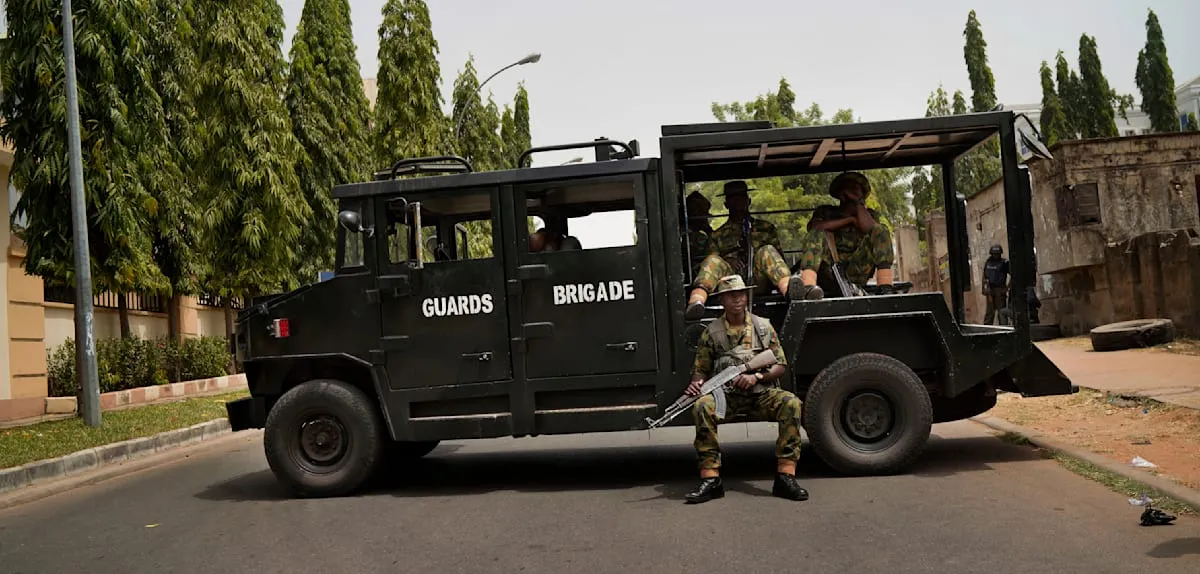
ABUJA — After nearly two months deprived of freedom, hundreds of schoolchildren in southwest Nigeria have been rescued in a dramatic military operation. Nigerian security forces successfully liberated a large group of children abducted from three different schools in July 2026, killing several terrorists and arresting others in a fierce shootout. The incident also highlighted the death of a teacher who was killed during the captors' detention period.
The mass abduction began in May 2026, when armed militants stormed three educational institutions in a conflict-prone region of southwest Nigeria. The students, mostly minors, were forcibly taken from their families and safe environments, triggering deep distress and international condemnation.
During the harrowing period of detention, the condition of the students was a primary concern. Initial reports indicated that a teacher who attempted to protect the children tragically lost his life at the hands of the abductors. This tragedy adds to a long list of violence victims in the conflict plaguing several regions of Nigeria.
The crucial rescue operation was meticulously and secretly executed by a special unit of Nigerian security forces. They tracked the abductors to their hideout, conducting a coordinated assault that led to intense gunfire. The bravery of the forces on the ground is commendable for successfully penetrating enemy defenses with minimal casualties among the hostages.
The Nigerian government, through its spokesperson, expressed high appreciation for the success of this operation during a press conference in July 2026. They reaffirmed the nation's commitment to eradicating terrorist groups and ensuring security for all citizens, especially children and the educational environment.
Joy overflowed among families and the local community as news of the liberation spread. Parents who had endured months of anxiety could now embrace their children again. However, the profound trauma resulting from the abduction is expected to require long-term psychological support.
The phenomenon of mass student abductions is not new in Nigeria. Since the Chibok incident in 2014, similar acts have recurred, highlighting the complex security challenges in Africa's most populous nation. Militant groups often use kidnapping as a tactic to demand ransom or as a propaganda tool.
Security analysis indicates that the root of the problem lies in weak oversight in remote areas, compounded by poverty and lack of employment opportunities exploited by extremist groups. The southwest region of Nigeria, though not as intense as the northeast, is also beginning to show similar patterns of vulnerability.
Human rights organizations and international bodies are urging the Nigerian government not only to focus on liberation operations but also to strengthen preventive measures. Education and economic development in vulnerable communities are considered crucial to breaking the cycle of violence and abduction.
The Nigerian Minister of Education, in a separate statement, underscored the importance of implementing more robust security systems in schools, especially those in high-risk areas. This includes increased patrols, installation of surveillance technology, and training programs for teaching staff and students in emergency situations.
The success of this rescue operation brings a glimmer of hope amidst the shadows of security uncertainty. However, a significant task still awaits the Nigerian government and society to create a safer future and guarantee every child's right to education without fear.