 Gabriella
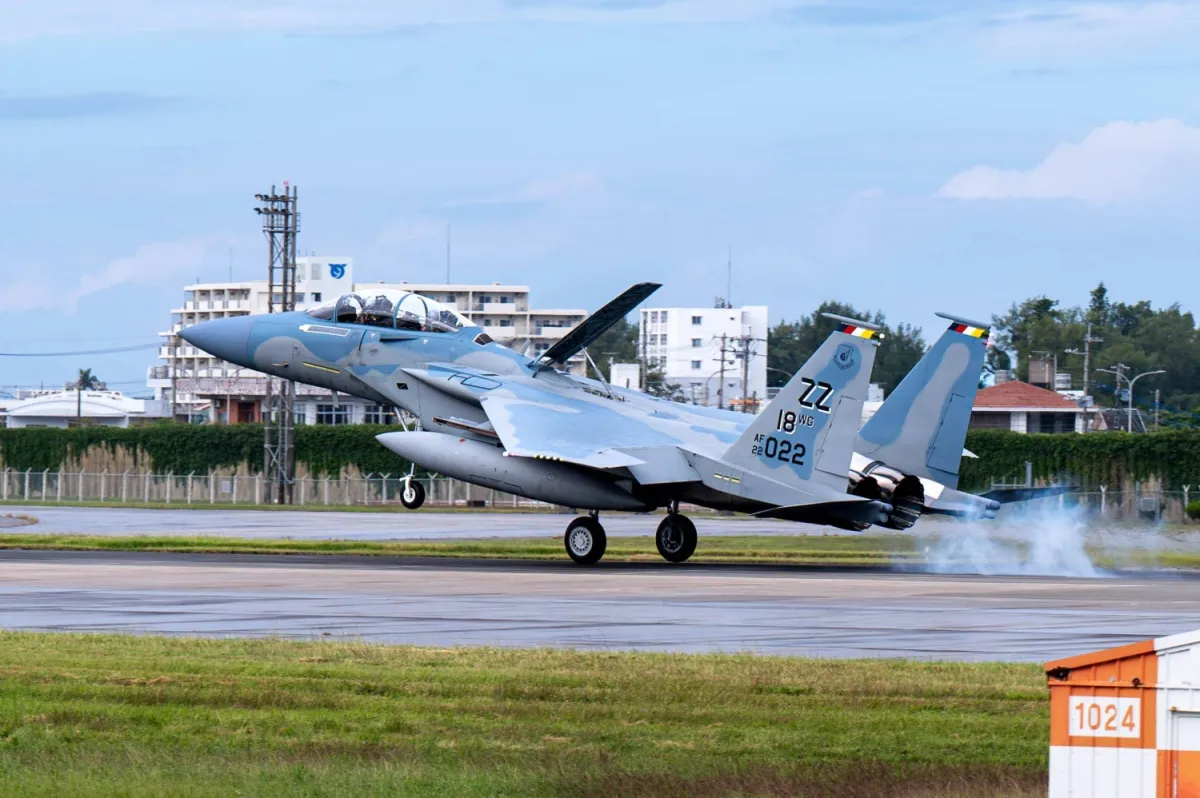
OKINAWA – The United States military presence in the Pacific region received a significant boost with the arrival of the newest F-15EX Eagle II fighter jets at Kadena Air Base, Okinawa, Japan, in early 2026. This deployment marks Kadena as the first overseas U.S. Air Force base to receive an advanced fleet equipped with state-of-the-art electronic warfare systems, positioning it as a vanguard in U.S. defense strategy and power projection in East Asia.
The F-15EX, the most advanced variant of the legendary F-15 Eagle fighter, brings superior combat capabilities with integrated digital avionics, fly-by-wire flight controls, and the revolutionary Eagle Passive/Active Warning and Survivability System (EPAWSS). The integration of these technologies significantly enhances the aircraft's ability to detect, jam, and evade enemy threats in modern warfare.
Kadena Air Base, strategically located in Okinawa, has long been a backbone of U.S. military operations in the Asia-Pacific. The presence of F-15EX aircraft at this base reaffirms Washington's commitment to regional security and its ability to swiftly respond to the ever-evolving geopolitical dynamics in the region.
This F-15EX deployment is more than just a fleet replacement. It is a strategic move to modernize and enhance the U.S. Air Force's deterrent capability amid rising tensions in the South China Sea and potential conflicts around Taiwan. With more agile maneuverability and an extended strike range, the F-15EX is expected to counter various sophisticated threat scenarios.
The Government of Japan welcomes this enhancement of defense capabilities, viewing it as an integral part of the robust U.S.-Japan security alliance that has been firmly established for decades. This step also strengthens coordination and interoperability between the two nations in maintaining regional stability, which is crucial for global trade and international peace.
The EPAWSS system on the F-15EX allows pilots to conduct air-to-air and air-to-ground combat missions with unprecedented electronic protection. This capability is vital in confronting increasingly sophisticated enemy air defense systems, ensuring air superiority in every operation.
A regional defense analyst, Dr. Kenji Tanaka from the University of Tokyo, stated that the arrival of the F-15EX at Kadena transforms the air security landscape. This constitutes a clear message from the United States regarding its readiness to defend its interests and allies amidst global turbulence.
Although Japan also possesses a modern fighter fleet, including the F-35, the addition of the F-15EX by the U.S. complements the spectrum of capabilities needed to address multi-dimensional threats. This reflects a layered defense strategy that integrates various aircraft types with different roles and specializations.
This move is seen as part of President Donald Trump's efforts to strengthen the U.S. military's global standing, particularly in the Indo-Pacific region, which remains a strategic focus for Washington. This reinforcement is expected to provide a significant deterrent effect against actors who could potentially threaten regional stability.
The F-15EX deployment is the culmination of a modernization program launched by the U.S. Air Force to replace aging F-15C/D units, ensuring combat readiness relevant for the coming decades.
Editorial Insight: The arrival of the F-15EX jets at Kadena Air Base, Okinawa, is not merely an addition of military hardware but a significant shift in the U.S. defense architecture in East Asia. It sends a clear signal to regional powers that the United States is serious about maintaining its air dominance and is prepared to invest in cutting-edge military technology. The impact will likely be felt in geopolitical dynamics, prompting other nations to re-evaluate their defense strategies and potential alliances. This readiness is essential given the escalation in various global flashpoints, as seen in discussions regarding regional energy security and responses to drone threats at other U.S. bases.