 Debby Wijaya
WASHINGTON — The Pentagon has officially declassified a series of secret archives related to Unidentified Flying Objects (UFOs) or Unidentified Aerial Phenomena (UAP), acknowledging the existence of these phenomena and their potential threat to national security. This declassification, carried out in early 2026, has sparked widespread debate and urged governments worldwide to review their air defense policies.
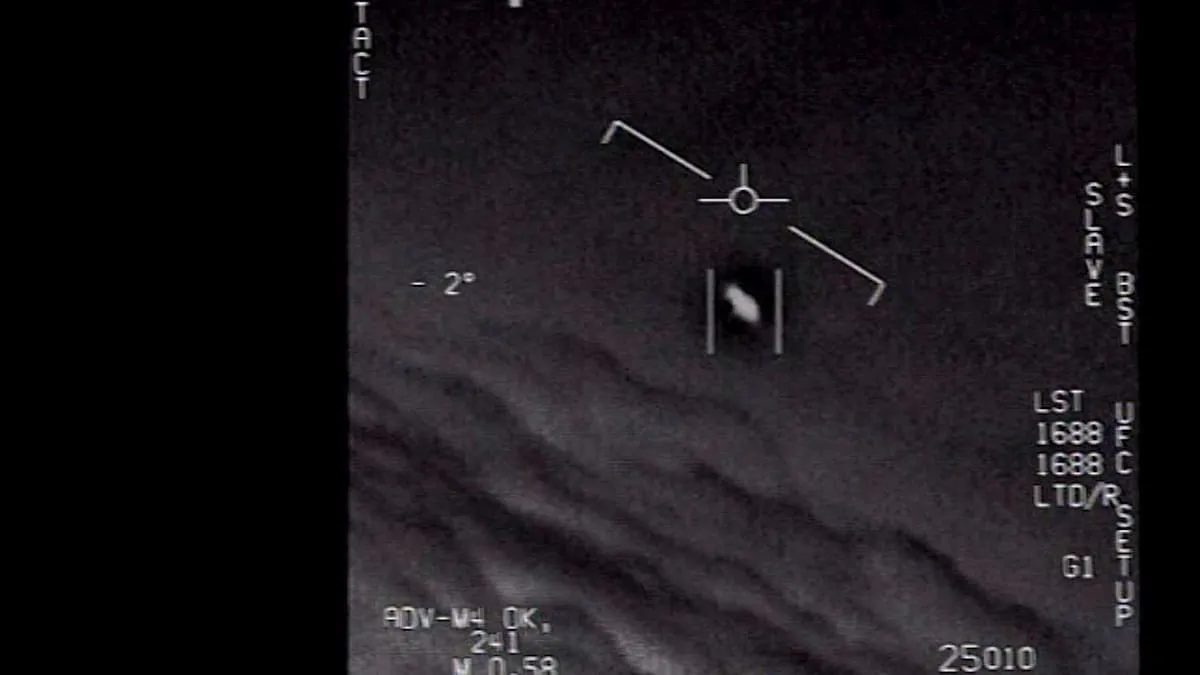
This move is not the first time the Pentagon has released such documents, but this time the emphasis is stronger. The reports detail unexplained encounters by military pilots with mysterious flying objects, demonstrating maneuvering capabilities beyond currently known technology.
Dennis Sand, a prominent editor from the international media outlet WELT, highlighted the urgency of the situation. He stated, "These are phenomena that must be taken very seriously, raising fundamental questions: what on earth is happening?" Sand’s comments underscore serious concerns among journalists and defense experts.
The Pentagon’s acknowledgment shifts the paradigm from speculation to a tangible geopolitical concern. For years, the UFO issue was often dismissed as science fiction or a conspiracy theory. Now, U.S. defense authorities are explicitly categorizing it as a potential security threat.
This threat not only refers to potentially superior foreign technology but also concerns uncontrolled airspace. The implications for national sovereignty and the safety of civilian and military aviation are becoming central to discussions in various international forums, including G20 and UN meetings scheduled for later this year.
The U.S. government has established a special task force to further investigate these UAPs, with a significant budget allocated for the 2026 fiscal year. The goal is to collect more data, analyze patterns of appearance, and develop comprehensive emergency response protocols.
Several previously classified incidents are now coming to light, providing a clearer picture of the nature of these phenomena. Radar data, video recordings, and veteran pilot testimonies indicate that these objects are capable of hypersonic speeds, instant directional changes, and operating without conventional propulsion signs.
Despite this declassification effort towards transparency, the public still questions the full extent of the information that has truly been shared. Critics argue that much vital data remains withheld for higher national security reasons, fueling calls for greater openness.
Defense experts and astrophysicists from various countries, including Russia and China, are reportedly observing similar trends in their airspaces. Although no joint official statements have been made, there are indications of covert intelligence cooperation to understand this global phenomenon.
This declassification of archives marks a significant turning point in humanity’s relationship with strange phenomena in the skies. It is no longer just a hot topic among mystery enthusiasts but a strategic agenda that redefines the concept of global security in the modern era.
This disclosure implicitly pressures other nations to also release data related to unidentified sightings in their airspace. International collaboration will be crucial for analyzing data holistically and developing a coordinated response to these still largely mysterious entities.
As a developed nation, the United States is at the forefront of efforts to understand UAP phenomena. However, the challenges faced are universal, requiring a multinational approach to mitigate potential existing risks. The world awaits concrete next steps from the Pentagon and the global intelligence community.