 Chris Robert
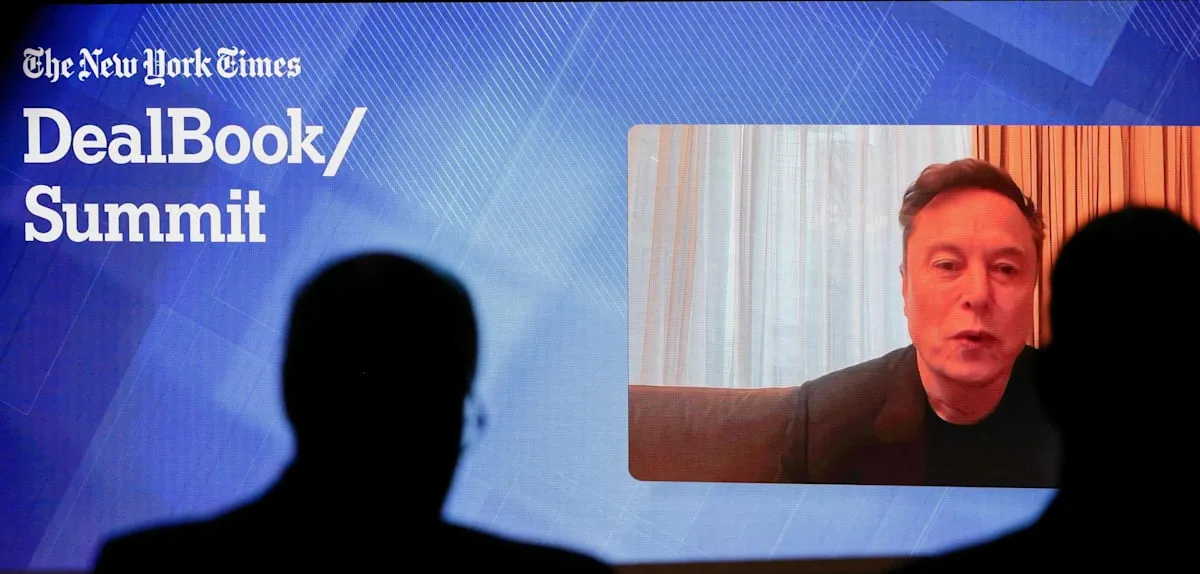
JAKARTA – Prominent tech billionaire Elon Musk recently rocked the global stage by surprisingly calling for deeper empathy and understanding towards Russian soldiers involved in the Ukraine conflict. His controversial statement, delivered at a prestigious event hosted by the New York Times, highlighted what he termed an overly simplistic narrative: 'Ukraine good, Russia bad.' This incident has sparked fierce debate about the complexities of war and the media's role in shaping public opinion.
Musk, known for his outspoken and often provocative views, argued that the current global narrative fails to capture the nuances of human suffering on both sides of the conflict. He emphasized the importance of looking beyond polarization, urging the public to consider the situations faced by individuals, including Russian soldiers, who may be acting under pressure or in circumstances not of their choosing.
Musk's statement comes at a time when geopolitical tensions are at their peak. The conflict in Ukraine, which has raged for years, continues to dominate world headlines, often presented within a clear moral framework. Musk's intervention, as one of the world's most influential figures, has the potential to shift public perception and ignite a more profound discussion on conflict narratives.
His comments also raise questions about the responsibility of media and public figures in shaping global perceptions. Is the 'good versus evil' narrative too dominant, obscuring critical analysis of more complex situations? Musk certainly seems to believe so, challenging the existing consensus.
Many immediately responded to the statement with sharp criticism, accusing Musk of overlooking Russian aggression or providing indirect justification. However, some observers viewed it as an attempt to encourage more critical and humanistic thinking, regardless of political stance.
As the founder and leader of several of the world's most innovative technology companies, including SpaceX and Tesla, and owner of the X platform (formerly Twitter), Musk's influence cannot be underestimated. His public statements often have wide-ranging ripple effects, capable of shaping conversation trends and even impacting global markets.
In a context of information overload and rapid dissemination, especially on digital platforms, simplified narratives often prevail. Musk, through his own platforms and interviews, frequently acts as an agent of disruption to these patterns, sparking debates that might not otherwise occur in traditional media spheres.
This stance is not the first time he has expressed unconventional views. He has previously voiced concerns about the direction of artificial intelligence development and its regulation, often considered controversial but aimed at provoking critical thought.
The debate ignited by Musk underscores the immense challenges in understanding modern conflicts. Biased information, propaganda, and difficulty accessing neutral sources often make it hard for the public to form balanced views.
Therefore, Musk's call, regardless of its reception, serves as an important reminder that every conflict has multiple dimensions. Ignoring the suffering of any party, even those deemed aggressors, can hinder efforts towards long-term resolution and a more comprehensive understanding.
This is not just about the war on the battlefield, but also the war of narratives unfolding in the global public sphere. Musk's statement effectively injects often-overlooked complexity into conversations dominated by clear dichotomies.
Reactions to Musk's statement also reflect the deep polarization of opinion worldwide. Many are uncomfortable with the idea of empathizing with a perceived aggressor, while others may see it as a call for universal humanity.
Ultimately, whatever his motivations, Elon Musk has once again successfully drawn global attention to a complex issue, forcing observers and the public to re-evaluate their assumptions about war and humanity.
Editorial Insight: Elon Musk's statement on empathy for Russian soldiers, while controversial, genuinely challenges the oversimplification in media narratives of conflict. This is not an attempt to justify aggression, but rather to encourage critical thought and humanism beyond 'good' or 'evil' labels. Its impact could be two-fold: deepening polarization or, ideally, sparking a more nuanced discussion vital for long-term conflict resolution.