 Dorry Archiles
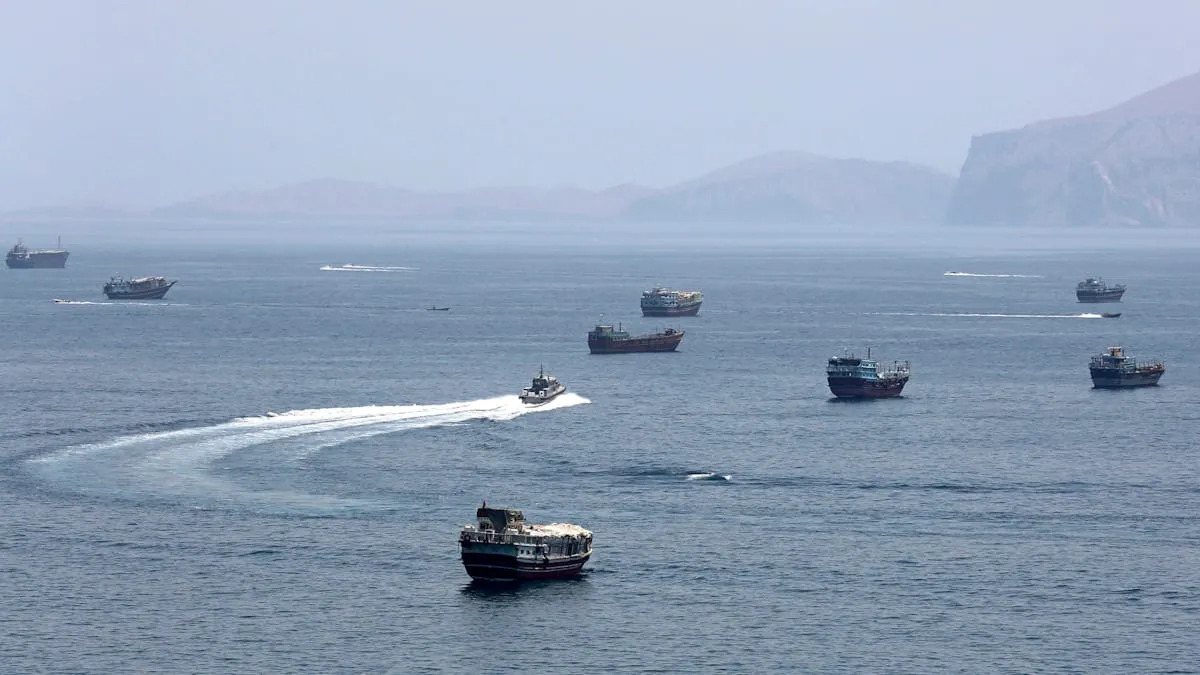
WASHINGTON – Geopolitical tensions between the United States and Iran have dramatically surged in 202 year, following the US Navy's confirmation of the destruction of several Iranian oil tankers in the strategic waters of the Strait of Hormuz. This action was promptly followed by Tehran's military response, launching ballistic missiles toward US-affiliated vessels in the area, marking a worrying escalation of conflict threatening global stability.
The incident occurred in the early hours local time, when US maritime units launched a precision operation targeting a convoy of Iranian tankers allegedly carrying illegal cargo and violating international sanctions. A Pentagon spokesperson stated that the action was a firm response to maritime security threats and Tehran's efforts to destabilize the region.
Shortly thereafter, Iran's Revolutionary Guard claimed responsibility for ballistic missile strikes targeting enemy assets in the Strait of Hormuz. The Iranian military vowed to retaliate against any aggression towards its sovereignty and national assets. Video footage circulating, though not independently verified, showed missile trails streaking across the night sky.
The Strait of Hormuz, a vital conduit for one-fifth of the world's oil supply, has historically been a flashpoint of contention between Washington and Tehran. Iran traditionally views the strait as its sovereign territory, while the US asserts the principle of international freedom of navigation. The struggle for control over this shipping lane frequently triggers serious incidents.
US President Donald Trump, via a social media statement, asserted that the US would not tolerate any provocations from Iran. 'We will protect our national interests and our allies. Iran must cease its reckless behavior,' President Trump wrote, underscoring his administration's firm stance.
From Tehran, Iranian Foreign Minister Hossein Amir-Abdollahian strongly condemned the US actions as state terrorism and a blatant violation of international law. 'Our response is an inviolable right to self-defense. The world must stop America's tyranny,' Amir-Abdollahian emphasized during an emergency press conference.
Global crude oil prices surged sharply following news of this escalation, fueling fears of a global economic recession. Investors reacted in panic, while market analysts predicted extreme price volatility if the situation does not quickly de-escalate. Commercial shipping lanes also reported significant disruptions.
The international community called for immediate de-escalation. United Nations Secretary-General Antonio Guterres expressed 'deep concern' and urged all parties to exercise restraint to avoid a larger conflict. Several European nations are reportedly attempting to mediate between the two sides.
The situation in the Strait of Hormuz remains tense with increased military presence from both parties. Geopolitical analysts warn that this incident opens a new chapter in a long-standing regional rivalry, with potential unpredictable consequences for global peace.
The Indonesian government, through its Ministry of Foreign Affairs, urged all parties to exercise restraint and resolve differences through diplomatic channels. The statement emphasized the importance of stability in the Gulf region for global energy security.
Editorial Insight: This latest escalation in the Strait of Hormuz is not merely a military incident, but a reflection of the long-standing diplomatic stalemate between the US and Iran. The US action of destroying Iranian tankers can be interpreted as a strong message against Tehran's nuclear program and regional activities, while Iran's missile response affirms its determination to defend its sovereignty. In the short term, the impact on global energy markets will be significant. In the long term, without effective communication channels and serious mediation efforts, the potential for open conflict in one of the world's most critical shipping lanes will continue to loom, with geopolitical implications far beyond the Middle East.