 Debby Wijaya
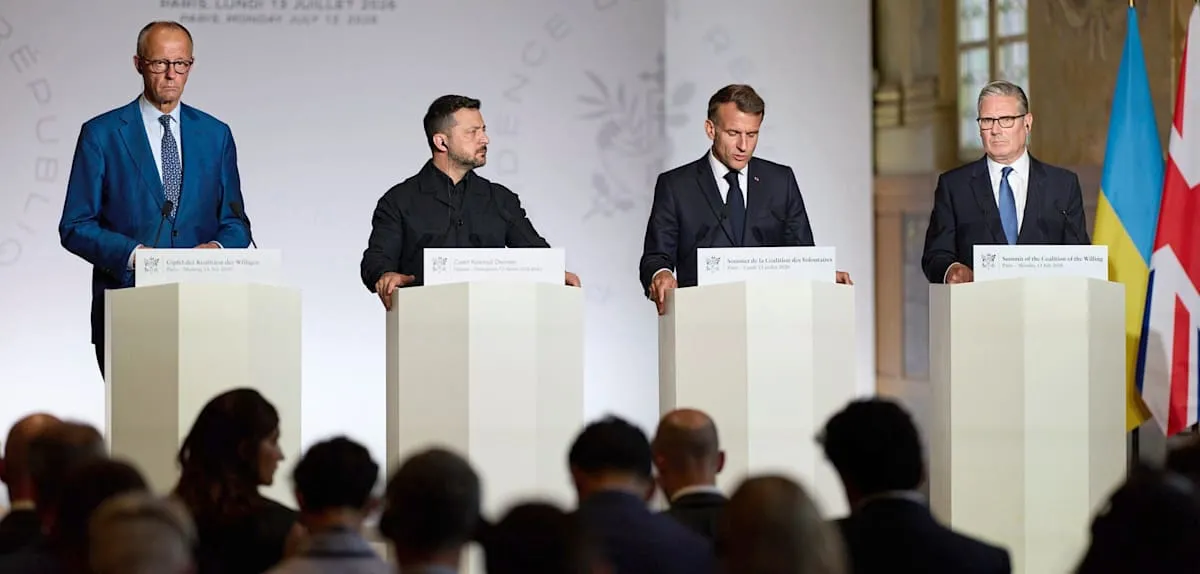
Paris and London — Ukraine's future has entered a crucial phase as French President Emmanuel Macron and British Prime Minister Keir Starmer race against time. They are intensively mobilizing forces across Europe to strengthen long-term support for Kyiv. This critical window of solidarity, lasting only a few months, is the primary determinant of regional stability in 2026.
This urgent effort comes amidst signals of fracturing within the “coalition of the willing” that has been the backbone of military and financial aid to Ukraine. European leaders face significant challenges in closing ranks and ensuring unity in the face of ongoing conflict escalation.
Brussels — Diplomatic sources in Brussels reveal that high-level meetings between French and British representatives are continuously taking place. Their main agenda is to formulate a cohesive strategy that can stem potential support fatigue from some EU member states and maintain the momentum of assistance.
Macron, known for his active diplomacy, has repeatedly emphasized the importance of European strategic autonomy. He views the strengthening of defense and support for Ukraine as vital elements in protecting the continent's security from external threats.
Meanwhile, Prime Minister Starmer, following a historic election in the UK, also plays a key role. Under his leadership, the UK is fully committed to supporting Ukraine, reaffirming its position as an unwavering strategic partner amidst the global geopolitical dynamics of 2026.
“This is not just aid; it is an investment in our collective security,” stated a senior official from the French Ministry of Foreign Affairs, who wished to remain anonymous, referring to the importance of maintaining pressure on the aggressor. “Ukraine is Europe's first line of defense.”
However, achieving consensus is not easy. Some member states, particularly in southeastern Europe, are beginning to show signs of economic exhaustion due to sanctions and inflationary pressures. This complicates Macron and Starmer's efforts to create a unified and sustainable front of support.
Kyiv — In Kyiv, the situation feels tense. Ukrainian officials recognize that strong external support is essential. President Volodymyr Zelenskyy, through his spokesperson, conveyed that any delay or hesitation from Western partners would have irreparable consequences.
Political analyst Dr. Anya Schmidt from a prominent Berlin think tank warned that “this critical window means that a lack of decisive action in the coming months could permanently alter the course of the conflict, unfavorably for Kyiv.” This statement underscores the urgency faced by the coalition.
Support is not only in the form of weaponry but also financial aid to keep Ukraine's economy running and rebuild damaged infrastructure. A stable, long-term framework is vital for Kyiv to effectively plan its strategy.
Macron and Starmer are striving to identify additional resources, both from their respective national budgets and from EU funding mechanisms. Discussions on defense Eurobonds and joint projects are being intensified to address these needs.
Upcoming G7 and NATO summits in 2026 are expected to be important forums for driving further commitments. Leaders hope to announce new substantial support packages, sending a strong signal to Kyiv and the world.
The success of these efforts depends not only on Macron and Starmer's diplomatic capabilities but also on the collective awareness of European nations regarding the long-term threat to their sovereignty and democratic values.
Thus, the next few months will be a decisive period. Paris, London, and Brussels will be at the center of intensive diplomatic efforts. Robust European solidarity is the only way to ensure Ukraine has a real chance to rise and build its future.
Amidst these external turbulences, Ukraine's internal situation also demands attention. News from Kyiv reports that Kyiv in Turmoil: Thousands Demand President Reconsider Defense Minister's Dismissal also colors the complex political landscape, adding layers of challenge for Zelenskyy's leadership.
Therefore, strengthening external support is not just about military aid, but also about providing essential political and economic stability for Ukraine to overcome its internal issues.
The future of European security is closely intertwined with Ukraine's resilience. Statements from coalition leaders affirm that any setback in Ukraine would have geopolitical implications far beyond its borders, affecting global stability as a whole.
Global energy and food security crises are also a focus of discussions. European collaboration is expected to address the continued impact of the conflict on the global economy, while also strengthening the continent's internal resilience.