 Edward DP Situmorang
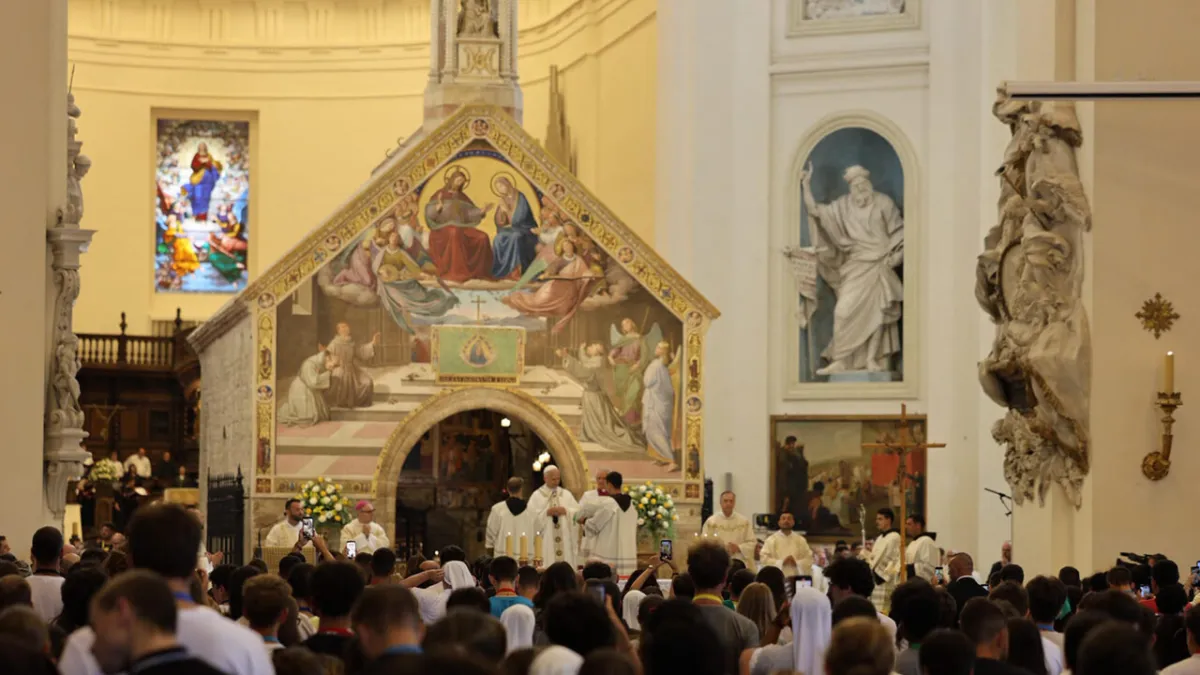
ASSISI – Pope Francis recently issued a stark warning about the dangers of creating "invented enemies" as a strategy to establish and maintain power. He delivered this significant message to thousands of young people in Assisi, Italy, in 2026. During this historic occasion, the Pope also affirmed that the essence of Christianity is fundamentally opposed to all forms of fundamentalism.
The Pope's statement comes as the world continues to grapple with various conflicts and tensions often rooted in polarization and the stigmatization of certain groups. He underscored how narratives of enmity are deliberately constructed to divide societies, divert attention from substantive issues, and ultimately, strengthen political and social control.
"When someone wants to impose their power, they often find enemies or create enemies," Pope Francis remarked, highlighting a modus operandi proven throughout history. This tactic, according to him, is frequently employed by rulers or elite groups seeking to justify authoritarian actions or consolidate support by uniting masses against a common target.
The event in Assisi, attended by young people from various parts of the world, served as a strategic platform for the Pope to convey a message of peace and unity. Assisi, as the birthplace of Saint Francis, has always been a symbol of interfaith dialogue and a bridge of fraternity, further amplifying the resonance of the Pope's teachings.
Furthermore, the Holy Father unequivocally stated, "Christians are completely the opposite of fundamentalism." This affirmation refutes the mistaken notion that often equates religion with extremism. He explained that the core tenets of Christ's teachings are love, forgiveness, and tolerance—values that are impossible to reconcile with divisive fundamentalist ideologies.
The Pope called on young people to become agents of peace and to resist the temptations of fundamentalism, whether in the form of religious extremism, rigid political ideologies, or narrow nationalism. He encouraged them to practice their faith authentically, which means embracing differences and building bridges of friendship, not walls of enmity.
Pope Francis's message is not only relevant for Christians but for all humanity. Amidst rising hate speech and division, the call to combat narratives of invented enemies becomes critically important. It is an appeal for critical reflection on sources of information and the motivations behind every claim of hostility.
The year 2026 marks a period where issues of fundamentalism and polarization are increasingly prominent in global discourse. Pope Francis has consistently voiced concern over rising intolerance and promoted dialogue as the only path towards sustainable conflict resolution. His message in Assisi serves as a profound reminder of the shared responsibility to uphold peace and justice.
He also highlighted how fundamentalism can undermine religious freedom and human rights. Fundamentally, in any context, fundamentalism tends to impose a single and exclusive interpretation, rejects pluralism, and often leads to violence in the name of dogma.
The involvement of young people in this event signals the Pope's optimism for the future. By equipping the younger generation with an understanding of universal values and the ability to discern between truth and manipulation, they are expected to become leaders who bring positive change to society.
Editorial Insight:
Pope Francis's message from Assisi is not merely religious rhetoric; it is a sharp critique of global power politics that often exploits fear and division. His emphasis on Christianity's antithetical nature to fundamentalism also serves as a crucial distinction amidst the stigma against religion. The implications of this message include an encouragement for every individual, especially the youth, to be critical, promote dialogue, and reject all forms of manipulation that aim to divide society for narrow interests.