 Robert Andrison
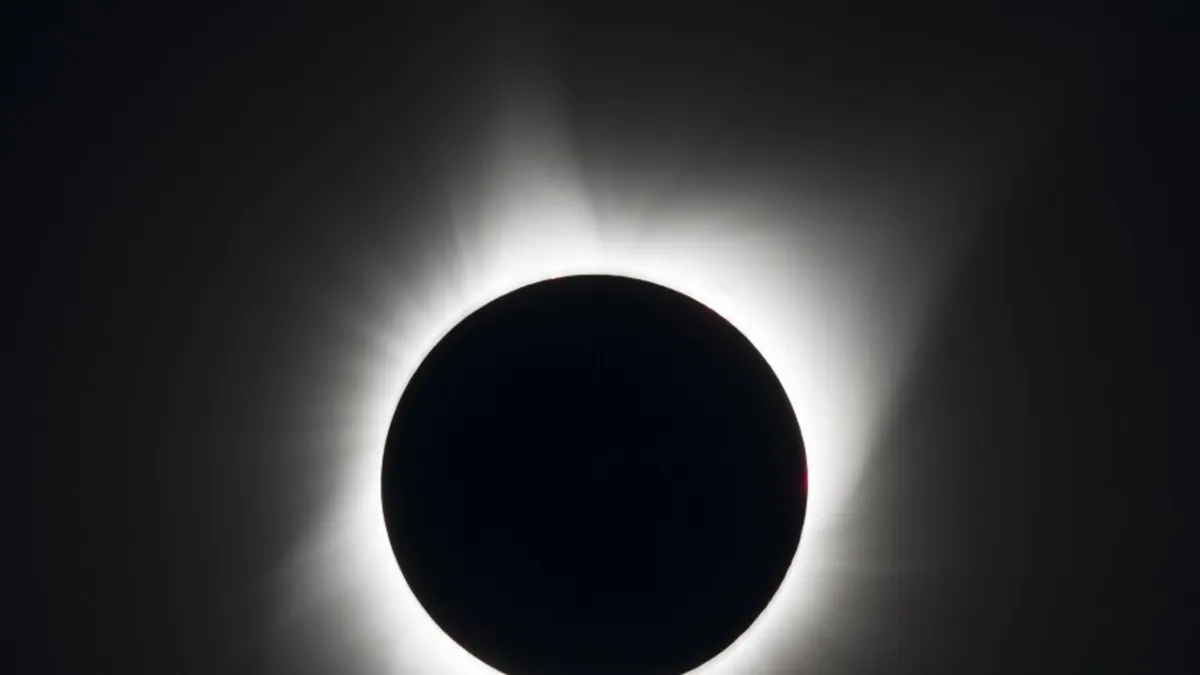
ROME – The skies above Europe are poised to deliver a rare cosmic spectacle in 2026. A partial solar eclipse will grace the horizon at dusk, anticipated around 7:30 PM local time, and will be followed by a spectacular display of meteor showers illuminating the night sky. This dual phenomenon promises an unforgettable visual experience for sky gazers across the continent.
This astronomical event is a major highlight for both the scientific community and the public. The dusk solar eclipse, though not total in most areas, will still offer a captivating view as the moon's disc begins to obscure part of the setting sun, creating a dramatic and rare silhouette.
After the eclipse's grandeur, the celestial stage will be taken over by a meteor shower. This phenomenon, colloquially known as falling stars, will peak after the eclipse subsides and continue throughout the night, providing ample opportunity for anyone to witness streaks of light across the firmament.
Astronomical experts from various observatories in Europe have been preparing to monitor both events. The combination of a dusk solar eclipse and a meteor shower on a single night is a rare gift. This is a valuable moment for public education about the wonders of the universe, stated a senior researcher from the European Space Observatory.
Solar eclipses occur when the moon passes between the sun and Earth, blocking the sun's light. In the case of a partial dusk eclipse, the alignment of the Earth, moon, and sun is not perfectly straight, resulting in only a portion of the sun's disc being covered by the moon.
Meanwhile, meteor showers are phenomena where numerous meteors appear to radiate from a single point in space. This happens when Earth passes through trails of debris from comets or asteroids, which enter Earth's atmosphere and burn up, creating bright streaks of light.
For observing the solar eclipse, it is crucial for the public to use special, certified safe eye protection. Looking directly at the sun without protective gear can cause permanent eye damage. However, for meteor showers, observation can simply be done with the naked eye from locations with minimal light pollution.
Major European cities, including Paris, Madrid, and Berlin, are expected to be key observation points, although visibility levels will vary. Many local astronomical communities are planning public viewing events, complete with telescopes and guidance from experts.
This event adds to the list of stunning celestial phenomena occurring in 2026. Previously, the world had also anticipated several other captivating sky shows. Further information regarding the 2026 astronomical calendar can be found in our article: Spectacular Solar Eclipse 2026: World Prepares to Welcome Rare Sky Phenomenon.
The public's enthusiasm reflects humanity's enduring fascination with the cosmos. The beauty and mystery of the universe continue to mesmerize, fostering curiosity and appreciation for extraordinary natural phenomena.
It also serves as a reminder of how dynamic our solar system is, where gravitational interactions between celestial bodies periodically create unparalleled spectacles on Earth. The European sky will bear silent witness to these wonders, offering valuable lessons about our place in the vast universe.
Editorial Insight: The dusk solar eclipse followed by a meteor shower in 2026 is not merely a visual spectacle but also an educational and scientific opportunity. The potential impact on astronomical tourism in Europe, especially in areas with optimal visibility, warrants attention. Furthermore, this event underscores the importance of public awareness regarding safe sky observation, while simultaneously sparking interest in science and space exploration among the younger generation. The involvement of local communities will be key to the successful celebration of this celestial event.