 Robert Andrison
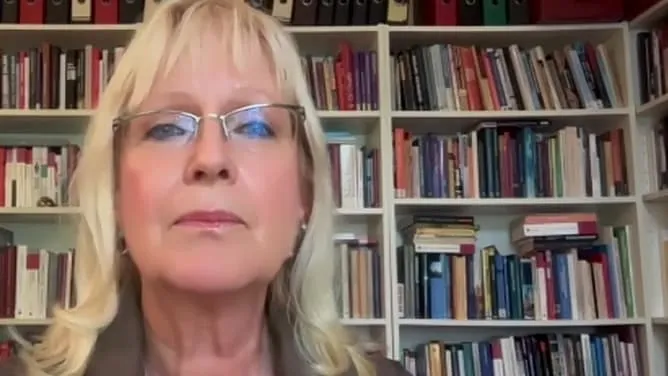
BRUSSELS — Europe is bracing for a turbulent political year in 2027, as predicted by prominent Bulgarian political scientist Ivan Krastev. He foresees heightened tensions across the European political landscape, particularly if radical forces succeed in gaining power through upcoming elections. This scenario, he warns, could create vulnerabilities for external actors, specifically Vladimir Putin, to exploit the situation for his strategic gains.
Krastev, renowned for his insightful analysis of geopolitical dynamics, highlights concerns over internal fragmentation within the European Union. According to him, the resurgence of anti-establishment sentiment and far-right populism in several member states could erode the cohesion and solidarity that have long been the foundation of European integration.
The period leading up to 2027 will serve as a crucial test for the resilience of democratic institutions across the continent. Elections in several key nations are projected to become intense battlegrounds between mainstream parties and factions advocating radical agendas, often characterized by nationalistic rhetoric and skepticism towards the European Union.
This threat is more than just rhetoric. Global political trends indicate increasing support for movements rejecting globalization and integration. The success of figures like Marine Le Pen in France, despite facing past legal issues, remains a strong indicator that anti-establishment narratives possess significant electoral appeal. Le Pen herself has vowed to conquer the Elysee without an electronic tag, demonstrating her undiminished political ambition.
The emergence of these radical forces has the potential to drastically alter Europe's foreign and security policy landscape. A fragmented European Union, or one led by governments with conflicting agendas, would be more susceptible to external pressures, especially from Russia, which has historically sought to weaken the bloc.
Ivan Krastev specifically states that Russian President Vladimir Putin will keenly observe every opportunity arising from Europe's internal turmoil. The Kremlin's strategy has often involved exploiting geopolitical vulnerabilities and political divisions in the West to advance its expansionist agenda.
Should radical parties dominate parliaments or even assume governmental roles, concerns arise that Europe's foreign policy will become more isolationist, less cooperative, and potentially withdraw from critical alliances. This includes the potential weakening of NATO, a scenario repeatedly voiced by controversial figures like Donald Trump. Trump himself has shaken NATO with his stern warnings to Europe, adding to the complexity of this threat.
Furthermore, the European Parliament has also demonstrated serious concern regarding this threat. An investigation into the ESN party, suspected of being far-right, illustrates the seriousness with which Europe's legislative body monitors movements that could threaten democratic values and European unity.
Unstable economic conditions post-pandemic and prolonged geopolitical conflicts can further exacerbate public dissatisfaction, driving them to seek political alternatives beyond traditional parties. This creates fertile ground for the growth of radical movements offering instant, often simplistic, solutions.
European leaders are urged to anticipate worst-case scenarios and bolster their political and economic resilience. Inter-state dialogue, institutional reforms, and efforts to address the root causes of public dissatisfaction must be top priorities to avert the "long year 2027" that Krastev fears.
Krastev's analysis serves as a stark warning to policymakers across Europe. A failure to tackle the rising tide of populism and political extremism risks regional and global stability, while providing significant strategic advantages to those who wish to see a fragmented Europe.
The year 2026 marks a crucial moment for consolidation and preparation to face the political challenges that will culminate in 2027. Internal cohesion and coordinated foreign policy will be key to preserving the integrity and influence of the European Union amid constantly shifting geopolitical dynamics.