 Dodi Irawan
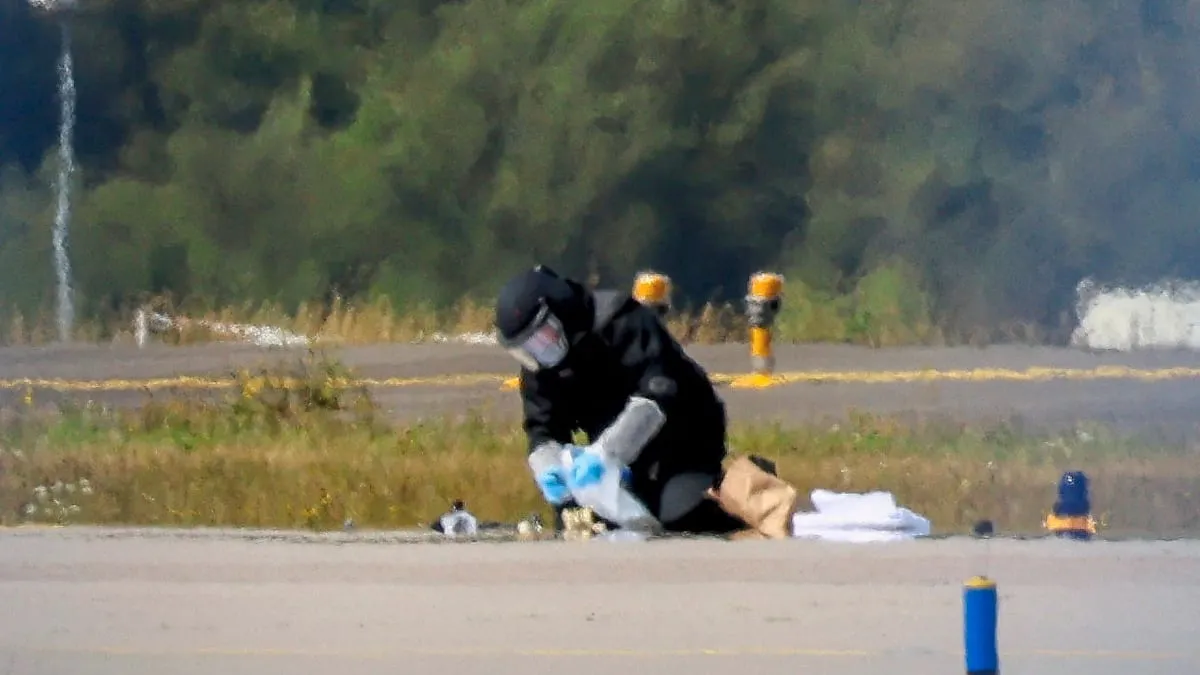
LEIPZIG — Germany has been gripped by anxiety following the discovery of a kamikaze drone laden with approximately 800 grams of explosives in the vicinity of Leipzig Airport. This incident has prompted a swift response from security authorities and underscores the urgent role of the Federal Office for the Protection of the Constitution (Verfassungsschutz) in neutralizing the actors behind this serious threat in early 2026.
The discovery of a drone carrying a significant explosive payload has put the country on high alert. The nature of the threat, an unmanned aerial vehicle capable of carrying destructive material, raises urgent questions about the security of vital national infrastructure.
Wolfgang Spyra, a leading explosives expert, asserted that an explosive mass of about 800 grams is not easily accessible through legal channels. “The explosives must have been acquired through illegal means,” Spyra stated, indicating the existence of organized illicit supply networks for such dangerous materials.
The expert's statement reinforces the view that this incident is not merely the act of an individual, but rather a potentially planned action involving actors with access to specific resources and expertise. Therefore, the demand for Verfassungsschutz to act immediately becomes even more crucial.
The role of Verfassungsschutz as Germany's domestic intelligence agency is central to identifying, tracking, and neutralizing individuals or groups that pose a potential threat. Their mandate is to protect the country's democratic order from sabotage or terrorism.
The Leipzig incident adds to Germany's growing concerns about hybrid warfare threats and sabotage frequently targeting critical infrastructure. Since early 2026, security authorities have increased vigilance against various modes of threat operation, including the use of drone technology.
This case also highlights the need for increased security across all critical infrastructure, not just airports. Ports, power plants, and data centers are now serious concerns, driving demands for protection protocols equivalent to air facilities.
The German government, through its spokesperson, expressed its firm commitment to ensuring the safety of its citizens and protecting the country's strategic assets. A comprehensive investigation is underway, involving various intelligence and law enforcement agencies.
The threat from explosive-laden drones represents an evolution in tactics that requires rapid adaptation in counter-terrorism and cyber security strategies. Tracing the source of the explosives and their procurement routes is a top priority of the investigation.
The German public has responded with vigilance, but also with confidence in the government's ability to handle the situation. However, concerns about the potential for similar attacks in the future continue to loom.
In facing this global challenge, international intelligence coordination is essential. The exchange of information with partner countries can help uncover broader networks and prevent similar incidents from occurring in the future.
As Germany moves into the second half of 2026, the incident at Leipzig Airport serves as a stark reminder that threats to national security can emerge in various forms. Verfassungsschutz and other related agencies face the daunting task of keeping Germany safe from the shadows of ever-adapting terrorism.