 Dorry Archiles
KYIV – The conflict between Russia and Ukraine escalated again in early 2026. Ukraine launched an attack on a vital oil refinery in Perm, Russia, which was immediately retaliated with intensive shelling by Russian forces on the Ukrainian capital, Kyiv. This incident marks a new escalation in the protracted war, amid reports that the situation in the Donbass region is becoming increasingly critical for Ukraine's defense.
The attack on the oil refinery in Perm, located deep within Russian territory, demonstrates Ukraine's capacity to reach strategic targets. Ukrainian intelligence sources claim that this operation aimed to disrupt Russia's fuel supplies and military logistics. The attack also serves as a strong message that no territory is entirely safe from the reach of Ukrainian drones and missiles.
Shortly after the Perm attack, air raid sirens blared in Kyiv. A series of explosions rocked the capital, targeting critical infrastructure and residential areas. The Ukrainian government reported civilian casualties and significant damage to buildings. Russian authorities did not issue an official statement regarding this retaliatory attack, but the action is widely interpreted as a direct response.
These developments confirm that the Russia-Ukraine conflict is far from over, entering an even more aggressive phase. Both sides continue to deploy military force and bolder strategies to secure their positions. The intensity of fighting on the front lines, particularly in the eastern regions, indicates that territorial ambitions remain a primary driver.
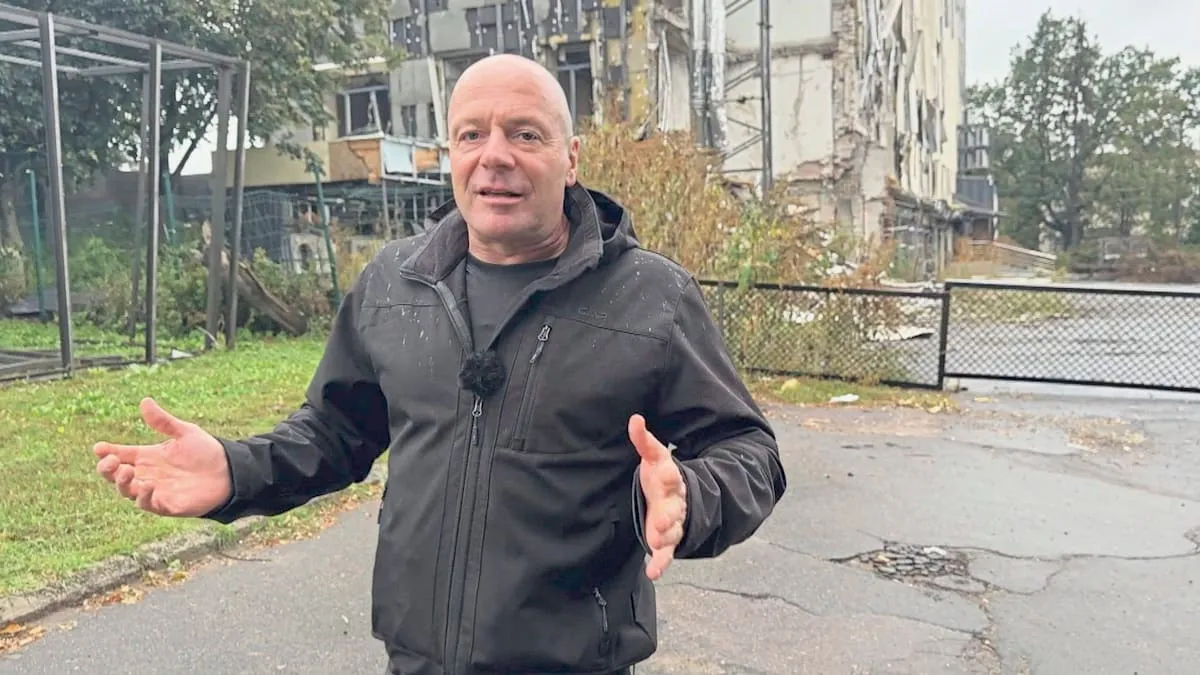
Donbass, a rich industrial region, remains the most brutal battleground. Reports from WELT journalist, Christoph Wanner, highlight that claims of decisive large-scale 'cauldron' encirclements, by either Russia or Ukraine, have not been definitively proven. 'Neither the first nor the second 'kessel' seems to exist,' Wanner stated, indicating that the battlefield is fluid and no side has achieved a lethal large-scale encirclement.
Wanner's analysis underscores that the fighting in Donbass more closely resembles a war of attrition, where both forces struggle for every meter of territory with heavy losses. For Ukrainian forces, every day in Donbass is a difficult struggle to maintain increasingly thin defensive lines. This situation exacerbates the humanitarian and infrastructure crisis there.
The international community continues to call for de-escalation, but these calls appear to be disregarded by the warring parties. The war has entered its third year in 2026, with widespread impacts on the global economy, energy stability, and food security.
US President Donald Trump, who returned to office in 2025, has on several occasions hinted at his willingness to find a 'solution' to this conflict. However, Moscow has repeatedly rejected negotiations deemed not to meet its preconditions. Kremlin Rejects Negotiations After Trump-Zelensky Meeting: Conditions Not Met is one news story that underscores the complexity of international diplomatic efforts in this conflict.
This latest escalation also raises concerns about the potential use of more destructive weapons. The government of Ukraine has repeatedly called for greater military aid from Western allies to repel Russian attacks and reclaim its territory.
This situation places the international community in a dilemma, between pursuing diplomatic avenues or continuing to supply arms. On the other hand, pressure on the Russian economy due to international sanctions has not been strong enough to halt its military aggression, while Ukraine is increasingly dependent on external support.
With critical reports from Donbass and mutual attacks in Perm and Kyiv, the prospect of peace seems increasingly distant. Military tensions continue to dominate the narrative, overshadowing any efforts towards a lasting peaceful resolution.
Editorial Insight: This latest escalation indicates that a strategy of attrition remains the primary focus for both sides. Ukraine demonstrates its offensive capabilities against strategic targets within Russia, while Russia responds with strong retaliatory strikes against Ukrainian population centers. This situation prolongs civilian suffering and further complicates international mediation efforts. Without significant changes in power dynamics or political will, this conflict has the potential to drag on with increasingly severe humanitarian and geopolitical consequences.